
What Are the Traits and Care Tips for Long-Haired Dachshunds?
The Dachshund (Long Haired) is a striking and affectionate member of the hound group, easily recognized by its elongated body, expressive eyes, and flowing, silky coat. This breed is well-suited to those who appreciate a bold, lively companion with a distinct personality and a knack for both adventure and affection. Whether joining an active single, a couple, or a family, the Dachshund (Long Haired) brings a lively spirit and plenty of warmth into the home.
Originally bred as a determined tracker and burrower, this dog still shows strong instincts to explore, follow scents, and tackle challenges. Owners will appreciate not just the breed’s classic look but also its loyalty and adaptable nature, making the Dachshund (Long Haired) as fitting for city apartments as it is for country cottages, provided its needs for exercise and engagement are met.
- Overview of the Dachshund (Long Haired)
- Key Characteristics
- Appearance of the Dachshund (Long Haired)
- Temperament & Behavior
- Care & Living Needs
- Health & Common Issues
- Official Breed Standard Summary
- Frequently Asked Questions
Group: Hound
Size: Medium
Exercise needs: Up to 1 hour per day
Coat length: Medium
Grooming: More than once a week
Shedding: Yes
Lifespan: Over 12 years
Ideal home type: Small house
Town or country: Either
Garden needs: Small/ medium garden
Overview of the Dachshund (Long Haired)
The Dachshund (Long Haired) traces its origins back to Germany, where it was bred for a very specific purpose: to track and flush out badgers and rabbits from their burrows. Known as the “Teckel,” this breed is highly valued for its tenacity, courage, and remarkable ability to work underground or follow wounded game. In Germany, Dachshunds come in three sizes, but in some countries, such as the UK, only standard and miniature sizes are recognized.
This particular variety, with its luxurious long coat, adds elegance and a softer appearance to the robust, low-slung frame. The Dachshund (Long Haired) excels as both a hunting companion and a loyal household member, blending working ability with a keen, intelligent mind. For owners looking for a dog that offers companionship, character, and a manageable size, this breed is a rewarding choice.
The Dachshund (Long Haired) is a flexible companion, fitting into many lifestyles. Whether in a small house in the city or a cottage with a bit of garden, these dogs adapt well, as long as they are engaged physically and mentally. Their heritage means they thrive with an owner who appreciates both their working roots and affectionate side.
Key Characteristics
- Energy level – The Dachshund (Long Haired) is lively with bursts of high energy mixed with content periods lounging beside family members.
- Trainability – Intelligent and determined, but can be a bit stubborn; positive, consistent training works best.
- Intelligence – Highly intelligent, showing quick learning when motivated, especially with tasks involving scent and tracking.
- Prey drive – Strong prey drive due to hunting ancestry; must be supervised around small animals and in open spaces.
- Social needs – Enjoys being close to family, can form a tight bond with their people, and dislikes being left alone for extended periods.
- Compatibility with families and children – Faithful and generally good tempered, this breed can thrive in families, especially with respectful children.
- Compatibility with other dogs – Usually does well with other dogs, but care should be taken with much larger breeds due to the Dachshund’s stature.
- Guarding or watchdog tendencies – Bold and alert, the Dachshund (Long Haired) will often let you know about newcomers, making an effective little watchdog.
- Adaptability to city or country life – Suits both urban and rural environments, provided daily exercise and interaction are available.
- Best suited owner type – Fits owners looking for a loving, intelligent companion with moderate exercise needs and a willingness to provide regular grooming.
- Typical daily routine – Benefits from structured play, a daily walk (up to an hour), time with family, and opportunities for scent games or exploration.
Appearance of the Dachshund (Long Haired)
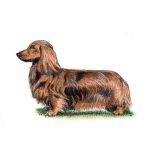
The Dachshund (Long Haired) presents a distinctive and harmonious silhouette, characterized by a moderately long body that stands about half as high as it is long. The chest is deep and oval, offering plenty of capacity for heart and lungs, while the back remains level from withers to loin, blending into robust, muscular quarters. Ground clearance is moderate, never exaggerated, ensuring that the dog’s function and movement are not compromised by an overly low build.
The head is long and slightly conical when viewed from above, balanced with a gently arched skull and neatly fitting lips. The expressive, almond-shaped eyes are dark in most colors except in chocolates, where lighter shades are acceptable. The breed’s ears are set high, broad, and rounded, with the forward edge resting against the cheek—long enough to add elegance, while allowing for communication of mood and attention.
Muscular shoulders and forequarters provide the strength Dachshunds need for digging and following scent trails, while the hindquarters remain strong and parallel, equipped for stable propulsion. Feet are tight, arched, and well-knit, supporting the dog’s sturdy frame. The tail continues the line of the spine and is carried gently curved, never above the topline or touching the ground in repose.
The defining feature of the Long Haired variety is its beautiful coat: soft, straight (sometimes slightly waved), and lying flat. It is longest under the neck, chest, on the underparts, behind the legs, and on the tail, forming elegant feathering. The outside of the ears is also generously feathered. Acceptable colors include red, shaded red, black & tan, chocolate & tan, as well as various dapple patterns, lending an extra element of visual interest. The ideal weight typically falls between 20 and 26 pounds.
Temperament & Behavior
The Dachshund (Long Haired) combines a good-natured, faithful character with a fearless streak inherited from generations of hunting dogs. Lively and obedient, they bring a spirited presence to homes, often appearing bold—even a bit defiant—in posture and outlook. Their intelligence equips them for problem solving and task-based games, while their versatility means they adjust smoothly to different family routines.
At home, this breed seeks close interaction with its people, forming deep attachments and often shadowing their favorite humans from room to room. While they can be trusted companions for respectful children, their size and confidence require supervision during boisterous play, particularly around much larger pets. With early socialization, the Dachshund (Long Haired) coexists well with other dogs.
As a member of the hound group, the Dachshund possesses a dignified and trustworthy demeanor. However, they can also be a little aloof toward strangers—making them excellent watchdogs, quick to alert to unusual activity. Their instinct to pursue scents may emerge during walks, so a secure space or lead is recommended.
Owners may find this breed’s independent mind both charming and challenging. Patience and consistency, paired with plenty of positive reinforcement, turn their boldness into an asset. Whether joining a quiet home or an active family, the Dachshund (Long Haired) adds personality, warmth, and a touch of charm to daily life.
Care & Living Needs for the Dachshund (Long Haired)
The Dachshund (Long Haired) is content with up to an hour of exercise daily. A daily walk, combined with play and exploratory scent games, usually meets their energy requirements. Their size and temperament allow them to adapt well to either town or country settings, from apartments to small houses with access to a small or medium-sized garden.
Grooming is a notable responsibility for this variety. The long, silky coat requires brushing several times a week to prevent tangles and mats, especially in feathered areas under the neck, behind the legs, and on the tail. Although they do shed, good brushing habits help keep the coat in condition and minimize hair around the home. Occasional bathing and regular ear checks keep them looking and feeling their best.
This breed thrives on interactive games and tasks that engage their sharp nose and mind, such as scent-based puzzles or brief training sessions. Consistency and encouragement are key to channeling their intelligence and independent nature positively. Prospective owners who prefer a dog that is always eager to please and demand little grooming might find the Dachshund’s grooming and training needs more than they want to take on.
The Dachshund (Long Haired) is not an ideal match for those who are away from home for long hours or who cannot commit to regular brushing and exercise. They are best placed with owners who enjoy including their dog as part of family life and can dedicate time to keeping them both active and engaged.
Health & Common Issues
Maintaining the health of a Dachshund (Long Haired) is largely a matter of good management and preventive care. Like many breeds with a long back, weight control is important to reduce unnecessary strain on the spine. Regular, moderate exercise and a balanced diet contribute to lifelong mobility and well-being.
Keeping up with routine grooming, dental hygiene, and periodic veterinary checkups ensures healthy skin, coat, and teeth. Given their love for outdoor exploration, checking for ticks, debris, and signs of ear irritation after walks is also a good practice.
No specific health tendencies are highlighted for this breed in the available information, so providing a safe environment, gentle handling (especially when picking up or carrying), and appropriate social interaction are the best ways to support a Dachshund’s long and active life.
Official Breed Standard Summary
The official breed standard defines the Dachshund (Long Haired) as a moderately long, well-muscled, and compact dog with enough ground clearance for free, efficient movement. Key points emphasize absolute soundness, functional build, and proportions that ensure the dog remains fit for its traditional work, as well as for life as a companion.
The coat should be soft, straight, or just slightly waved, with the longest feathering located under the neck, on the underbody, tail, and behind the legs. Flatness and a natural outline are valued, and excessive hair on the feet is not desired. Colors allowed in this variety include red, shaded red, black & tan, chocolate & tan, red dapple, silver dapple & tan, and chocolate dapple & tan. Eyes are generally dark, and a small white patch on the chest is tolerated but not encouraged.
Movement should be free and flowing, with parallel legs and feet when viewed from the front or rear, and a natural stride driven by the hindquarters. Weights for the standard Dachshund (Long Haired) range between 9–12 kilograms (20–26 pounds), though precise size can vary somewhat outside of the ideal.
Faults are assessed by their impact on health and welfare, and only features that truly add to the breed’s function and appearance should be rewarded. The standard recommends that male dogs have two normally descended testicles, and reminds prospective owners that ideal measurements serve as a guide, not a strict requirement.
Frequently Asked Questions about the Dachshund (Long Haired)
Is the Dachshund (Long Haired) good for first-time dog owners?
This breed can be suitable for a first-time owner who is committed to training, socialization, and regular grooming. As with all intelligent, independent breeds, patience and consistency are important for a rewarding partnership.
How much exercise does a Dachshund (Long Haired) need daily?
A Dachshund (Long Haired) benefits from up to one hour of daily exercise. This can include walks, playtime in the garden or home, and games that appeal to their natural tracking and hunting instincts.
Is the Dachshund (Long Haired) good with children?
The breed is known to be faithful, good-tempered, and versatile, making it a strong candidate for families with children who understand how to interact respectfully with dogs. Supervision is recommended, especially with very young children.
Can the Dachshund (Long Haired) live in an apartment?
This variety adapts well to apartment living if its exercise needs are met and it gets regular social interaction. Access to a small garden is beneficial, but not an absolute necessity.
How much grooming does a Dachshund (Long Haired) need?
The long, silky coat requires brushing several times a week to stay free of knots and tangles. Occasional bathing and attention to ears and feet will keep the dog comfortable and healthy.
Are there common health concerns in this breed?
While the breed standard highlights the importance of soundness and fitness, general wellness practices—such as monitoring weight, providing regular exercise, and scheduling routine veterinary visits—help maintain health throughout the Dachshund’s life.


