
What Are the Traits and Care Tips for Smooth-Haired Dachshunds?
The Dachshund (Smooth Haired) brings charm, energy, and cleverness into homes of all sizes. Compact yet sturdy, this breed fits comfortably with singles, couples, families, and active seniors looking for a loyal, intelligent companion. Known for their bold spirit and loving nature, these dogs are particularly well-suited to those who appreciate both playfulness and devotion in a pet.
With their moderate exercise requirements, distinctive short coat, and affable temperament, the Dachshund (Smooth Haired) easily transitions between city apartments and rural homes. This breed’s roots as a dedicated hunter show in its courage and curiosity, while its gentle side ensures it thrives in well-structured family routines.
- Overview of the Dachshund (Smooth Haired)
- Key Characteristics
- Appearance of the Dachshund (Smooth Haired)
- Temperament & Behavior
- Care & Living Needs
- Health & Common Issues
- Official Breed Standard Summary
- Frequently Asked Questions
Group: Hound
Size: Medium
Exercise needs: Up to 1 hour per day
Coat length: Short
Grooming: Once a week
Shedding: Yes
Lifespan: Over 12 years
Ideal home type: Small house
Town or country: Either
Garden needs: Small/ medium garden
Overview of the Dachshund (Smooth Haired)
The Dachshund (Smooth Haired) traces its origins to Germany, where it was developed for tracking and hunting, particularly for pursuits like following badgers and rabbits underground. Its low body, remarkable muscles, and persistence made it an invaluable working dog for hunters seeking a smaller breed adept at both tracking and “going to ground.” In its homeland, several size varieties exist to suit different hunting roles, while the smooth coat offers both practicality and style.
This breed’s reputation as a lively and bold companion is not just rooted in history—it continues today. The Dachshund (Smooth Haired) is adored for its alertness and intelligence, and while it has sporting roots, it also adapts seamlessly to life as a cherished pet. Its moderate size and straightforward grooming needs make it manageable for most households, while its devotion brings warmth to both family homes and singles who desire a steadfast friend.
Owners who are drawn to its distinctive silhouette and spirited character tend to enjoy active days balanced with relaxed evenings. Whether living in a bustling neighborhood or a more rural setting, the Dachshund (Smooth Haired) finds purpose and pleasure as both a loyal companion and a vigilant presence in the home.
Key Characteristics
- Energy level – Medium to high, enjoying daily play and walks but also happy to relax indoors with the family.
- Trainability – Intelligent and willing, though sometimes independent; responds well to positive, patient training methods.
- Intelligence – Notably smart and resourceful, with a strong instinct for problem-solving.
- Prey drive – Retains a keen hunting instinct; may chase small animals or follow scents if unsupervised.
- Social needs – Enjoys companionship, bonds closely with household members, and appreciates being included in daily activities.
- Compatibility with families and children – Loyal and generally good-tempered, often forming close attachments with children in respectful households.
- Compatibility with other dogs – Can live harmoniously with other dogs if well-socialized, though may show some assertiveness due to their confident nature.
- Guarding or watchdog tendencies – Naturally alert and vocal, quick to announce arrivals and changes in their environment.
- Adaptability to city or country life – Equally at home in urban apartments or homes with a garden, provided exercise needs are met.
- Best suited owner type – Individuals or families seeking an interactive, affectionate dog willing to participate in both adventures and downtime.
- Typical daily routine – Prefers structured schedules with regular walks, opportunities to explore scents, playtime, and comfortable relaxation periods.
Appearance of the Dachshund (Smooth Haired)
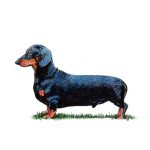
The Dachshund (Smooth Haired) is instantly recognizable for its unique proportions: it carries a moderately long body with a compact, well-muscled build. Standing with a bold, proud head carriage, it demonstrates both elegance and strength. The ideal height at the withers is balanced with body length, ensuring there is enough ground clearance—at least a quarter of their height—to support agile movement.
Its head has a long, gently tapered appearance, giving it a conical outline from above and in profile. Almond-shaped, dark eyes show intelligence and devotion, though paler eyes are accepted in certain color patterns such as chocolates or dapples. Ears are set high, broad, rounded, and hang close to the cheeks, giving a soft and expressive look. The mouth should feature strong jaws with a scissor bite, while the muscular neck flows in a gentle arch into well-laid-back shoulders.
The breed’s front assembly is especially notable: robust forequarters allow the Dachshund to dig and maneuver, with a gently curved forearm wrapping neatly around its deep chest. The body is oval and full, with a prominent breastbone and ribs extending well back for heart and lung capacity. Muscular hindquarters and straight, parallel hind legs give the breed its characteristic stride. Feet are strong and arched, with front feet slightly larger than the hind.
The smooth, dense, short coat sits close to the body, providing both practicality and shine. Traditional colors for this variety include Black & Tan, Chocolate & Tan, Red, and several dapple or brindle variations, while colors such as blue or isabella are outside the accepted standard. The ideal weight for this breed ranges from 20 to 26 pounds, maintaining a strong yet moderate appearance without exaggeration.
Temperament & Behavior
At home, the Dachshund (Smooth Haired) is best described as loyal, lively, and intelligent. These dogs build strong attachments to their people, delighting in shared routines and affectionate interactions. They are known for being faithful and versatile, often showing a playful, engaging side balanced by a natural confidence.
As part of the Hound group, Dachshunds combine an independent nature with strong social instincts. While dignified and sometimes a bit aloof with strangers, they are highly trustworthy companions in the family setting. Their original working purpose as hunters still influences their determination and boldness today; owners may notice their persistent efforts to explore scents or alert their household to anything unusual.
Interaction with children and other pets is typically positive, especially when early socialization is provided. The breed’s courageous and sometimes “rash” enthusiasm can lead to spirited play, so supervised introductions and respectful handling by young children are encouraged. Dachshunds may show some assertiveness with other dogs, but generally get along with familiar companions.
While these dogs thrive on attention and inclusion, their strong-mindedness means they benefit most from consistent boundaries and positive reinforcement. As watchdogs, they are attentive and vocal—often one of the first to sound the alarm when visitors approach, making them reliable house dogs as well as affectionate friends.
Care & Living Needs for the Dachshund (Smooth Haired)
The Dachshund (Smooth Haired) requires around one hour of exercise per day to stay healthy and content. Walks, play sessions, and opportunities to sniff their surroundings keep them physically and mentally engaged, while their moderate size makes them adaptable to both city living and homes with a small to medium garden.
An ideal living space for this breed is a small house or apartment, so long as daily activity needs are met. Homes with secure gardens allow them to explore while staying safe, but owners in urban environments will also find these dogs adjust well to routine walks. They are flexible and do equally well in town or country settings.
Grooming the smooth-haired variety is simple and manageable. A weekly brush helps to remove loose hair and maintain coat shine, though the breed does shed. Their short, dense coat rarely mats, and bathing can be limited to when necessary. Eyes, ears, and nails should be checked regularly, as with any breed.
Because of their intelligence and energy, Dachshunds benefit from mental enrichment. Puzzle toys, scent games, and basic obedience training help to satisfy their curious minds and prevent unwanted behaviors. Patient and positive instruction is most effective, as their independent streak can sometimes lead to stubbornness.
This breed is best for owners who appreciate an interactive relationship and are committed to daily exercise and companionship. Households seeking a low-maintenance, highly independent dog who is left alone for prolonged periods may not be the best match, as Dachshunds value attention and structure from their people.
Health & Common Issues
The dataset does not specify particular health issues for the Dachshund (Smooth Haired). Generally, regular veterinary care, a well-balanced diet, and controlled exercise are important to support lifelong wellness and help this breed live beyond 12 years, as is common for many dogs of their size.
Like all dogs, maintaining a healthy weight protects joints and ensures ease of movement, especially considering the Dachshund’s unique body structure. Routine checkups are essential for monitoring dental, eye, and ear health, and for early detection of any potential concerns.
Moderate daily activity, weight control, and appropriate nutrition go a long way toward supporting overall health. Providing a secure environment reduces opportunities for injury, and consistent grooming keeps their smooth coat and skin in optimal shape.
Official Breed Standard Summary
The official breed standard for the Dachshund (Smooth Haired) provides detailed guidance on the ideal appearance, temperament, and qualities that define the breed. Strong emphasis is placed on soundness, health, and the avoidance of any exaggerated traits that could compromise welfare. The standard highlights correct size, proportion, and movement, ensuring the dog remains both functional and true to its historical role.
Dachshunds should present a bold, defiant carriage with intelligent expression and a balanced, moderately long body. The ideal weight is between 20 to 26 pounds, with correct ground clearance and a harmonious silhouette. Only certain colors, such as Black & Tan, Chocolate & Tan, Red, and related patterns, are permitted. Features such as blue or isabella colors, as well as piebald or tricolor patterns, fall outside the accepted guidelines.
The breed’s movement must be free and flowing, with parallel legs and a long stride powered by strong hindquarters. The coat is dense, short, and smooth, fitting closely all over the body. Faults are assessed according to their impact on health and function, and the presence of any unacceptable traits should prevent reward in the show ring.
Potential owners should note that the official size is provided as a guideline rather than an absolute requirement, as healthy dogs may fall outside the precise weight or height ranges outlined by the standard. Male dogs are expected to have two fully descended testicles. Careful adherence to the standard helps preserve the breed’s historic and functional qualities for future generations.
Frequently Asked Questions about the Dachshund (Smooth Haired)
Is the Dachshund (Smooth Haired) good for first-time dog owners?
The Dachshund (Smooth Haired) can be a wonderful companion for first-time owners who are prepared for their intelligence and slight independence. With consistent training and daily interaction, they respond well and develop deep bonds with their human companions.
How much exercise does a Dachshund (Smooth Haired) need daily?
This breed needs up to one hour of exercise per day. Walks, interactive play, and scent games are ideal to meet both their physical and mental needs.
Is the Dachshund (Smooth Haired) good with children?
Dachshunds are faithful and adaptable, often forming strong attachments to children. Supervised interactions and gentle handling are important, as with any breed, especially given their small stature and spirited personality.
Can the Dachshund (Smooth Haired) live in an apartment?
Yes, their manageable size and moderate exercise needs make them suitable for apartment living. Regular outings and opportunities to explore new environments are important for their well-being.
How much grooming does a Dachshund (Smooth Haired) need?
The smooth, short coat requires just a weekly brushing to remove loose hairs and maintain condition. Regular checks of ears, nails, and teeth complete their grooming routine.
Are there common health concerns in this breed?
The dataset does not identify specific health issues for the Dachshund (Smooth Haired). Owners should provide regular veterinary care, maintain a healthy weight, and be attentive to their dog’s activity to promote long-term health.


