
Gordon Setter – Breed Information, Traits & Complete Guide
The Gordon Setter is a distinguished large breed originally bred to work as a gundog in the Scottish countryside. Known for its striking appearance and steadfast nature, this dog is best suited to homes where it can fully express its athleticism and intelligence. Owners who appreciate an active lifestyle will find the Gordon Setter to be a loyal and capable companion, eager to join in on adventures and long days outdoors.
This breed excels as a family companion for those who can meet its exercise and mental stimulation needs. Its dignified and outgoing temperament makes it equally at home as a loving pet and a skilled working dog. With the right guidance and a spacious environment, the Gordon Setter thrives, building strong bonds with its people and making a lasting impression with its elegance and versatility.
- Overview of the Gordon Setter
- Key Characteristics
- Appearance of the Gordon Setter
- Temperament & Behavior
- Care & Living Needs
- Health & Common Issues
- Official Breed Standard Summary
- Frequently Asked Questions
Group: Gundog
Size: Large
Exercise needs: More than 2 hours per day
Coat length: Medium
Grooming: More than once a week
Shedding: Yes
Lifespan: Over 10 years
Ideal home type: Large house
Town or country: Country
Garden needs: Large garden
Overview of the Gordon Setter
The Gordon Setter stands as the heaviest among the Setter breeds, with a heritage deeply rooted in the Scottish Highlands. The breed took its name from the Duke of Gordon, who began developing these dogs at the turn of the 19th century in an effort to refine their abilities as skilled game-finding partners. Historically, early Gordon Setters displayed a range of coat colors, but today’s standard is the dramatic black and tan that sets the breed apart.
Bred to assist hunters by locating and pointing game, the Gordon Setter was meticulously honed for stamina, style, and a keen nose. This legacy means they are not just attractive show dogs but working animals at heart, with energy and intelligence to match. The breed thrives in active, rural settings where it has ample opportunity to exercise and put its instincts to use.
Owners who are seeking a large, loyal, and hardworking dog with a balanced temperament will find the Gordon Setter a compelling choice. They flourish in families or with individuals who appreciate their heritage, endurance, and need for engagement—best in environments where their outgoing personalities and physical abilities are encouraged.
Key Characteristics
- Energy level – Highly energetic, needs plenty of vigorous exercise each day to stay happy and healthy.
- Trainability – Intelligent and responsive, though sometimes independent; consistency and positive motivation work best in training.
- Intelligence – Known for their sharp minds and problem-solving abilities, which makes them excellent learners.
- Prey drive – Strong hunting instincts from their gundog lineage mean they may chase birds or small animals if not supervised.
- Social needs – Bonds deeply with family and benefits from ongoing companionship and interaction.
- Compatibility with families and children – Gentle and kind; generally excellent with children when raised alongside them.
- Compatibility with other dogs – Adapts well to living with other dogs if socialized properly from a young age.
- Guarding or watchdog tendencies – Typically not an aggressive guard dog but can be alert and will announce newcomers.
- Adaptability to city or country life – Ideally suited for spacious, rural homes, but can adjust to suburban settings with ample exercise.
- Best suited owner type – Active individuals or families able to provide space, training, and time for exercise.
- Typical daily routine – Enjoys long walks, play sessions, mental challenges, and plenty of time with people.
Appearance of the Gordon Setter
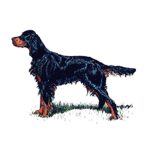
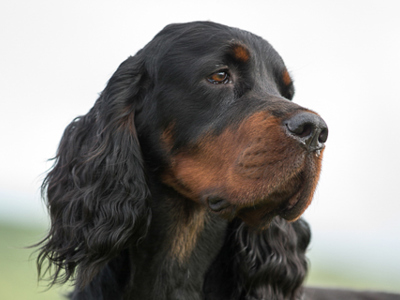
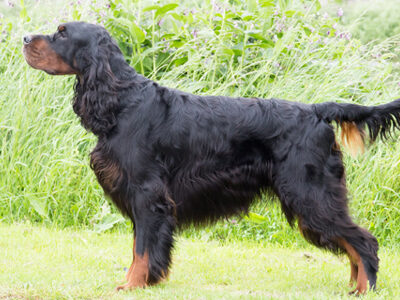
The Gordon Setter gives an immediate impression of strength and style. It has a symmetrical, galloping build, reminiscent of a weight-carrying hunter, emphasizing both power and grace. The breed is always black and tan, with a shining coal-black coat punctuated by rich chestnut markings—this vibrant coloring adds to the breed’s distinctive look.
In size, males stand around 26 inches at the shoulder and weigh about 65 pounds, while females are slightly smaller at 24.5 inches and 56 pounds. Their heads are deep yet finely modeled, with a slightly rounded skull and defined stop. The expressive dark brown eyes are full of intelligence, and their medium-sized, low-set ears gently frame the face.
The Gordon Setter’s body is balanced, with a moderate length back, a level topline, and a deep brisket. Their legs are strong and straight with well-arched, oval feet, suited to long days spent outdoors. The tail is thick at the base, tapering to a fine point and adorned with a silky feathering, carried horizontally or just below the back line.
The breed’s coat is medium in length, flat, and mostly free from wave or curl. The feathering on ears, legs, and underbelly adds an elegant flair. Each detail, from the long, lean neck to the muscular hindquarters, contributes to the Gordon Setter’s athletic yet dignified presence.
Temperament & Behavior
The Gordon Setter embodies a combination of boldness, kindness, and dignity. Around the home, they are known for being outgoing and steady, with a disposition that’s gentle and trustworthy. These dogs often form strong bonds with their entire family, making them affectionate companions who thrive on social connection.
With their roots in the gundog group, Gordon Setters have a keen sense of purpose and can be quick and agile during play or work. They are generally excellent with children and get along with other animals when socialized properly. Early exposure to various people, sights, and sounds helps encourage their naturally friendly nature.
Their intelligence means they are capable of learning complex tasks, but they may sometimes display independence, especially if bored or under-challenged. Engaged owners who provide both mental and physical stimulation will see their Gordon Setter at its best. These dogs benefit from calm and consistent handling and will reward their people with loyalty and enthusiasm.
Gordon Setters rarely show tendencies toward aggression, but they can be reserved with strangers, making them reliable but not overly territorial watchdogs. Their keen senses and sound judgment serve them well in unfamiliar situations, without being prone to nervousness or shyness.
Care & Living Needs for the Gordon Setter
Meeting a Gordon Setter’s needs centers around giving them time, space, and stimulation. They require more than two hours of robust exercise each day, making them ideal for owners who enjoy long walks, hikes, or opportunities for fieldwork and active play. Under-exercised Gordons can become restless, so outdoor activities are essential for their well-being.
This breed is best suited to homes with generous space—a large house with a substantial, secure garden in a rural or semi-rural setting allows the Gordon Setter to enjoy the freedom and adventure it craves. Apartment living or smaller homes are seldom a good match, as limited space can inhibit their natural energy and make regular exercise more challenging.
Grooming the Gordon Setter requires a commitment to regular brushing, ideally more than once a week, to keep its medium-length coat in good condition and free of tangles. The breed does shed, so routine care will help manage loose hair and maintain a neat appearance. Paying attention to the feathering on ears, legs, and underbelly is important, as these areas can mat more easily—particularly after outdoor activities.
Mental engagement is just as vital as physical exercise. Training sessions that tap into their intelligence, scent games, retrieval tasks, and social play will help keep this dog content and fulfilled. Early and positive training helps curb any headstrong tendencies, channeling their drive productively.
This breed is not ideal for low-activity households or those seeking a low-maintenance companion. Owners with limited time, small living areas, or constrained access to outdoor spaces may find it challenging to meet the Gordon Setter’s needs.
Health & Common Issues
The dataset does not specify any particular health issues commonly found in the Gordon Setter. However, as a large, active breed, general health considerations may include maintaining joint health, monitoring weight, and ensuring a balance of exercise and rest to prevent strain or fatigue.
Routine veterinary visits are encouraged to catch any concerns early and to maintain healthy teeth, skin, and coat. Regular grooming and ear care can support overall well-being, especially for a breed with heavier feathering and a love of the outdoors.
Owners should always observe their dog for signs of discomfort, mobility changes, or any persistent health changes, and consult their veterinarian for guidance as needed. Providing a well-balanced diet and plenty of mental and physical activity contributes to long-term vitality, especially since the Gordon Setter is known for a lifespan exceeding ten years.
Official Breed Standard Summary
The official breed standard for the Gordon Setter describes a dog of style, substance, and soundness. This guideline emphasizes the importance of symmetry, balanced proportions, and characteristics that ensure the breed is fit for its original fieldwork function. Key points include a stylish, strong build, expressive dark brown eyes, and the signature black and tan coloring—deep black with rich chestnut red markings laid out in precise patterns.
Movement should be steady, free, and true, with plenty of drive behind. The coat should be flat and mostly free from curl, with long feathering on ears, legs, and underbelly that enhances the Gordon Setter’s graceful outline. Attention to detail in structure—from the arched neck and level back to the powerful hindquarters—ensures capability for covering ground with ease.
The breed standard highlights absolute soundness and the need to avoid exaggerations or conditions detrimental to health. Acceptable size falls within a range, acknowledging that not all individuals conform perfectly to the ideal measurements, and allowing for healthy variation. Only the distinctive black and tan coat and its specific markings are permitted under the standard; any other coloring is not accepted.
Potential faults are considered relative to their impact on function and welfare. The official guidelines encourage breeders and owners to prioritize health, temperament, and the traditional qualities that define the Gordon Setter’s strength and enduring appeal.
Frequently Asked Questions about the Gordon Setter
Is the Gordon Setter good for first-time dog owners?
The Gordon Setter can be a rewarding companion for dedicated first-time owners with an active lifestyle and commitment to training. However, due to their high energy and grooming needs, they may be better suited to owners prepared for the demands of a large, active breed.
How much exercise does a Gordon Setter need daily?
This breed requires more than two hours of exercise every day. Activities like long walks, running, and interactive play are essential for keeping the Gordon Setter happy and healthy.
Is the Gordon Setter good with children?
Gordon Setters are generally kind, gentle, and patient with children—especially when socialized together from a young age. Supervised interactions help ensure positive relationships.
Can the Gordon Setter live in an apartment?
Due to their size, energy level, and need for space, Gordon Setters are not well-suited to apartment living. They do best in large homes with access to a secure, spacious garden in a rural or suburban setting.
How much grooming does a Gordon Setter need?
The breed requires brushing more than once per week to manage its medium-length, feathered coat. Regular maintenance helps control shedding and keeps the dog’s coat and skin healthy.
Are there common health concerns in this breed?
The dataset does not list specific health problems. Like all large breeds, careful attention to exercise, diet, and routine vet care supports good overall health and longevity for the Gordon Setter.


