
What Are the Traits and Care Tips for Greyhounds?
The Greyhound is a celebrated member of the hound group, long admired for its incredible speed, streamlined physique, and gentle temperament. Whether gracing the racetrack or curled up on a family sofa, this breed has a blend of dignity and warmth that appeals to a wide range of owners. Potential Greyhound guardians often appreciate their calm nature indoors and elegant presence, making them both a historic and contemporary favorite.
This breed suits those who appreciate a companion with dignity, keen intelligence, and a soft, affectionate side. Active singles, couples, or families with space to accommodate a large dog will find much to love in the Greyhound. Their moderate exercise needs and easy-going temperament allow them to shine as versatile companions, while their history as both hunters and racers brings a special grace to everyday life.
- Overview of the Greyhound
- Key Characteristics
- Appearance of the Greyhound
- Temperament & Behavior
- Care & Living Needs
- Health & Common Issues
- Official Breed Standard Summary
- Frequently Asked Questions
Group: Hound
Size: Large
Exercise needs: Up to 1 hour per day
Coat length: Short
Grooming: Once a week
Shedding: Yes
Lifespan: Over 10 years
Ideal home type: Large house
Town or country: Either
Garden needs: Large garden
Overview of the Greyhound
The Greyhound has a rich cultural legacy, with roots tracing back to hounds depicted on the walls of Ancient Egyptian tombs. Sighthounds of this type traveled across continents, eventually gaining prominence in Europe where their athleticism and sharp vision made them prized hunting partners for royalty and nobility. Their popularity led to their selection as exclusive companions for the upper classes during the Middle Ages, emphasizing their prestige as a breed of distinction.
Originally developed in Britain, Greyhounds were bred specifically for their prowess in coursing and later for their speed on the racetrack. The breed’s smooth, aerodynamic build and acute senses allowed these dogs to chase down game with impressive agility and stamina. Today’s show Greyhounds differ somewhat from those seen on racing tracks, being generally larger and more substantial in build. Despite this, they retain the breed’s signature elegance and athleticism.
Modern Greyhounds are well-suited to a variety of homes, thriving with owners who can provide gentle guidance, a spacious environment, and regular but moderate exercise. Their affectionate demeanor and minimal grooming requirements make them accessible to both seasoned dog owners and enthusiasts looking for a unique, loving family companion.
Key Characteristics
- Energy level – Moderate; bursts of speed when outdoors, calm and relaxed at home.
- Trainability – Responds well to positive reinforcement; learns routines quickly, though can be independent minded.
- Intelligence – Highly intelligent and quick to pick up on both cues and household routines.
- Prey drive – Strong; their heritage as sighthounds means a natural instinct to chase small animals.
- Social needs – Enjoys companionship with people and, often, with other dogs too.
- Compatibility with families and children – Gentle and affectionate, typically integrates well with respectful children.
- Compatibility with other dogs – Usually gets along with other dogs, especially of similar size; caution with small pets due to prey drive.
- Guarding or watchdog tendencies – Not natural guard dogs; tends to be more reserved and dignified.
- Adaptability to city or country life – Thrives in both environments with adequate space and exercise opportunities.
- Best suited owner type – Suits owners who prefer calm companionship, have secure outdoor space, and appreciate an affectionate but not clingy dog.
- Typical daily routine – Enjoys a brisk walk or play session, followed by long periods of restful lounging indoors.
Appearance of the Greyhound
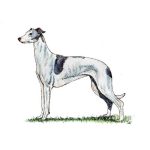
The Greyhound is renowned for its sleek, powerful build and generous proportions. This breed features a long, streamlined head set on an elegantly arched, muscular neck. Its deep chest and capacious body afford ample heart room, essential for the endurance that makes this breed so unique. The back is typically long and square, with a slightly arched loin lending an athletic profile.
Standing tall and graceful, Greyhounds present a silhouette that is both muscular and refined. Males typically reach an ideal height of 28 to 30 inches (71–76 cm), while females measure about 27 to 28 inches (69–71 cm). Their forelegs are long and straight, and powerful hindquarters showcase their defining propulsion and speed. Compact, well-knuckled feet and strong pads aid in their efficient, ground-covering stride.
The breed’s coat is short, fine, and close, emphasizing their clean lines. Greyhounds come in a striking palette of colors, including black, white, red, blue, fawn, brindle, and various combinations with white. The tail is long, tapering, and carried with a gentle curve. With their bright, intelligent eyes and classic rose-shaped ears, Greyhounds carry themselves with a calm dignity and unmistakable poise.
Temperament & Behavior
Greyhounds are cherished for their intelligent, gentle, and even-tempered nature. When at home, they often display an affectionate yet dignified personality—content to relax quietly by their family’s side, enjoying a calm environment. These dogs tend to form close bonds with their people, expressing loyalty and a soft, welcoming disposition.
Their group legacy as sighthounds brings with it a remarkable sense of independence and sharp awareness of their surroundings. While they retain a strong prey drive, especially outdoors, they seldom exhibit aggression and are generally trustworthy and composed companions. This makes them suitable for both solo owners and families, provided that young children interact respectfully and supervision is given around small pets.
Greyhounds are notably social, valuing gentle human attention and often enjoying the company of other dogs. They are not typically prone to guarding or watchdog behaviors, instead presenting a reserved and quietly confident demeanor. This trait, alongside their love of routine and restful habits indoors, makes them easygoing yet reliable additions to many households.
Their stamina and endurance, honed over centuries, combine with an intelligent, adaptable character. Owners should be prepared to offer gentle, consistent leadership, as Greyhounds respond best to positive reinforcement and patient training.
Care & Living Needs for the Greyhound
Exercise is an important aspect of Greyhound care, but the requirements are moderate compared to their athletic history. A daily walk or opportunities for safe, short bursts of running can fulfill their physical needs. Greyhounds thrive in large houses with secure, spacious gardens, yet adapt well to both town and country living as long as their exercise needs are met.
Their short, fine coats make grooming a straightforward affair—usually a weekly brushing to manage shedding and maintain coat health. As a breed that does shed, regular but brief grooming sessions can keep fur under control. Their skin is somewhat delicate, so gentle grooming and a comfortable indoor environment are important.
Mental enrichment is just as crucial as physical activity. Basic obedience, puzzle toys, or low-impact games are excellent for keeping them mentally satisfied. Positive, gentle training methods work well thanks to their sensitivity and desire to please.
Greyhounds are best suited to owners who appreciate calm, composed pets and can provide a safe environment for their occasional energetic dashes. They are less ideal for those seeking a rough-and-tumble playmate for very young children or looking for a highly active companion for all-day hiking. Their independent streak means they appreciate both companionship and time to relax quietly, making them a balanced choice for a variety of homes.
Health & Common Issues
Greyhounds are generally robust and can enjoy lengthy, healthy lives when cared for appropriately. Their athletic build and genetic selection for soundness contribute to their overall vitality. Regular veterinary care, balanced exercise, and proper nutrition help maintain optimal health throughout their lifespan.
Their short coats and lean bodies mean they are more sensitive to temperature extremes, particularly cold weather. Owners should provide adequate warmth during chilly months and avoid extended periods outdoors in harsh conditions. The breed also benefits from soft bedding to prevent pressure sores due to their minimal body fat.
Routine dental care, weight management, and monitoring for injuries, especially to joints and feet, are wise practices. Consistent observation and preventative care are the best ways to keep a Greyhound happy, active, and comfortable at home.
Official Breed Standard Summary
The official breed standard for the Greyhound sets forth a detailed vision of the ideal dog in terms of appearance, temperament, and suitability for its historic roles. The standard places high value on both absolute soundness and overall well-being, cautioning breeders and judges to avoid any exaggerations or features that might be detrimental to the breed’s health and function.
The Greyhound should appear strong, muscular, and upstanding, with generous proportions and a harmonious, symmetrical outline. A long head, slightly arched neck, deep chest, powerful hindquarters, and a long, slender tail are signature elements. Size is ideally 28–30 inches for males and 27–28 inches for females, though some variation is acceptable. The gait emphasizes straight, low-reaching strides that cover ground efficiently and reflect the breed’s legacy as a swift coursing hound.
The coat is fine, short, and close, presented in a wide array of colors including black, white, blue, red, fawn, brindle, and various combinations with white. Any other color or combination outside of these is regarded as unacceptable under the standard. Attention is also given to teeth alignment, with a perfect scissor bite being desirable.
The standard also notes that any deviation from these ideal traits should be considered in proportion to its impact on the health and welfare of the dog. The standard serves as a guide for both appearance and temperament, not as a rigid requirement, allowing for some natural variation within the breed.
Frequently Asked Questions about the Greyhound
Is the Greyhound good for first-time dog owners?
Greyhounds can be a great choice for first-time owners who appreciate a calm, gentle companion. Their low grooming and moderate exercise needs, combined with their affectionate nature, make them accessible to new dog guardians willing to provide a safe, structured home.
How much exercise does a Greyhound need daily?
Most Greyhounds are content with up to one hour of daily exercise, including brisk walks and the occasional sprint in a secure area. Despite their history as racers, they tend to be relaxed indoors and do not require intense, prolonged activity.
Is the Greyhound good with children?
Greyhounds are typically gentle and affectionate, making them suitable for families with respectful children. As with all large dogs, supervision and teaching children proper interaction are important to ensure harmony.
Can the Greyhound live in an apartment?
While Greyhounds prefer spacious homes with large gardens, they can adapt to apartment living if provided with daily exercise and soft places to rest. Secure walks and proper enrichment help maintain their well-being in smaller spaces.
How much grooming does a Greyhound need?
Grooming needs are minimal with the Greyhound’s short coat. A weekly brushing is usually sufficient to remove loose hair and keep their skin healthy. Regular checks for skin abrasions are recommended due to their delicate skin.
Are there common health concerns in this breed?
The Greyhound is generally healthy when cared for responsibly. Basic attention to weight, dental hygiene, and sensitivity to temperature changes are the main considerations; regular veterinary visits are encouraged to maintain long-term health.


