Hungarian Vizsla: a short coat and a busy shared routine
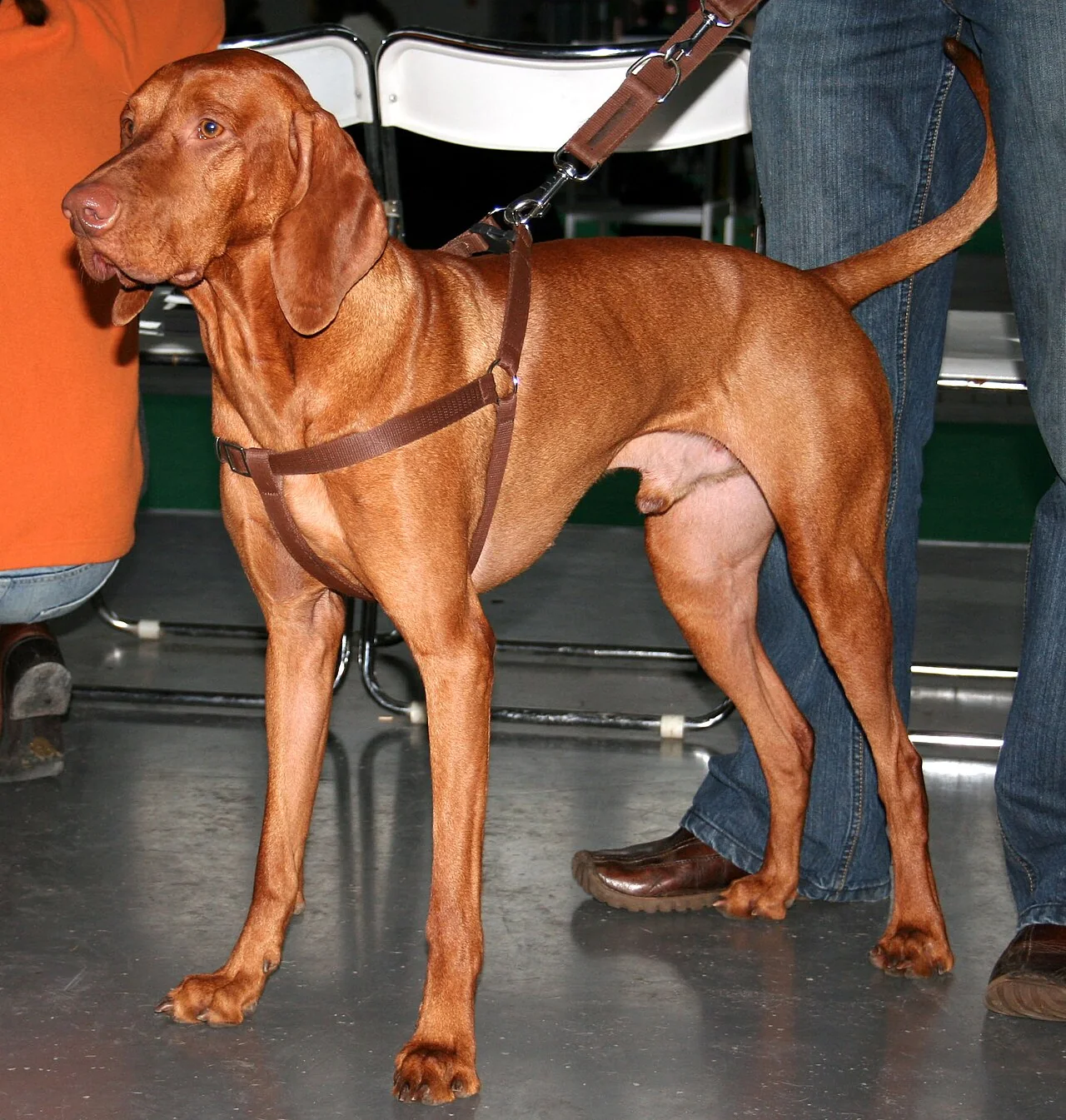
The Hungarian Vizsla’s short russet-gold coat covers a lean, moderately built frame. The coat itself takes relatively little work, while daily physical and mental activity needs a deliberate plan. There is still shedding, ear care and nail care behind the sleek appearance.
A lean outline without undercoat
The FCI gives shoulder heights of 58–64 cm for males and 54–60 cm for females, with balance more important than simply increasing size. The earlier UK ranges begin 1 cm lower, at 57 cm and 53 cm, and add an unsexed 20–30 kg weight range. The FCI provides no numerical weight here.
Body length slightly exceeds height. The FCI describes short, dense, hard hair and no undercoat; the UK guide describes a smooth, shiny coat with a greasy feel. The head and ears have finer hair than the body.
Simple tools, several small jobs
The AKC recommends occasional use of a rubber grooming brush to remove loose hair. When dirty, it suggests a lukewarm bath with dog shampoo and thorough rinsing. The UK grooming category is weekly, which provides a regular opportunity to look over the coat.
Keep nails short and check ears frequently for dirt, wax or irritation. The same guide includes regular dental cleaning with products made for dogs. These jobs remain part of care even when there is no long feathering to comb.
Activity changes as the dog grows
The UK category is more than two hours daily, with a large house and garden in town or country. The AKC describes individual variation, walks, fetch, opportunities to run and mental exercise. Its thirty-minute minimum is not equivalent to the UK category. For young Vizslas it advises waiting until maturity, about 18–24 months, before long-distance running.
Compare the two Vizsla coats
The Wirehaired Vizsla has a more robust build, dense undercoat and 2–3 cm wiry outer hair in its FCI description. The German Shorthaired Pointer also has short hair but a different coat description and brushing-every-few-days routine. Compare the exercise and care advice of each rather than assuming one short-haired routine fits them all.
Sources and further reading
Hungarian Vizsla at a glance
These earlier UK breed guides are starting points for comparison. Details may have changed, and individual dogs vary.
- Breed group
- Gundog
- Size
- Large
- Daily exercise
- More than 2 hours per day
- Grooming frequency
- Once a week
- Coat length
- Short
- Sheds
- Yes
- Suggested home size
- Large house
- Town or country
- Town or country
- Garden recommendation
- Large garden
- Lifespan
- Over 12 years
FCI breed standard
Standard guidance describes the breed ideal; individual dogs vary.
- Origin
- Hungary
- Group
- 7 - Pointing Dogs
- Section
- 1 - Continental Pointing Dogs
- Height
- Males: 58–64 cm; Females: 54–60 cm
- Weight
- Not specified in this standard
This is the short-haired Vizsla with no undercoat. FCI gives height but no weight; overall balance and symmetry take priority over increasing height.
Official FCI standard (PDF)
Standard effective from 2000-04-06; checked 2026-10-15