Nova Scotia Duck Tolling Retriever: a compact retriever with a double coat
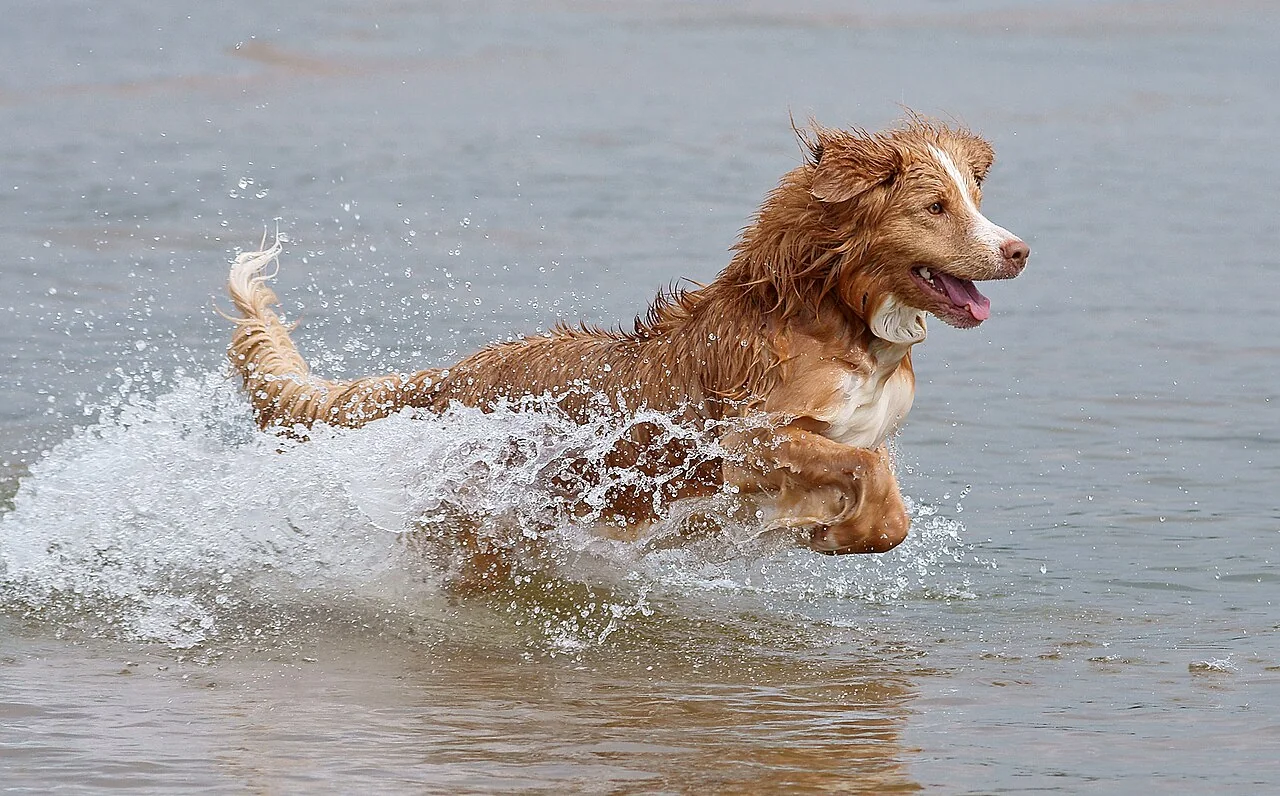
The Nova Scotia Duck Tolling Retriever, usually called the Toller, has a compact, muscular outline and a feathered tail. Its medium-length double coat has a softer, dense undercoat beneath the outer hair. The FCI description includes red and orange shades with lighter feathering.
A smaller outline still has feathering
The body coat is generally straight, with a slight wave allowed along the back. Longer hair forms feathering at the throat, behind the ears and on the rear of the thighs, with more moderate feathering on the forelegs. This gives a different outline from the Labrador’s short coat without feathering.
Time and space in the earlier UK guide
The UK guide places the Toller in the medium category, compared with large for the other five retrievers here. It lists a small house and small or medium garden, with town or country in the location entry.
Its exercise category is up to one hour a day, but grooming is still more than once a week. The smaller size and different exercise category do not establish that it is easier to keep; use these earlier entries as starting points for thinking about your own space and time.
Compare adult figures with adult figures
The FCI height ideals apply to dogs over 18 months: 48–51 cm for males and 45–48 cm for females, with a separate 2.5 cm allowance above or below. These are not puppy measurements.
The adult weight guidelines are 20–23 kg for males and 17–20 kg for females, in proportion to height and bone. Compare with the Labrador for the coat and UK care categories, or the Golden for another feathered double coat.
Sources and further reading
Retriever (Nova Scotia Duck Tolling) at a glance
These earlier UK breed guides are starting points for comparison. Details may have changed, and individual dogs vary.
- Breed group
- Gundog
- Size
- Medium
- Daily exercise
- Up to 1 hour per day
- Grooming frequency
- More than once a week
- Coat length
- Medium
- Sheds
- Yes
- Suggested home size
- Small house
- Town or country
- Town or country
- Garden recommendation
- Small / medium garden
- Lifespan
- Under 10 years
FCI breed standard
Standard guidance describes the breed ideal; individual dogs vary.
- Origin
- Canada
- Group
- 8 - Retrievers-Flushing Dogs- Water Dogs
- Section
- 1 - Retrievers
- Height
- Males: Ideal: 48–51 cm for dogs over 18 months; Females: Ideal: 45–48 cm for dogs over 18 months; 2.5 cm above or below the ideal is allowed
- Weight
- Males: Adults: guideline: 20–23 kg; in proportion to height and bone; Females: Adults: guideline: 17–20 kg; in proportion to height and bone
Official FCI standard (PDF)
Standard effective from 1987-06-24; checked 2026-10-15