
What Are the Traits and Care Requirements of the Bavarian Mountain Hound?
The Bavarian Mountain Hound is a medium-sized scent hound bred specifically for tracking wounded game across rugged mountain terrain. Best suited for active individuals or families who appreciate time outdoors, this dog is an excellent choice for those with a rural lifestyle, ample space, and a strong commitment to exercise. With their roots in hunting, these hounds bring stamina and a highly developed sense of smell, making them persistent and reliable both as working dogs and loyal companions.
Although highly athletic and driven, the Bavarian Mountain Hound is also noted for its calm and biddable nature at home. It tends to form deep bonds with its owner and thrives in environments where it can put its tracking instincts to use, whether as a dedicated working partner or active household member. For those seeking a devoted, energetic, and intelligent dog with a mild-mannered temperament, this breed offers a rewarding—and sometimes adventurous—canine partnership.
- Overview of the Bavarian Mountain Hound
- Key Characteristics
- Appearance of the Bavarian Mountain Hound
- Temperament & Behavior
- Care & Living Needs
- Health & Common Issues
- Official Breed Standard Summary
- Frequently Asked Questions
Group: Hound
Size: Medium
Exercise needs: More than 2 hours per day
Coat length: Short
Grooming: Once a week
Shedding: Yes
Lifespan: Over 10 years
Ideal home type: Small house
Town or country: Country
Garden needs: Large garden
Overview of the Bavarian Mountain Hound
Originating from the mountainous regions of Germany, the Bavarian Mountain Hound was purpose-bred to track down wounded game over challenging terrain. Its ancestry is closely linked to the Hanoverian Hound, with the Bavarian developed as a slightly smaller, more agile version adapted for steep and wooded environments. Agility, perseverance, and a keen sense of smell have always been hallmarks of the breed, making it an indispensable asset to hunters requiring reliable tracking skills.
The breed’s development focused on producing a dog capable of working reliably on a leash through demanding landscapes. This required not only athleticism and endurance, but also a calm, controlled temperament and a singular focus on the task at hand. While their roots are firmly in the working world, today’s Bavarian Mountain Hounds are valued not only by hunters but also by active families who can offer consistent activity and an environment where their talents are appreciated.
These hounds are not idle companions. They are best matched with owners who can give them a rural or semi-rural setting, plenty of room to roam, and regular outlets for their mental and physical energy. Those with a keen interest in hiking, running, or scent-based activities will find the Bavarian Mountain Hound an eager and trustworthy partner.
Key Characteristics
- Energy level – The Bavarian Mountain Hound has high exercise requirements, needing more than two hours of daily physical activity.
- Trainability – Intelligent and biddable, this breed responds well to consistent, positive training methods and rewards.
- Intelligence – Highly perceptive with a strong work ethic, especially in scent-related tasks.
- Prey drive – As a scent hound, it possesses a notable prey drive and natural tracking instincts.
- Social needs – Forms tight bonds with its owner and family but is typically reserved with unfamiliar people.
- Compatibility with families and children – Calm and devoted, these hounds can thrive in an active family, especially when properly socialized from an early age.
- Compatibility with other dogs – Usually coexists well with other canines, particularly those raised together or within a pack setting.
- Guarding or watchdog tendencies – More reserved than overtly protective, but their alertness makes them reliable at noticing unfamiliar events.
- Adaptability to city or country life – Best suited to country environments; not ideal for dense urban settings or small apartments.
- Best suited owner type – Owners with outdoor lifestyles, access to large gardens or countryside, and experience with active dogs.
- Typical daily routine – Involves long exercise sessions, mental stimulation through scent games, and steady companionship throughout the day.
Appearance of the Bavarian Mountain Hound
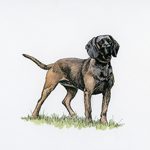
The Bavarian Mountain Hound presents a balanced, athletic silhouette with a slightly elongated body in proportion to its height. Medium in size, the breed displays both agility and strength—its frame is built for endurance and power without becoming too heavy or cumbersome. Males typically stand between 18½ and 20½ inches at the withers, while females are slightly smaller, ranging from 17½ to 19 inches. All individuals display a build characterized by muscularity and lightness, which supports their outstanding mobility in difficult terrain.
The head of the Bavarian Mountain Hound is broad and slightly arched, featuring a well-defined stop and a straight or subtly convex muzzle that is neither pointed nor narrow. Their eyes are medium-sized, expressive, and generally dark brown, conveying alertness and depth. Ears are of medium length, set moderately high, broad, and rounded at the tips, hanging close and flat against the head.
The breed’s coat is one of its defining features: dense, close-fitting, and moderately harsh to the touch, though finer along the head and ears. Coat colors range from shades of deer red, tan, and fawn, sometimes interspersed with black hairs or brindle patterns. Often, the back and tail show a more intense coloration, while the muzzle and ears are darker. Occasional small, light-colored patches on the chest are permissible.
Forequarters and hindquarters are both robust and well-muscled, contributing to the breed’s efficient, springy gait. The tail is set high, tapering, and carried either level with or just below the back. Feet are oval, strong, and well-arched, equipped to cushion the impact of long walks over rough ground.
Temperament & Behavior
At home, the Bavarian Mountain Hound is known for its calm, composed demeanor and devoted loyalty to its owner. This breed is biddable and responsive, especially when there is clear direction and a predictable routine. Despite a very energetic nature outdoors, they often settle down well when inside, provided their exercise needs have been met.
This hound is naturally reserved around strangers but never displays shyness or aggression when properly socialized. Its roots as a working dog have cultivated a sense of self-assurance without brashness. Within the family unit, the Bavarian Mountain Hound is affectionate and forms strong bonds, making them trustworthy companions.
Their strong instincts for scent work and tracking mean they are most at ease when given a job to do or when part of structured outdoor activities. While gentle and patient with children, early socialization is important to ensure their calmness extends to all family members. Their even temperament allows them to get along with other dogs, especially within familiar environments or breed groups.
Owners should keep in mind that, as with many hounds, a Bavarian Mountain Hound’s persistence and single-mindedness on a scent can sometimes translate to stubbornness in other contexts. Patient, positive training and regular opportunity for enrichment will help channel these tendencies productively.
Care & Living Needs for the Bavarian Mountain Hound
The Bavarian Mountain Hound thrives on high levels of daily activity. More than two hours of exercise are ideal, including opportunities for long walks, hiking, or interactive scent games. Their stamina is impressive, and without enough to do, they may become restless or bored. Space is key: a large, securely fenced garden offers the freedom they need between official walks, and overall, these dogs do best in rural areas or properties with direct outdoor access.
When it comes to the ideal home, this breed can be comfortable in a small house if daily adventures are on the agenda and there is a sizable garden to roam. The Bavarian Mountain Hound is not well suited for apartment living or urban environments where opportunities to run and explore are limited. Their countryside heritage and love for open spaces make these dogs happiest when there is plenty to see, sniff, and discover.
Grooming the Bavarian Mountain Hound is straightforward—brushing once a week is typically sufficient to manage shedding and keep the coat healthy. The short, dense coat repels most dirt and dries quickly, requiring only minimal maintenance. Regular checks of the ears, nails, and feet are helpful, especially for dogs who spend a lot of time outdoors.
Mental stimulation is as important as physical activity. Training sessions that focus on scent detection or structured problem-solving exercises will keep the Bavarian Mountain Hound engaged. Owners who cannot provide significant daily exercise or who live in busy city environments may not find this breed to be an ideal fit. This is a dog best matched with those committed to an active, outdoor-centered lifestyle.
Health & Common Issues
The Bavarian Mountain Hound is generally a robust breed, noted for a lifespan of over ten years. With balanced exercise, good nutrition, and routine veterinary care, most individuals enjoy a healthy and active life.
No breed-specific health tendencies or issues are highlighted for the Bavarian Mountain Hound in the official guidance provided. Like all dogs, regular vet checkups are important to monitor for changes in weight, dental health, and general well-being. As an energetic, muscular breed, it also benefits from joint care and appropriate exercise to avoid strain or overuse injuries.
Their short, dense coat is typically low maintenance, but regular brushing and observation for signs of skin irritation or ear problems—often associated with hanging ears—are sensible precautions. Attention to these basics, along with a balanced and active routine, supports the longevity and quality of life that the breed is known for.
Official Breed Standard Summary
The official breed standard for the Bavarian Mountain Hound outlines the ideal blend of form and function. This medium-sized scent hound is well muscled, with a slightly longer body relative to its height. The breed should display both agility and strength, with a topline that rises subtly to a long, level croup, and a balanced, moderately light build.
Movement is described as light and springy, covering ground efficiently with good reach in the front and powerful drive from the rear. The coat is dense, close fitting, and of moderate harshness, with coloration ranging from deer red and tan to fawn, sometimes overlaid with black hairs or brindle. A more intense shade along the back and tail is typical, and a small, pale chest patch is acceptable under the standard.
Height at the withers is specifically stated: males should be 47 to 52 centimeters (about 18½–20½ inches) and females 44 to 48 centimeters (17½–19 inches). Faults are judged in proportion to their impact on the dog’s health, welfare, or soundness, and a balanced, natural appearance—without exaggeration—remains a top priority.
The breed standard also notes that size guidelines are targets but dogs may be larger or smaller in practice, and it underscores the importance of health and functional conformation above all else.
Frequently Asked Questions about the Bavarian Mountain Hound
Is the Bavarian Mountain Hound good for first-time dog owners?
While this breed is intelligent and devoted, it thrives with experienced owners who can meet its significant exercise and mental stimulation needs. First-time owners may find the breed’s activity requirements and tracking instincts challenging without previous experience.
How much exercise does a Bavarian Mountain Hound need daily?
This breed requires more than two hours of exercise each day, ideally including walking, running, and scent-based activities. Long, varied exercise keeps them healthy and happy.
Is the Bavarian Mountain Hound good with children?
The Bavarian Mountain Hound is calm, devoted, and patient, making it a good match for children in active families. Early socialization and supervision around young children help ensure positive interactions.
Can the Bavarian Mountain Hound live in an apartment?
This breed is best suited to homes with direct access to large, secure gardens and the countryside. Apartment living and city environments typically do not provide the space and exercise opportunities this energetic hound needs.
How much grooming does a Bavarian Mountain Hound need?
Weekly brushing is usually enough to keep their short, dense coat in good condition. Shedding is moderate and regular attention helps control loose hair in the home.
Are there common health concerns in this breed?
There are no widely recognized, breed-specific health concerns for the Bavarian Mountain Hound. Regular veterinary care, sensible exercise, and attention to diet and hygiene support a healthy, active life.


