
What Are the Traits and Care Tips for Bernese Mountain Dogs?
The Bernese Mountain Dog is a strikingly beautiful and large working breed with deep roots in the Swiss Alps. Known for their calm temperament and versatility, these dogs have traditionally served as farm helpers, family companions, and even parade participants in their home country. Their gentle personality and loyalty make them well-suited to homes looking for both a devoted friend and a reliable, steady guardian.
This breed thrives in active families or with owners who can accommodate their exercise needs and passion for outdoor life. While the Bernese Mountain Dog’s affectionate and mild demeanor is a huge draw for many households, their size and grooming requirements mean they are best matched with those ready to commit time and energy to their care.
- Overview of the Bernese Mountain Dog
- Key Characteristics
- Appearance of the Bernese Mountain Dog
- Temperament & Behavior
- Care & Living Needs
- Health & Common Issues
- Official Breed Standard Summary
- Frequently Asked Questions
Group: Working
Size: Large
Exercise needs: Up to 1 hour per day
Coat length: Medium
Grooming: More than once a week
Shedding: Yes
Lifespan: Under 10 years
Ideal home type: Large house
Town or country: Either
Garden needs: Large garden
Overview of the Bernese Mountain Dog
The Bernese Mountain Dog has its origins in the agricultural heartland of Switzerland, particularly the canton of Berne. Historically, this breed played a crucial role on farms, undertaking demanding tasks such as pulling carts filled with dairy or textiles and managing herds of cattle and sheep. Their strength, stamina, and willingness to work made them invaluable helpers for Swiss farmers and craftspeople.
Although today’s Bernese Mountain Dog is most commonly found as a treasured family companion, their working heritage shines through in their eagerness to participate in activities and serve their owners dutifully. In their homeland, it is not uncommon to see these dogs in regional festivals, proudly pulling carts alongside their traditionally dressed owners. Their deep connection to Swiss culture is evident in their striking tri-color coat, which includes markings said to resemble the iconic Swiss cross.
Ideal for active individuals or families who can provide both physical and mental engagement, the Bernese Mountain Dog is happiest with space to move and a role to fill. Their size and strength require thoughtful management, but their sensitivity and trainability reward patient, dedicated owners.
Key Characteristics
- Energy level – Moderate; needs daily exercise but also enjoys downtime with the family.
- Trainability – Learns well with gentle guidance and consistency; responds best to positive reinforcement.
- Intelligence – Highly intelligent, with an aptitude for problem-solving and complex tasks.
- Prey drive – Generally low, as the breed was developed more for working alongside livestock rather than hunting.
- Social needs – Thrives on companionship, forming close bonds with people and adapting well to family life.
- Compatibility with families and children – Known for their kind and tolerant nature with young and old alike.
- Compatibility with other dogs – Typically sociable with other dogs, especially if well socialized from an early age.
- Guarding or watchdog tendencies – Calm and alert, can serve as a gentle deterrent without being aggressive.
- Adaptability to city or country life – Can adapt to various environments if their need for exercise is met, but much prefers country living or homes with large gardens.
- Best suited owner type – Active families or individuals who have ample living space and enjoy outdoor activities.
- Typical daily routine – Combines outdoor routines like walking or playing with plenty of quality family time indoors.
Appearance of the Bernese Mountain Dog
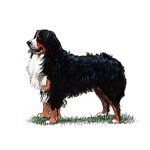
The Bernese Mountain Dog leaves a memorable impression with its large, sturdy stature and striking tricolor pattern. This breed is generously boned and well-muscled, emphasizing its background as a draught and farm dog. Males typically stand between 25 and 27.5 inches tall, while females are slightly more compact, ranging from 23 to 26 inches at the shoulder. The body is compact but not squat, balanced with a broad chest, strong loins, and a firm, straight back.
Distinctive facial features include a strong, flat skull with a slight furrow and a broad, straight muzzle. The breed’s dark brown, almond-shaped eyes convey a gentle, intelligent expression, while the medium-sized, triangular ears are set high and lie flat when relaxed, adding to their approachable appearance. The jaws are strong, with a classic scissor bite and well-developed lips.
The neck is muscular and of medium length, providing a proud, elegant carriage. Moving down, the front assembly is marked by sloping, muscular shoulders and straight forelegs. Hindquarters are equally robust, featuring broad, well-muscled thighs and correctly angulated stifles and hocks. The feet are compact and round, providing stability and endurance over varied terrain.
A full, bushy tail with a white tip is characteristic, reaching just below the hock and carried aloft when the dog is alert, but never tightly curled over the back. The coat is one of the breed’s highlights: long, silky, and with a bright, natural sheen. Slightly wavy, the fur should never curl when mature. Color is essential—a deep jet black base with rich reddish-brown on the cheeks, legs, over the eyes, and chest, combined with clear white markings, including a blaze on the head and the Swiss “cross” on the chest. Symmetry in markings is highly regarded.
Temperament & Behavior
The Bernese Mountain Dog is defined by its calm, self-confident, and good-natured disposition. This breed is neither fearful nor aggressive; instead, it presents a friendly and fearless demeanor that makes it a delightful member of any household. Their reputation as multi-purpose farm dogs has fostered a temperament rooted in reliability, patience, and devotion to both work and family.
These dogs are eager to please, developing strong, affectionate bonds with their people. They tend to be especially gentle and tolerant with children, making them popular in family environments. Their slow-to-mature character means that youthful exuberance may persist longer than in other breeds, and their overall sensitivity means they thrive best in calm, structured homes where kindness prevails.
Interactions with other animals, including other dogs, are typically smooth and pleasant if the Bernese Mountain Dog is well socialized from an early age. While they can be protective and alert to new people or changes in their environment, they rarely display aggression and are not prone to territorial or dominant behavior. Their working background aligns them with breeds renowned for heroism and practical intelligence, such as the Boxer and St. Bernard, making them well-attuned to household life yet always ready for a purposeful job.
Owners should be aware that these dogs crave companionship and may develop separation issues if left alone for extended periods. Their intuitive sense of family makes them happiest when included in daily routines and activities.
Care & Living Needs for the Bernese Mountain Dog
Despite their imposing size, the Bernese Mountain Dog is not overwhelmingly demanding when it comes to exercise. About an hour of activity per day suits most individuals, encompassing walks, play sessions in a securely fenced area, and opportunities to stretch their legs in a large garden. These dogs excel in environments where they can explore, pull carts, or engage in practical tasks, but they are generally content with active family life and regular outdoor outings.
Housing considerations are key: the Bernese Mountain Dog is best suited to spacious homes, ideally with direct access to a large yard or garden. While they can adapt to quieter town environments, they feel most at home in the country or anywhere with space to move and fresh air to breathe. Apartment living is usually not well-suited for this breed due to their size and exercise requirements.
Grooming the Bernese Mountain Dog requires dedication. With a medium to long soft, silky coat that sheds throughout the year, brushing more than once a week is essential to prevent mats and manage loose hair. Seasonal shedding can be particularly heavy, so regular grooming is a must. Occasional baths and attention to ears and nails round out the coat care regimen.
Training should focus on positive reinforcement, patience, and consistency. As intelligent dogs that thrive on routine and purpose, they respond best to owners who provide clear expectations and gentle correction. Mental enrichment, such as nose work, obedience exercises, or simple cart-pulling, will help keep them engaged. Families and homes who cannot offer both time and space for this dog’s needs, or who wish to avoid significant shedding, might consider other breeds.
Health & Common Issues
The Bernese Mountain Dog is considered a robust and sturdy breed, but like all large dogs, benefits from attentive care and regular veterinary visits. Regular check-ups are the best way to monitor their general health and to catch any concerns early.
The breed’s thick coat calls for consistent grooming to keep skin and fur healthy and to help identify any skin irritations or abnormalities. Owners should aim to keep their Bernese Mountain Dog at a healthy weight, as excess pounds can put strain on joints and bones, which is especially important in larger breeds.
Balanced exercise routines that pair moderate daily activity with rest support both joint health and mental well-being. Whenever possible, offering varied forms of exercise such as walking, running in open spaces, or even traditional draught work can keep your Bernese fit and content.
Official Breed Standard Summary
The official breed standard for the Bernese Mountain Dog sets forth a detailed guideline for appearance, temperament, and functionality. The ideal Bernese is a strong, agile, and active working dog, noted for its classic black, tan, and white coloration and striking physical presence. This standard outlines that absolute soundness and well-being should never be compromised for exaggerated features, and both breeders and judges are encouraged to prioritize the health and welfare of each individual dog.
Height typically ranges from 25 to 27.5 inches for males and 23 to 26 inches for females, with the body slightly longer than tall, compact, and balanced. The preferred color is jet black with vibrant rust and white markings, particularly distinct on the face and chest in a symmetrical pattern. The coat is long, silky, and slightly wavy, with a healthy sheen.
The breed’s movement is described as balanced and powerful, with strides that cover ground efficiently both at work and in the show ring. Any deviation from standard, especially those that might impact soundness or health, should be considered faults to the extent they affect the dog’s quality of life. Males should have two fully descended, normal testicles.
The breed standard provides guidance for ideal size, highlighting that dogs may fall above or below the range while still embodying the breed’s essential characteristics. The focus remains on producing dogs that are fit for purpose, with characteristic features present in appropriate measure and free from unhealthy exaggeration.
Frequently Asked Questions about the Bernese Mountain Dog
Is the Bernese Mountain Dog good for first-time dog owners?
The Bernese Mountain Dog can be suitable for dedicated first-time owners who are prepared for their size, grooming needs, and exercise requirements. Their gentle temperament and desire to please make training manageable, especially with patience and consistency.
How much exercise does a Bernese Mountain Dog need daily?
They typically need up to one hour of exercise each day. A combination of walks, playtime in a fenced yard, and mental enrichment keeps them physically and mentally satisfied.
Is the Bernese Mountain Dog good with children?
Yes, this breed is renowned for being kind, gentle, and patient with children. Their friendly nature and strong bond with families make them excellent companions for young ones.
Can the Bernese Mountain Dog live in an apartment?
Due to their large size and need for space, Bernese Mountain Dogs are usually not well-suited to apartment living. They thrive best in spacious homes with a large garden or direct access to outdoor areas.
How much grooming does a Bernese Mountain Dog need?
They require more than once-a-week brushing to manage shedding and prevent mats. Regular grooming also helps maintain their soft, silky coat and keep them looking and feeling their best.
Are there common health concerns in this breed?
While no specific health concerns are detailed here, regular veterinary visits, weight management, and well-balanced exercise are important for maintaining the health of a large breed like the Bernese Mountain Dog. Attentive care is key to supporting their longevity and well-being.


