
What Are the Traits and Care Tips for Boston Terriers?
The Boston Terrier stands out as an adaptable, affectionate, and lively small breed, making it a favorite choice for individuals and families seeking a cheerful canine companion. With its charming tuxedo-style markings and manageable size, the Boston Terrier slips easily into various lifestyles, from city apartments to cozy suburban homes. This breed’s intelligent and determined nature, combined with a people-oriented personality, endears it to dog enthusiasts looking for a spirited but trainable household member.
Boston Terriers have a rich heritage rooted in American history and are commonly valued for their companionship and gentle disposition. Their compact structure, low grooming needs, and stable temperament make them a practical choice for many situations, especially for those with limited space or busy schedules. Whether sharing quiet evenings at home or accompanying their owners on daily strolls, Boston Terriers blend seamlessly into family life while bringing their own playful energy to the home.
- Overview of the Boston Terrier
- Key Characteristics
- Appearance of the Boston Terrier
- Temperament & Behavior
- Care & Living Needs
- Health & Common Issues
- Official Breed Standard Summary
- Frequently Asked Questions
Group: Utility
Size: Small
Exercise needs: Up to 1 hour per day
Coat length: Short
Grooming: Once a week
Shedding: Yes
Lifespan: Over 10 years
Ideal home type: Flat/ Apartment
Town or country: Either
Garden needs: Small/ medium garden
Overview of the Boston Terrier
The Boston Terrier traces its origins to the city of Boston, Massachusetts, where its development as a distinct breed began in the late nineteenth century. These dogs are the result of a purposeful cross between the Bulldog and the now-extinct English White Terrier. The founding sire of the breed, Hooper’s Judge, brought together the brindle coloring of the Bulldog and the crisp white markings of the Terrier, a combination still recognized as the breed’s hallmark today.
Designed initially as a companion and family dog, the Boston Terrier quickly charmed Americans with its endearing expression, manageable size, and sociable temperament. Its popularity flourished so rapidly that by the mid-twentieth century, it was one of the most favored dog breeds in the United States. While small in stature, the Boston Terrier is renowned for its robust, muscular build and vivacious spirit. Today, they continue to suit a variety of homes, from urban apartments to country settings, thriving wherever their people are found.
This breed holds a special appeal for owners who want a sociable pet that is easy to care for and enjoys being part of family life. Its adaptability, intelligence, and naturally affectionate nature make it not only a joy to train but also a delightful everyday companion.
Key Characteristics
- Energy level – Boston Terriers possess moderate energy and enjoy daily walks and play sessions.
- Trainability – Their intelligence and willingness to please make them responsive to positive reinforcement training.
- Intelligence – This breed is known for being bright, quick-witted, and eager to learn new commands and tricks.
- Prey drive – Boston Terriers have a low to moderate prey drive, generally focusing more on human interaction than chasing small animals.
- Social needs – They are social dogs, happiest when included in daily family activities and not left alone for extended periods.
- Compatibility with families and children – Gentle and lively, Boston Terriers typically get along very well with children.
- Compatibility with other dogs – This breed usually interacts amicably with other dogs, especially if socialized early.
- Guarding or watchdog tendencies – They are alert and will notify owners of new arrivals, but are not considered aggressive guardians.
- Adaptability to city or country life – Highly adaptable, Boston Terriers are content in both urban apartments and country homes.
- Best suited owner type – They make excellent companions for singles, couples, and families looking for a friendly, manageable dog.
- Typical daily routine – Boston Terriers benefit from daily exercise, interactive play, regular training sessions, and plenty of human contact.
Appearance of the Boston Terrier
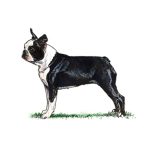
The Boston Terrier has a striking, compact build characterized by a square-shaped head, short tail, and a sturdy, well-balanced body. Standing within a small frame and never exceeding 25 pounds, this breed gives an impression of strength and grace without looking heavy or coarse. Its overall proportions are balanced, with bone and muscle in harmony, and every feature contributing to its recognizable silhouette. The Boston Terrier’s confident posture is enhanced when alert, carrying its head and body with an air of dignity and vitality.
This breed’s most noticeable facial traits are its square, broad skull, flat cheeks, and a relatively short and wide muzzle. The nose is broad, and the jaws are square, with clean, non-pendulous lips fully covering the teeth. Ears are small, triangular, and upright, set toward the corners of the skull, and give a keen, responsive look typical of the breed. The neck is of fair length and slightly arched, adding to the dog’s balanced appearance, while straight and strong legs provide stability and movement with purpose.
The Boston Terrier’s coat is short, smooth, lustrous, and fine in texture, requiring minimal maintenance. Its distinct markings—most often a combination of brindle or seal with white—are a signature feature. Ideal markings include a white blaze between the eyes, a white muzzle, collar, breast, and partial or full white on the legs. Acceptable colors according to the breed standard are black, brindle, seal, mahogany brindle, and their combinations with white. Any colors outside these are not supported by the breed guidelines. Tails are always short and set low, whether straight or slightly curled, and never carried above the horizontal.
Boston Terriers fit comfortably into three weight categories: lightweight (under 15 lbs), middleweight (15–20 lbs), and heavyweight (20–25 lbs), all maintaining the breed’s square, athletic look and easy movement.
Temperament & Behavior
At home, Boston Terriers are lively, intelligent, and an absolute delight to watch. They express affection openly and are typically gentle in their approach, developing strong bonds with their human companions. Owners find them determined and sometimes strong-willed, but their eagerness to please often outweighs their moments of stubbornness.
These dogs thrive on social interaction, both with people and with other animals. Early socialization contributes to their reputation as steady, amiable household dogs. With children, they tend to be tolerant and playful, participating actively in family fun without being overbearing or rough. Their intelligence makes them outstanding participants in various games, training activities, and casual learning sessions at home.
The Boston Terrier is a breed that fits seamlessly into the Utility group, a collection of dogs originally bred for all-around usefulness rather than one specific job. While they do not excel as guard dogs, they are attentive and quick to alert their owners to arrivals at the door, maintaining a balance between approachability and vigilance. Challenges for owners may include curbing their determined streak, which is easily managed through positive, consistent training routines.
Care & Living Needs for the Boston Terrier
Boston Terriers have modest exercise requirements, thriving with up to one hour of daily activity. This can include brisk walks, interactive play, or brief games in a secure backyard. Their moderate energy makes them suitable for apartments and homes with small or medium gardens, and they are equally comfortable in towns or rural settings. The breed’s manageable size also means they adapt well to households where space is at a premium.
Their short, smooth coat sheds somewhat but is easy to groom, requiring only a weekly brush to maintain its shine and limit loose hair. Routine care such as nail trimming, ear checks, and dental hygiene should form part of the regular routine. As social dogs that relish human interaction, Boston Terriers also benefit from ongoing mental stimulation. Short training sessions using positive reinforcement encourage good manners and prevent boredom-induced mischief. Puzzle toys or varied daily activities provide additional enrichment.
Prospective owners who prefer independent or aloof breeds may find the Boston Terrier’s need for attention less appealing. These dogs seek companionship and are happiest when integrated into daily household routines, rather than being left alone for extended periods. Those looking for a low-maintenance grooming regime, a breed that fits well in smaller living spaces, and a cheerful, outgoing temperament will find the Boston Terrier an excellent fit.
Health & Common Issues
Boston Terriers, with their charming flat-faced appearance, fall under the category of brachycephalic dogs. Their short, wide skulls give them the distinctive “pushed-in” look, which many find endearing, but these features can also bring certain health considerations. The primary issues relate to breathing, as the breed’s soft tissue in the nose and throat may sometimes be excessive for the size of their airways. Owners may notice heavier panting or noisy breathing, especially after exertion or in warm weather, and some dogs have narrower nostrils that contribute to these challenges.
Dental health is another area that requires vigilance in Boston Terriers. The shortened jaw leaves little room for their full set of teeth, resulting in potential crowding. This can predispose them to gum and dental problems, so it is important to keep up with regular tooth brushing and professional cleanings as advised by your vet.
Maintaining optimal weight, routine exercise, and providing a balanced diet are essential to supporting general health and minimizing stress on breathing and joints. Regular veterinary check-ups are important for monitoring respiratory function, oral health, and ensuring early detection of any issues. With attentive care, Boston Terriers can enjoy long and active lives as cherished companions.
Official Breed Standard Summary
The official breed standard outlines the Boston Terrier as a small, smooth-coated, and well-balanced dog with a compact, sturdy body and graceful, stylish carriage. Proportion and soundness are essential, ensuring that no individual trait is exaggerated to the detriment of the dog’s health or function. Appearance, movement, and attitude combine to produce a dog of strength, activity, and easily recognizable character.
The breed’s color–primarily brindle, black, or seal with white markings–is one of its distinctive features. While the classic “tuxedo” look is preferred, variations within the standard are allowed, and dogs should not be penalized if their markings are not ideal. The coat should be short, smooth, and lustrous, offering a low-maintenance grooming experience for owners. Boston Terriers are classified into three weight groups, with an upper limit of 25 pounds, preserving their compact yet muscular appearance across all sizes.
Movement should be easy, graceful, and straight, reflecting the breed’s sure-footed gait. Faults that hamper health, welfare, or soundness are discouraged, and special attention is paid to avoid any exaggeration or condition that could impact quality of life. For those seeking a show-quality Boston Terrier, details such as head proportion, tail carriage, and coloring are outlined in the breed standard, but dogs may vary in size and specific measurements, especially when considering companions outside the show ring.
For all Boston Terriers, good health and temperament take priority. The breed standard emphasizes that dogs must not possess any feature, color, or characteristic described as unacceptable, with healthy form and solid structure at the core of the breed’s purpose and appeal.
Frequently Asked Questions about the Boston Terrier
Is the Boston Terrier good for first-time dog owners?
Boston Terriers often make excellent choices for first-time dog owners because of their manageable size, friendly disposition, and eagerness to please. Their intelligence means they pick up new routines quickly and adapt well to various households.
How much exercise does a Boston Terrier need daily?
Most Boston Terriers are satisfied with up to one hour of exercise each day. This can be a combination of walks, playtime, and brief training or mental enrichment sessions.
Is the Boston Terrier good with children?
With their gentle and lively nature, Boston Terriers are generally very good with children. Their size and temperament make them adaptable playmates, though supervision and teaching children to respect the dog’s space is always important.
Can the Boston Terrier live in an apartment?
Yes, the Boston Terrier adapts well to apartment living due to its compact size and relatively modest exercise needs. Regular opportunities for outdoor walks and interaction are important for their well-being.
How much grooming does a Boston Terrier need?
This breed’s short, smooth coat requires minimal upkeep—usually just a weekly brushing to remove loose hair. Routine care of nails, teeth, and ears will help keep them healthy and comfortable.
Are there common health concerns in this breed?
Boston Terriers, as a flat-faced (brachycephalic) breed, can experience some breathing difficulties and dental crowding. Regular veterinary care and responsible management help to minimize potential issues and ensure a long, active life.


