
What Are the Traits and Care Tips for the Akita Breed?
The Akita is a striking and dignified large breed that combines a strong presence with a loyal, reserved nature. Recognized for its powerful build and plush double coat, the Akita makes a bold impression in any setting. Though the breed was originally developed as a hunting and utility dog in Japan, today’s Akita, especially the American line, is prized for its strength, alertness, and balanced temperament. This breed is best suited for experienced dog owners who appreciate its independence and noble bearing, as well as its need for consistent leadership.
For those seeking a devoted companion that excels in both protective instincts and quiet companionship, the Akita can be a wonderful addition to the family. Its history as a working dog shines through in its impressive physicality and confident demeanor. Owners should be prepared for the breed’s exercise requirements and a strong will but will be rewarded with a loyal protector that forms deep attachments with its household.
- Overview of the Akita
- Key Characteristics
- Appearance of the Akita
- Temperament & Behavior
- Care & Living Needs
- Health & Common Issues
- Official Breed Standard Summary
- Frequently Asked Questions
Group: Utility
Size: Large
Exercise needs: More than 2 hours per day
Coat length: Short
Grooming: Once a week
Shedding: Yes
Lifespan: Over 10 years
Ideal home type: Large house
Town or country: Either
Garden needs: Large garden
Overview of the Akita
Originating in Japan, the Akita stands as the largest member of the Utility dog group. The breed’s roots trace back to hunters who needed dogs capable of pursuing large game such as bear, deer, and wild boar. Beyond this demanding task, Akitas also have a history of being involved in organized competitions. Over time, especially in America, the modern Akita has developed into a somewhat more robust and substantial dog, prized for its noble appearance and imposing stature.
The Akita is not just a dog of impressive physical strength; it is equally known for its intelligent, reserved, and sometimes aloof personality. These qualities make the breed ideally suited for families or individuals experienced with large dogs and able to provide confident leadership. While the Akita thrives as a companion and protector, it remains alert, watchful, and independent, offering a unique blend of loyalty and self-assurance not found in every breed.
Distinctive coat colors and clear, striking markings are especially prized with this breed, further adding to its aura of dignity. Today, Akitas capture attention not just in the utility and working dog circles but also as loyal household members when their physical and social needs are met.
Key Characteristics
- Energy level – The Akita possesses high stamina and requires significant daily exercise to stay healthy and content.
- Trainability – Intelligent and quick to learn, but can be independent, requiring a firm and experienced hand during training.
- Intelligence – Highly observant and clever, the Akita excels in tasks that require focus and discernment.
- Prey drive – With a history as a large game hunter, the breed has strong instincts and may show a pronounced prey drive.
- Social needs – Bonds closely with family but can be reserved or aloof with strangers; early socialization is important.
- Compatibility with families and children – Loyal to its family; supervision around children is recommended due to size and strength.
- Compatibility with other dogs – May show dominance, especially toward other dogs of the same sex; early socialization is important.
- Guarding or watchdog tendencies – Naturally protective and alert, making the Akita a reliable watchdog.
- Adaptability to city or country life – Adaptable to both town and rural environments if exercise needs are met and space is available.
- Best suited owner type – Experienced owners who can offer firm leadership and consistent boundaries.
- Typical daily routine – Relishes active walks, playtime, and structured activities, plus time to relax with the family.
Appearance of the Akita
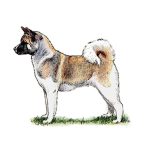
The Akita creates a striking impression with its powerful build, deep chest, and thick, muscular neck. Males typically stand between 26 to 28 inches at the withers, while females generally range from 24 to 26 inches, with the breed overall being longer than it is tall. The Akita’s robust physique is characterized by heavy bone, a broad head with a distinct triangular shape, and a pronounced, muscular body that suggests both strength and agility.
The breed’s head is large and flat, with a broad forehead, clear furrow, and a defined stop that gives the face its resolute appearance. Eyes are dark brown, almond-shaped, and set moderately apart, radiating an expression of keen intelligence. The ears are small, thick, and triangular, carried forward in line with the back of the neck, contributing to the breed’s alert demeanor. The jaw is strong, featuring a perfect scissor bite, while the nose is large and typically black, though flesh pigmentation is acceptable in white-coated dogs.
One of the Akita’s most distinctive features is its large, high-set tail. This tail is carried curled over the back, with a full or double curl and hair that is coarse, straight, and profuse—never plumed or drooping. The coat is another hallmark: a dense double-layered covering with a coarse, straight outer coat and a soft, thick undercoat. Coat lengths vary slightly around the body, reaching about two inches at the withers and tail, with no sign of ruff or feathering. Markings and colors are bold and clear, with the breed recognized in an array of shades including black, brindle, fawn, red, silver, white, and various combinations, so long as the merle pattern is absent.
Temperament & Behavior
The Akita is well-known for its dignified and independent bearing, combining courage with an aloof attitude. This breed generally forms a deep bond with its family while remaining reserved, sometimes even indifferent, towards unfamiliar people. As a consequence, Akitas seldom seek attention from strangers and instead focus their loyalty on their owners.
When at home, Akitas are often quiet and well-mannered, yet always alert to their surroundings. Their powerful guarding instincts make them natural protectors of both people and property. These traits, paired with their intelligence and composure, mean Akitas expect respect from those around them—children and adults alike.
In interactions with other dogs, especially those of the same sex, Akitas may show signs of dominance. While this trait has deep historical roots, responsible breeding and dedicated early socialization can help ensure Akitas learn to get along in multi-dog households. However, due to their past as both hunters and guardians, Akitas will often retain a strong-willed nature that requires careful management.
The Utility group, of which the Akita is a member, includes breeds with a long history of being bred for specialized purposes outside traditional sporting or herding activities. This heritage influences the Akita’s well-rounded, somewhat self-driven temperament and explains why the breed remains both a capable working dog and a loyal family guardian today.
Care & Living Needs for the Akita
Akitas have considerable exercise requirements, thriving best with more than two hours of activity daily. This can include brisk walks, controlled play sessions, and safe, off-leash time in well-secured areas. The breed is happiest when it has a job or a purpose, so incorporating mental stimulation—such as puzzle toys and structured training exercises—is especially beneficial.
The ideal home for an Akita is a large house with a spacious, secure garden or yard. Though adaptable to both town and country living, Akitas are not suited for small apartments or homes without dedicated outdoor space. Regular access to a garden satisfies their need to stretch and explore, and helps channel their energy constructively.
Grooming an Akita is fairly manageable; brushing once a week generally suffices for most of the year, though shedding is a constant, especially during seasonal coat blows. The breed’s coat is short but dense, and regular maintenance will help control loose hair and promote healthy skin. Bathing is rarely required, and their naturally clean coats shed dirt readily. Nail trimming, ear checks, and dental care should also be included in the basic routine.
While Akitas excel in homes with experienced owners, they may not suit everyone. The breed’s strength, independence, and potential dominance can be too challenging for first-time dog owners or those unable to offer consistent training. Gentle but firm leadership, clear boundaries, and positive reinforcement are necessary ingredients for a well-adjusted Akita. Without this, the dog may develop unruly habits or resist commands.
Health & Common Issues
The Akita is a generally robust breed with a lifespan that typically extends beyond ten years. While specific health issues are not detailed for this breed within the dataset, owners should remain vigilant with routine veterinary checks and promote a lifestyle that supports joint health, proper weight, and dental hygiene. As with all large breeds, well-rounded exercise is essential—not just for physical well-being but for overall quality of life.
Regular attention to grooming helps maintain skin and coat health, while a balanced diet supports muscle strength and minimizes the risk of excess weight. Environmental enrichment, socialization, and mental stimulation are equally important in helping to prevent behavioral concerns.
An Akita kept active, engaged, and well cared for is more likely to enjoy its characteristic vitality and dignified presence throughout its life. Consistent attention to all aspects of care—from exercise to grooming to gentle monitoring for physical changes—can help prospective owners ensure their Akita remains happy and healthy.
Official Breed Standard Summary
The official breed standard for the Akita describes an animal that is large, powerful, and alert, with considerable substance and heavy bone. Both appearance and temperament are carefully defined, with absolute soundness and balance considered essential for breed integrity. Characteristics such as the breed’s large, broad head, erect triangular ears, and remarkably curled tail all contribute to a harmonious and imposing silhouette.
Coat colors are vivid and well defined, ranging from solid white through a wide variety of combinations including brindle, fawn, red, silver, black, and pinto markings. The dense double coat is straight and harsh to the touch, standing off the body and showing slight variation in length at the withers and tail. Feathering is undesirable, and the classic curled tail must always dip to or below the back line.
Movement is vigorous yet fluid, with a firm, level back and coordinated action between fore and hindquarters. Size is specified as 26–28 inches at the withers for males and 24–26 inches for females, though individual dogs may fall outside these measurements. Faults are to be judged in proportion to their effect on health and function, with significant deviations regarded seriously, especially if they jeopardize the dog’s welfare.
Prospective owners are reminded that published standards represent ideals—including size—and that individual dogs may vary. The core principle remains: a true Akita is both physically sound and temperamentally balanced, exemplifying strength, dignity, and reliability.
Frequently Asked Questions about the Akita
Is the Akita good for first-time dog owners?
The Akita is best suited for experienced dog owners. Its independent nature and strength can be a challenge for those without previous large breed experience or the confidence to provide consistent direction.
How much exercise does an Akita need daily?
An Akita requires more than two hours of exercise each day. Activities should include long walks, play, and opportunities for mental stimulation to keep the breed physically and mentally satisfied.
Is the Akita good with children?
When properly socialized, Akitas can be protective and gentle with children in their own family. Due to their size and sometimes aloof attitudes, supervision is always recommended during interactions with younger children.
Can the Akita live in an apartment?
While adaptable, the Akita truly thrives in a large home with access to a spacious garden. Their size and activity needs make apartment living less suitable unless owners are exceptionally dedicated to meeting their exercise requirements elsewhere.
How much grooming does an Akita need?
Akitas require regular weekly brushing, though they shed year-round and more heavily during certain seasons. Their dense double coat is relatively easy to maintain with routine care and proper grooming tools.
Are there common health concerns in this breed?
The Akita is generally robust, but, as with any breed, regular veterinary care, weight management, and attention to overall well-being are recommended to keep them in their best condition.


