
What Are the Characteristics and Care Tips for Hamiltonstovare Dogs?
The Hamiltonstovare is a remarkable scent hound from Sweden, recognized for its handsome tricolor coat and impressive stamina. Bred originally for hunting, this large and athletic dog brings together heritage, utility, and a majestic presence that appeals to experienced owners and active households. If you love the outdoors and want a companion who thrives on adventure, energy, and partnership, the Hamiltonstovare stands out as a loyal favorite.
With roots as a solitary hunter rather than a pack dog, the Hamiltonstovare brings independence and keen intelligence, making it both a rewarding and sometimes challenging breed to own. Families with ample space and an enthusiasm for long walks or hikes will appreciate the breed’s gentle balance of strength, endurance, and even temperament. Owning a Hamiltonstovare is best suited to those ready to meet its demanding exercise and stimulation needs while enjoying an affectionate companion by their side.
- Overview of the Hamiltonstovare
- Key Characteristics
- Appearance of the Hamiltonstovare
- Temperament & Behavior
- Care & Living Needs
- Health & Common Issues
- Official Breed Standard Summary
- Frequently Asked Questions
Group: Hound
Size: Large
Exercise needs: More than 2 hours per day
Coat length: Short
Grooming: Once a week
Shedding: Yes
Lifespan: Over 10 years
Ideal home type: Large house
Town or country: Country
Garden needs: Large garden
Overview of the Hamiltonstovare
The Hamiltonstovare hails from Sweden, where it was thoughtfully bred by Count Hamilton, a pioneering figure and founder of the Swedish Kennel Club. Developed by combining the English Foxhound with various German hounds, the breed’s purpose was clear: to create a powerful yet agile scent hound capable of hunting fox, deer, wild boar, and hare in the challenging Swedish countryside. Unlike many pack hunters, the Hamiltonstovare was designed to work alone, demonstrating both independence and excellent problem-solving abilities in the field.
This breed made its debut in Swedish show rings as early as 1886, quickly gaining recognition for its striking black, white, and tan coat, as well as its hardy and robust nature. Owners drawn to this breed are typically those with a keen interest in outdoor activities and the time to dedicate to a highly energetic and athletic companion. The Hamiltonstovare thrives in rural environments and is best suited for individuals or families with generous outdoor space.
While its roots are embedded in the world of hunting, the Hamiltonstovare has also earned respect as a loyal companion. Those considering this breed should be prepared for its daily need for exercise and mental stimulation. Its even temperament and striking appearance make it an attractive choice for owners ready to match its enthusiasm for life.
Key Characteristics
- Energy level – This breed is highly energetic, requiring more than two hours of exercise each day to stay happy and healthy.
- Trainability – Intelligent and eager, but independent nature means patience and consistency are essential during training.
- Intelligence – The Hamiltonstovare is smart and quick to learn, especially when motivated by scent work or outdoor activities.
- Prey drive – Originally bred for hunting, it has a strong prey drive; recall training and secure boundaries are necessary.
- Social needs – Enjoys companionship and bonds well with active families or individuals; not ideal for those away from home for long hours.
- Compatibility with families and children – Even-tempered and tolerant, making it a good fit for homes with well-behaved children.
- Compatibility with other dogs – Generally friendly with other dogs, particularly when socialized from an early age.
- Guarding or watchdog tendencies – Not typically used as a guard dog, but its alertness makes it watchful of its surroundings.
- Adaptability to city or country life – Best suited for country living and large spaces; may struggle in urban apartments.
- Best suited owner type – Active individuals, outdoor enthusiasts, and families with ample yard space and time for exercise.
- Typical daily routine – Thrives on long walks, scent games, and plenty of interaction; downtime is best spent with its family.
Appearance of the Hamiltonstovare
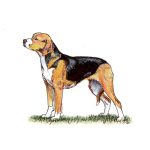
The Hamiltonstovare is immediately recognizable for its striking tricolor coat, which presents a harmonious blend of black, white, and tan. The black forms a mantle over the body, stretching over the upper side of the neck and tail, while the tan graces the head, ears, limbs, sides of the neck, and underside. White markings add definition, typically seen as a blaze on the muzzle, throat, chest, the tip of the tail, and the lower legs and feet. The distinct tricolor pattern is a hallmark of the breed, and a balanced display of these colors is highly valued.
Structurally, this breed has a rectangular and well-proportioned body that speaks to its endurance and athleticism. Males stand between 21 and 24 inches, and females from just over 19 to 22 inches at the shoulder, presenting an upstanding frame that is sturdy yet never heavy. The depth of the chest matches half the height at the withers, contributing to a powerful, balanced silhouette. A long, powerful neck sits smoothly into muscular shoulders, supporting a head that is slightly elongated and rectangular with a gentle arch to the skull.
Facial features include dark, almond-shaped eyes that give a tranquil expression, and ears set fairly high, lying close to the cheek with a soft, straight fall. The muzzle is broad and rectangular, topped with a well-developed black nose. The jaw boasts a complete scissor bite, ensuring both form and function. Forelegs are straight when viewed from the front, paired with a muscular body, well-sprung ribs, and broad, muscular thighs. The feet are compact and oval, and the tail reaches to the hock, carried in a slight saber-like curve when on the move.
The coat consists of two layers—a short, dense, and soft undercoat, especially thick in winter, and a weather-resistant topcoat that lies close to the body. This combination enables the Hamiltonstovare to withstand harsh outdoor conditions while maintaining ease of maintenance for owners.
Temperament & Behavior
At home, the Hamiltonstovare is characterized by its even temperament, combining the dignified presence typical of hounds with an approachable, trustworthy nature. While it may be more independent than some companion breeds, it seeks connection with its family and thrives on shared activities. The breed is not overly demanding for attention but will appreciate time spent together, both indoors and outside.
This hound tends to be friendly toward both people and other dogs, especially if well socialized from a young age. It is generally tolerant and calm, traits that make it an asset in homes with respectful children. The Hamiltonstovare’s hunting roots lend it a keen nose and a love for exploration, so it may become distracted by enticing scents outdoors. Owners must be vigilant during walks and ensure secure boundaries in the garden.
The breed’s hound lineage can lead to a certain degree of aloofness, but this is balanced by its trustworthiness and loyalty. While unlikely to serve as a deterrent for intruders, it is watchful of its environment and may sound an alert if something appears amiss. Its even-keeled personality can adapt well to a variety of life situations, yet its happiest moments are spent in active endeavors and companionship.
With proper mental stimulation—such as scent games, tracking, or interactive play—the Hamiltonstovare flourishes. Owners who enjoy being outdoors and are attuned to the breed’s needs will discover a devoted, engaging companion.
Care & Living Needs for the Hamiltonstovare
The Hamiltonstovare is best suited to owners who can provide a large home and, ideally, a sizable garden or rural property. Daily exercise requirements are extensive—over two hours per day—which means this breed thrives in environments where it has room to roam, run, and explore safely. Regular walks, off-lead time in secure areas, or participation in scent-oriented activities will keep energy levels balanced and support the dog’s health.
As a large and active breed, this hound does not adapt well to apartment living or sedentary lifestyles. A country environment with access to nature triggers the Hamiltonstovare’s best qualities, and a securely fenced yard will help channel its explorative instincts. It’s also a sensible choice for active families, individuals who work from home, or anyone with a keen interest in canine sports.
Grooming is relatively straightforward, with a short coat that sheds and requires a thorough brush about once a week. Bathing is needed mostly when the dog becomes particularly dirty, and attention should be paid to keeping the ears clean and dry, especially after long outdoor excursions. Regular nail trimming, dental care, and routine checks complete the maintenance routine.
With a high level of intelligence, the Hamiltonstovare benefits from structured training that emphasizes positive reinforcement and consistency. Scent games, obedience work, and diversified activities will help direct mental energy constructively. This breed is not ideal for those who cannot provide sufficient attention, exercise, or space; potential owners should consider their schedule and activity level carefully.
Health & Common Issues
The Hamiltonstovare is generally considered a robust and healthy breed with a lifespan that extends beyond ten years. There are no breed-specific health concerns listed, which suggests a heritage of soundness and resilience when responsibly bred and cared for.
Owners are encouraged to maintain regular veterinary checkups, follow vaccination schedules, and ensure a balanced diet appropriate to the dog’s size and activity levels. Monitoring weight and engaging in ample daily exercise both help prevent common canine ailments related to inactivity or obesity.
Basic preventive care—such as maintaining clean ears, brushing teeth, and inspecting for signs of joint discomfort—goes a long way. As always, early detection and adherence to a routine health regimen support a high quality of life through the Hamiltonstovare’s active years.
Official Breed Standard Summary
The official breed standard outlines the Hamiltonstovare’s ideal characteristics, posture, and appearance—a guideline used to ensure that each dog remains fit for its intended function. This hound must present as strikingly tricolored, well-proportioned, and muscular yet never heavy-set. The hallmark of a quality Hamiltonstovare is its harmonious balance of stamina, strength, and elegance, along with a clear distinction between males and females.
The preferred size places males between 21 and 24 inches at the shoulder, with an ideal of 22.5 inches; females range from just over 19 to 22.5 inches, ideally at 21 inches. The official standard values a distinct tricolor pattern: a black mantle, rust-to-golden tan on key areas, and clear, symmetrical white markings. All three colors should be well defined, and none should dominate the overall appearance. Any other coloration, large white neck markings, or a lack of clarity between the distinct areas is seen as undesirable.
Movement should be free and efficient, demonstrating reach and powerful drive from behind, while coat quality must exhibit a dense, protective undercoat and a weather-resistant outer layer. Judges and breeders are advised to prioritize overall soundness and structural health, avoiding physical extremes that could affect welfare. Any deviation from the standard is considered a fault, its severity evaluated by its impact on well-being and functional ability.
The breed standard notes that size guidelines are for reference and that slight variations may naturally occur. The essential focus remains on the dog’s suitability for function, health, and temperament, underscoring the Hamiltonstovare’s lasting value as a hardworking and trusted companion.
Frequently Asked Questions about the Hamiltonstovare
Is the Hamiltonstovare good for first-time dog owners?
While even-tempered and generally friendly, the Hamiltonstovare’s high energy and independent streak can challenge novice owners. It is best for those who are prepared for active daily routines and consistent training.
How much exercise does a Hamiltonstovare need daily?
This breed needs more than two hours of vigorous activity each day. Long walks, runs, and off-leash time in secure areas are ideal for meeting their needs.
Is the Hamiltonstovare good with children?
The breed is known for its even temperament and tends to get along well with respectful children. As with all breeds, supervised interaction is important, especially with young kids.
Can the Hamiltonstovare live in an apartment?
The Hamiltonstovare is not well suited to apartment living due to its size, high activity levels, and need for space. It thrives best in large homes with access to secure outdoor areas, ideally in rural settings.
How much grooming does a Hamiltonstovare need?
Grooming is straightforward—brushing once a week is usually enough to keep the short coat healthy and manage shedding. Occasional ear cleaning and routine care are also recommended.
Are there common health concerns in this breed?
The Hamiltonstovare is generally healthy, with no notable breed-specific health concerns reported. Regular preventive care, balanced exercise, and routine veterinary visits help ensure ongoing health.


