
What Are the Traits and Care Tips for Bloodhounds?
The Bloodhound is a breed recognized for its extraordinary tracking abilities and noble appearance, making it a favorite among those seeking a unique and dignified canine companion. Traditionally, Bloodhounds have been most appreciated by active families, dog enthusiasts with a passion for scent work, and those with spacious country homes. Their heritage as hounds originally bred for tracking both game and people ensures they are best suited to owners who lead active lifestyles and can offer plenty of space for exploration.
This breed stands out not just for its impressive working pedigree but also for its gentle and reserved temperament. While they are gentle giants at home, Bloodhounds are a true working breed, historically known for their skills in pursuit, particularly by scent. Owners are drawn to the combination of their affectionate nature, signature looks, and undeniable capability to be both a reliable family member and a diligent working partner.
- Overview of the Bloodhound
- Key Characteristics
- Appearance of the Bloodhound
- Temperament & Behavior
- Care & Living Needs
- Health & Common Issues
- Official Breed Standard Summary
- Frequently Asked Questions
Group: Hound
Size: Large
Exercise needs: More than 2 hours per day
Coat length: Short
Grooming: Once a week
Shedding: Yes
Lifespan: Under 10 years
Ideal home type: Large house
Town or country: Country
Garden needs: Large garden
Overview of the Bloodhound
The Bloodhound carries a storied history, with its roots believed to trace back to the hounds kept at the monastery of St Hubert in Belgium. However, it was in Britain, since before the 1300s, that the breed began to take the familiar form we know today. Revered for its remarkable sense of smell and tracking prowess, the Bloodhound is perhaps most famous for its work in police and search operations, but its journey began as a hunting companion for deer and wild boar. Over the centuries, the breed also played a crucial role in helping revive other similar hounds, such as the French Chien de St Hubert, and in some regions still carries the St Hubert name.
This breed is a symbol of both power and grace, with an unmistakable silhouette that underscores its noble lineage. Bloodhounds were once widely employed in Scotland as “sleuth-hounds”—their keen noses were unmatched in tracking humans, often used to pursue raiders and cattle thieves. Today, the breed’s tracking abilities remain legendary, though it has also flourished as a dedicated companion for those capable of meeting its unique needs.
Ideal owners for the Bloodhound are those who thrive in rural environments and can embrace the breed’s need for activity and outdoor exploration. These dogs do best in large homes with ample garden space, where their curiosity and working instincts can be satisfied safely and healthily.
Key Characteristics
- Energy level – Exceptionally high; Bloodhounds require more than two hours of vigorous exercise daily.
- Trainability – Intelligent but sometimes strong-willed; responds well to patient, positive training.
- Intelligence – Known for their sharp senses and ability to solve scent-related puzzles.
- Prey drive – Very strong; originally bred for tracking both animals and humans by scent.
- Social needs – Affectionate and thrives on companionship, yet displays a gentle, reserved side.
- Compatibility with families and children – Suited for families, especially those with older children aware of its size and strength.
- Compatibility with other dogs – Generally sociable with other dogs, aligning with their history as pack hounds.
- Guarding or watchdog tendencies – Dignified and alert, though not inherently suspicious or aggressive.
- Adaptability to city or country life – Strongly prefers the countryside; not suited to compact city living.
- Best suited owner type – Active individuals or families with secure outdoor space and a passion for engaging canine minds.
- Typical daily routine – Includes long walks, scent games, and plenty of supervised outdoor activity.
Appearance of the Bloodhound
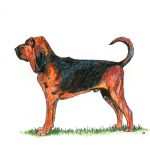
The Bloodhound is distinguished by its noble, dignified expression and impressively sculpted physique. This breed gives an immediate impression of solemn wisdom and physical strength. Large and powerfully built, the Bloodhound is more substantial than many other hound breeds, standing tall and well above the ground.
The head is one of the breed’s most distinctive features: long and narrow relative to its body, with a pronounced occipital peak and minimal loose skin compared to other breeds. The brows are subtle rather than prominent, and the eyes, typically dark brown or hazel, strike a balance between being neither sunken nor prominent. The breed’s trademark long ears are thin, soft to the touch, and hang gracefully, curving inward and backward.
Bloodhounds have a substantial frame, with muscular shoulders, a deep chest forming a notable keel, and robust, straight forelegs. Their backs and loins are strong, and the hindquarters are heavily muscled for endurance. Strong, well-knuckled feet support their impressive weight. The tail, or stern, is long, tapering, and set high, carried in a graceful scimitar shape when on the move.
The coat is short, smooth, and weatherproof, making it practical for outdoor work. Typical coat colors include black and tan, liver and tan, and red, sometimes with lighter or badger-colored hair and occasional flecks of white. Bloodhounds are large dogs, with males standing 25-27 inches (63-69 cm) at the shoulder and weighing up to 110 lbs (50 kg), while females are slightly smaller but still substantial in size.
Temperament & Behavior
Bloodhounds are renowned for their affectionate nature. While they can be somewhat reserved and sensitive, especially with unfamiliar people, their temperament is never aggressive or quarrelsome. Instead, they offer a deeply loyal and gentle personality that makes them stand out among large breeds. In the home, they are usually calm and patient, offering steadfast companionship without being overly demanding.
Despite their dignified demeanor, Bloodhounds can show a playful and affectionate side, especially with people they trust. Their social nature often shines when living with other dogs, echoing their origins as pack animals that once hunted together by scent. Though typically mild-mannered, they benefit from early socialization to feel at ease in different environments and with a range of people and animals.
The breed’s primary instinct is to follow its nose. Owners will find Bloodhounds highly driven to trail scents, sometimes to the point of ignoring distractions or commands. This makes secure fencing and careful supervision essential, as their tracking instincts are strong and persistent. Their loyalty and sensitivity, however, make them attuned companions, best suited to patient, understanding households that appreciate their intuitive and trustworthy nature.
Bloodhounds make dependable family dogs, particularly in homes where their size and need for space are respected. They are less suited to being watchdogs, given their lack of suspicion, but their sheer presence and booming bark are usually enough for most homes.
Care & Living Needs for the Bloodhound
Bloodhounds are active dogs needing more than two hours of exercise daily. Long walks, scent work, and time exploring in secure areas are a must, as this breed thrives when its physical and mental needs are well satisfied. Their considerable size means they require a large home and, ideally, a spacious garden where they can safely enjoy the outdoors. This is not a breed that typically adapts to small apartments or urban environments without significant daily effort from their owners.
Grooming is a straightforward task, thanks to their short, weatherproof coat. Regular brushing once a week will help manage shedding and keep their coat in good condition. As Bloodhounds do shed, occasional vacuuming may be needed to manage hair within the home. Attention should also be paid to their long ears and facial folds, which can benefit from occasional cleaning to prevent debris from accumulating.
Mental stimulation is crucial for the Bloodhound, which means incorporating scent-based games and engaging training sessions into their daily routine. Training should be positive, consistent, and understanding of their independent streak. Activities that channel their powerful tracking instincts are especially rewarding—for both breed and owner.
This breed is not well-suited for people with limited mobility, those without access to ample outdoor space, or individuals looking for a low-energy or small-stature companion. Meeting the Bloodhound’s needs requires commitment, time, and a genuine appreciation for their working heritage and distinct personality.
Health & Common Issues
The Bloodhound generally enjoys robust health when cared for appropriately. As a large, active breed, weight management and regular exercise are important to maintain their health and well-being. Owners should provide balanced exercise routines and ensure that the dog does not become overweight, as this helps protect their joints and ensures lifelong mobility.
Routine veterinary check-ups are an essential aspect of care, as with any breed. Bloodhounds can benefit from regular monitoring of their ears, eyes, and teeth, as their physical characteristics, such as long ears, may occasionally require extra attention. Regular grooming and sensible nutrition round out the key elements of healthy Bloodhound ownership.
Ensuring that the Bloodhound receives all recommended vaccinations, parasite control, and oral hygiene is an excellent foundation for maintaining their quality of life. Owners who are proactive about their dog’s needs and maintain open communication with their veterinarian will help their Bloodhound thrive.
Official Breed Standard Summary
The official breed standard for the Bloodhound outlines a noble dog with a dignified appearance, reflecting solemnity, strength, and wisdom. The standard emphasizes the need for absolute soundness—dogs must be healthy, well-proportioned, and free from features or exaggerations that could impact their welfare or function. Ideal Bloodhounds display a balanced, powerful frame with a commanding presence, standing over more ground than many other hounds of similar stature.
Size and weight are both significant, with males preferred at 25-27 inches in height and up to 110 pounds in weight, and females slightly smaller but still robust. The coat is smooth, short, and designed to withstand the elements, available in colors such as black and tan, liver and tan, and red. The accepted standard allows for some variation, but disqualifies any color combinations beyond those listed.
Movement is described as elastic and free-swinging, a testament to the Bloodhound’s working roots. Key features include a long, distinctive head, almond-shaped eyes, long trailing ears, and a strong jaw with a perfect scissor bite. Faults in conformation or temperament are considered seriously if they affect the health or welfare of the dog. Prospective puppy buyers should note that breed standard measurements are guidelines, and individual dogs may vary.
Another important note in the standard is that male dogs should have two normal testicles fully descended. Ultimately, the Bloodhound’s breed standard reflects a balance between working function and an appearance that is both striking and practical.
Frequently Asked Questions about the Bloodhound
Is the Bloodhound good for first-time dog owners?
While loyal and affectionate, the Bloodhound’s size, energy, and independent nature make it best suited to experienced owners or dedicated first-timers who have ample time, space, and patience for training and exercise.
How much exercise does a Bloodhound need daily?
The Bloodhound requires more than two hours of exercise every day. Long walks, scent-based games, and plenty of outdoor time are necessary to keep this active breed happy and healthy.
Is the Bloodhound good with children?
Bloodhounds are generally gentle and patient with children, especially if the children are taught to respect the dog’s size and temperament. Supervision is recommended due to the breed’s large frame.
Can the Bloodhound live in an apartment?
This breed is not suited to apartment living. Bloodhounds do best in large homes with spacious gardens, ideally in rural or semi-rural settings where they have room to move and explore.
How much grooming does a Bloodhound need?
The Bloodhound’s short coat only needs brushing about once a week. Regular cleaning of their ears and managing their shedding will help keep them healthy and comfortable.
Are there common health concerns in this breed?
While described as generally healthy, the Bloodhound’s large size means owners should pay attention to joint health, weight management, and routine cleaning of their ears and facial folds. Regular veterinary visits are important for prevention and early detection of any issues.


