Bouvier des Flandres: a harsh coat with substantial upkeep
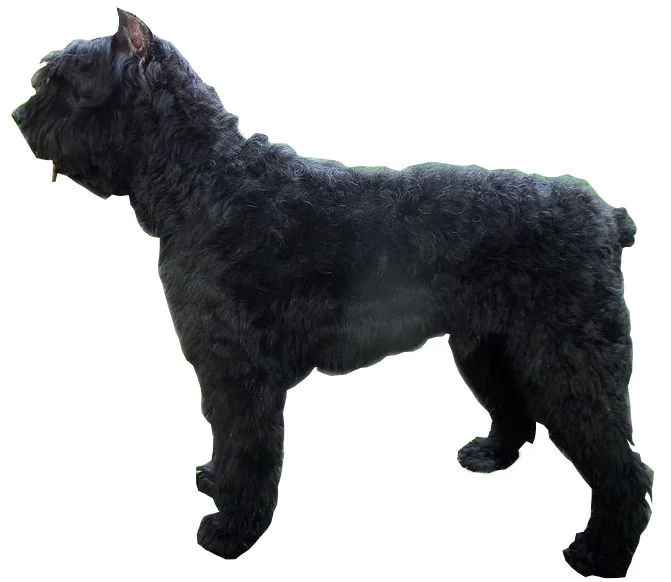
The Bouvier des Flandres combines a compact, square body with a coarse double coat and a conspicuous beard. The dry, matt texture described in its standard means a dull surface finish, not permission to leave tangles. Regular work through the coat matters more than simply preserving a shaggy outline.
Body and size
FCI gives heights of 62–68 cm for males and 59–65 cm for females, with a 1 cm tolerance and ideals of 65 cm and 62 cm. Weights are approximately 35–40 kg and 27–35 kg. The earlier UK guide uses the main height and approximate weight ranges. Dense hair over a strong, short body should not prevent checking the dog’s underlying condition.
What the coat should feel like
FCI describes an outer coat about 6 cm long, coarse, slightly tousled and neither woolly nor curly, above fine, dense undercoat. Hair is shorter on the head and ears; raised eyebrows should not veil the eyes. This differs from a Briard’s long, flexible goat-like coat and from the separately described Russian Black Terrier coat. Each coat needs its own grooming demonstration, including how to work through the undercoat and manage the furnishing hair.
Brushing and practical checks
AKC suggests brushing once or twice weekly with a slicker or pin brush and a large comb, and cleaning the beard at grooming time. It also suggests nail attention every one to two weeks. The UK category says daily grooming, so allow frequent checking and handling between longer sessions rather than treating one brush-through as the whole week’s care. Learn how to reach the undercoat without tugging at the skin.
Exercise with the owner
The UK category is up to an hour daily, while AKC describes an active owner providing walks, hikes and shared outdoor activity. Its caution about limiting heavy exercise in growing puppies matters when planning outings; adult activities do not automatically suit a young dog. The UK home categories are a large house and garden, in town or country, but space alone does not perform the daily care.
Sources and further reading
Bouvier Des Flandres at a glance
These earlier UK breed guides are starting points for comparison. Details may have changed, and individual dogs vary.
- Breed group
- Working
- Size
- Large
- Daily exercise
- Up to 1 hour per day
- Grooming frequency
- Every day
- Coat length
- Medium
- Sheds
- No
- Suggested home size
- Large house
- Town or country
- Town or country
- Garden recommendation
- Large garden
- Lifespan
- Over 10 years
FCI breed standard
Standard guidance describes the breed ideal; individual dogs vary.
- Origin
- Belgium-France
- Group
- 1 - Sheepdogs and Cattle dogs (except Swiss Cattle dogs)
- Section
- 2 - Cattle dogs (except Swiss Cattle dogs)
- Height
- Males: 62–68 cm; Females: 59–65 cm; Males: Ideal: 65 cm; Females: Ideal: 62 cm; Tolerance: 1 cm above or below
- Weight
- Males: About 35–40 kg; Females: About 27–35 kg
Official FCI standard (PDF)
Standard effective from 2000-10-25; checked 2026-10-15