
What Are the Traits and Care Tips for the Russian Black Terrier?
The Russian Black Terrier is a bold, versatile, and intelligent working dog, originally bred to serve the demanding needs of the Russian army but now cherished by experienced dog owners worldwide. This large, powerful breed is well-suited for active individuals or families who can match its energy and confidently manage a protective, loyal personality. With daily exercise needs that far exceed most breeds, the Russian Black Terrier requires space, stimulation, and guidance from those willing to invest time in training and care.
Well known for its natural guarding instincts, resilience, and adaptability, the Russian Black Terrier thrives in environments where its strength and intelligence can be channeled constructively. It is not simply a family companion; this breed excels both as a vigilant watchdog and as a true member of an active household committed to meeting its robust needs.
- Overview of the Russian Black Terrier
- Key Characteristics
- Appearance of the Russian Black Terrier
- Temperament & Behavior
- Care & Living Needs
- Health & Common Issues
- Official Breed Standard Summary
- Frequently Asked Questions
Group: Working
Size: Large
Exercise needs: More than 2 hours per day
Coat length: Medium
Grooming: Every day
Shedding: No
Lifespan: Over 10 years
Ideal home type: Large house
Town or country: Either
Garden needs: Large garden
Overview of the Russian Black Terrier
The Russian Black Terrier, or “Black Pearl of Russia,” stands as a testament to purposeful breeding and adaptability. Developed in the aftermath of World War II, this breed emerged from a need for a resilient, intelligent, and dependable guard and service dog in Russia. Deep crossbreeding—centered on the Giant Schnauzer, but also involving breeds such as the Airedale, Rottweiler, and Moscow Retriever—resulted in a dog notable for its strength, weather resistance, and versatility. Originally, these dogs played roles ranging from patrolling military installations to rounding up fugitives, thriving across the challenging terrains and climates of their homeland.
With official recognition and breed standards established in the decades following the 1950s, the Russian Black Terrier transitioned from specialized military settings to civilian homes, where its skills as a protector and worker are still highly valued. This breed best suits owners who lead active lifestyles and can offer abundant exercise, mental stimulation, and structure. Those seeking a manageable, low-maintenance dog or a pet that can be left alone for hours each day may want to consider alternative breeds.
For the right family or owner, the Russian Black Terrier offers not just companionship, but partnership—a powerful dog that combines loyalty with significant capabilities as a guardian and working dog.
Key Characteristics
- Energy level – Exceptionally high; thrives on more than two hours of vigorous activity each day.
- Trainability – Highly trainable with experienced and consistent handlers; responds well to structured routines.
- Intelligence – Outstanding; needs tasks and challenges to keep its mind sharp.
- Prey drive – Moderate; bred more for guarding than hunting, but should still be socialized around smaller animals.
- Social needs – Needs regular interaction with its family and benefits from clear boundaries.
- Compatibility with families and children – Loyal and protective, especially with well-behaved children in a supervised setting.
- Compatibility with other dogs – Can be reserved; early and ongoing socialization is important for harmony in multi-dog homes.
- Guarding or watchdog tendencies – Strong natural instincts; inherently watchful, brave, and self-assured.
- Adaptability to city or country life – Versatile, but requires space; best in large homes with big gardens or access to open areas.
- Best suited owner type – Ideal for experienced, active owners who understand large, working breeds.
- Typical daily routine – Includes substantial exercise, training, mental stimulation, and close interaction with family.
Appearance of the Russian Black Terrier
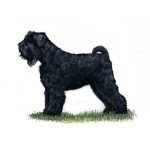
The Russian Black Terrier is an imposing, robust dog with an unmistakable presence. Large in both height and build, it carries strong bone structure, well-developed muscles, and a distinctive square outline that radiates power and stability. Males generally measure between 27 and 30.5 inches at the shoulder, while females stand slightly shorter. This breed impresses with a sturdy, almost square body balanced by a powerful head, giving it a look that is both noble and formidable.
The head is strong, moderately broad, and well-proportioned with slightly pronounced eyebrows, flat skull, and a solid muzzle shaped by trademark whiskers and a beard that create a squared-off effect. The large black nose, thick black lips, and dark, oval-shaped eyes convey alertness and depth. Ears are set high, triangular, and lie tightly against the cheek, adding to the breed’s watchful expression.
The Russian Black Terrier features a medium-textured, weatherproof coat with a dense undercoat. Furnishings are pronounced on the eyebrows, beard, and legs, contributing to its imposing look. Though the hair is slightly wavy and broken when brushed, the coat is neither wiry nor soft, and carefully trimmed in designated areas for neatness. Acceptable coloring is black or black intermingled with gray hairs—though the latter should never exceed a third of the total coat; any other coloring is considered outside the standard.
Strong legs, a well-arched neck, broad back, and a tail set high and thick contribute to the breed’s muscular, athletic frame. Feet are large and rounded with thick pads and black nails, supporting its energetic, ground-covering trot. This combination of physical features, coat, and size marks the Russian Black Terrier as a true working specialist with a bold, striking silhouette.
Temperament & Behavior
The Russian Black Terrier’s character is defined by alertness, adaptability, and unwavering courage. These dogs are naturally wary of strangers, making them highly effective watchdogs while remaining deeply loyal and even-tempered within their household. Their innate guarding instincts are evident, yet their temperament balances vigilance with composure—a confident presence without unnecessary aggression.
At home, this breed forms strong bonds and offers steadfast protection to its family. While they are deeply affectionate and can be playful, their size and strength require owners to provide clear boundaries and leadership from an early age. Russian Black Terriers are adaptable: given structure and consistent routines, they settle well whether in bustling towns or wide countryside expanses.
Socialization is key, as the breed can be reserved or cautious with new people and animals. Regular, positive exposure to different environments, visitors, and friendly dogs is vital to prevent overprotectiveness. With children, the Russian Black Terrier is usually gentle and devoted, though its enthusiasm and size mean interactions should always be supervised, especially with young kids.
This breed excels as a working and utility dog, a trait reflected in its history as a search, rescue, and guard companion. Those seeking a quiet lounge dog may find the breed’s energy and sense of purpose overwhelming. However, those willing and able to provide active engagement will be rewarded with a steadfast, intelligent partner.
Care & Living Needs for the Russian Black Terrier
The Russian Black Terrier demands high levels of daily activity, both physical and mental. Owners should prepare to provide more than two hours of active exercise daily—this can include vigorous walks, runs, supervised play in a secure area, and engagement in canine sports or advanced obedience training. Routine and structure are key; the breed thrives when given purposeful tasks and clear expectations.
The breed’s ideal home is a large house with access to a spacious, secure garden. These dogs are adaptable and can settle in either towns or rural environments, but compact apartments are less suitable unless owners commit to extensive outdoor activities. The large garden not only offers much-needed room to stretch but satisfies their natural inclination to patrol and watch over their territory.
Grooming is a significant aspect of ownership. Despite being a non-shedding breed, the Russian Black Terrier’s medium-length coat must be brushed daily to prevent tangles and maintain its quality. Thorough trimming is also necessary in specific areas, in line with the breed’s appearance standards. Owners who dislike grooming or are unable to maintain a daily routine may struggle with this breed’s maintenance needs.
Mental stimulation is as vital as physical exercise for Russian Black Terriers. Training based on positive reinforcement, puzzle toys, advanced obedience, or working tasks help satisfy their sharp minds. Novice owners may find the breed’s strength, intelligence, and guardian instincts challenging; the Russian Black Terrier is best suited to those with experience handling large working dogs.
Health & Common Issues
The Russian Black Terrier is known for its robust constitution and overall longevity, with many individuals living well beyond ten years. While specific breed health conditions are not detailed here, general dog welfare practices are particularly important for large, active breeds.
Regular veterinary checks are advised to monitor overall health, with careful attention paid to joints, dental health, and skin or coat condition due to the breed’s size and active lifestyle. Owners should manage weight carefully, fuel physical activity with balanced nutrition, and observe for any changes in mobility as the dog ages. Routine dental care, including regular brushing or chews, helps maintain strong teeth and fresh breath over the lifespan.
A consistent exercise regimen, paired with mental enrichment, supports both physical and emotional wellbeing. Maintaining kennel hygiene, coat care, and routine parasite prevention further enhances longevity and comfort. By providing attentive, proactive care, owners help the Russian Black Terrier reach its full health potential.
Official Breed Standard Summary
The official breed standard provides a detailed blueprint for the ideal Russian Black Terrier’s appearance, temperament, and function. This large, imposing breed is characterized by a strongly built, square frame, heavy bone, and well-developed muscles—traits that enhance both its working ability and imposing presence. Dogs should be noticeably larger than average, with males ranging from 68 to 77 centimeters and females just under that threshold.
The coat is a defining element: medium-textured, weatherproof, and dense, with extensive furnishings on the head and limbs. Only black or black with a limited proportion of intermingled grey hairs is permissible, as any other coloration falls outside the accepted standard. Trimming is standard in specific areas to maintain a tidy, functional outline, while the coat’s texture is maintained through consistent grooming.
Movement should appear elastic and ground-covering, reflecting both power and efficiency. The head is well proportioned, with a beard and pronounced eyebrows, while eyes are dark and oval-shaped. The tail, whether docked or left natural, is set high and thick, completing the breed’s bold appearance.
The standard emphasizes functional soundness, health, and proportion, advising breeders and owners to avoid exaggerations or features that might negatively impact welfare. The size described in official documents is a guideline, not a strict rule—dogs may fall slightly outside these measurements and still be true to type if they meet other key characteristics.
Frequently Asked Questions about the Russian Black Terrier
Is the Russian Black Terrier good for first-time dog owners?
This breed is better suited to experienced owners due to its size, strength, intelligence, and natural guarding instincts. First-time owners may find the Russian Black Terrier’s care and training needs demanding without prior experience with large or working breeds.
How much exercise does a Russian Black Terrier need daily?
The Russian Black Terrier thrives on more than two hours of active exercise each day. Consistent walks, interactive play, and mentally stimulating activities are essential to meet its energy needs.
Is the Russian Black Terrier good with children?
With the right socialization and supervision, these dogs are known for being loyal and protective toward children in their household. Due to their size and exuberance, interactions with young kids should always be monitored.
Can the Russian Black Terrier live in an apartment?
While adaptable, the breed is much better suited to large homes with spacious gardens. Apartment living may be workable only for owners who can commit to extensive daily exercise and provide sufficient space for activity.
How much grooming does a Russian Black Terrier need?
The breed requires daily brushing and regular trimming to maintain its medium-length, weatherproof coat. Routine grooming helps prevent matting and keeps the coat in top condition.
Are there common health concerns in this breed?
No specific breed-related health issues are detailed here, but regular vet checks, weight management, and proper grooming are important. Large, active breeds like the Russian Black Terrier benefit from attentive long-term care.


