
What Are the Key Traits and Care Tips for Rottweilers?
The Rottweiler is a robust and intelligent working dog breed celebrated for its remarkable blend of strength, loyalty, and confidence. With roots as a herder and protector, this breed is ideal for experienced owners seeking an active companion that excels both as a devoted family member and a vigilant guardian. Those looking for a courageous, energetic, and devoted canine partner will appreciate the Rottweiler’s many qualities, provided they can meet this breed’s exercise and training demands.
Known for their self-assured attitude and bold presence, Rottweilers make a strong impression whether as reliable working dogs or loving companions. Their natural guarding instincts and affectionate nature toward their people make them well-suited for active households willing to provide structure, consistent training, and daily enrichment. Properly raised, a Rottweiler can be a loyal, steadfast friend who adds both fun and peace of mind to everyday family life.
- Overview of the Rottweiler
- Key Characteristics
- Appearance of the Rottweiler
- Temperament & Behavior
- Care & Living Needs
- Health & Common Issues
- Official Breed Standard Summary
- Frequently Asked Questions
Group: Working
Size: Large
Exercise needs: More than 2 hours per day
Coat length: Short
Grooming: Once a week
Shedding: Yes
Lifespan: Under 10 years
Ideal home type: Large house
Town or country: Either
Garden needs: Large garden
Overview of the Rottweiler
The origins of the Rottweiler trace back to the days of ancient Rome, when these powerful dogs marched alongside Roman armies, helping herd cattle and guard livestock. After the Romans traveled through what is now southern Germany, some of their robust mastiff-type dogs remained and became the foundation of the Rottweiler breed. In the town of Rottweil, generations of cattle dealers and farmers further developed the dog as a strong and versatile drover, capable of both guiding livestock and warding off thieves—tasks at which the Rottweiler excelled for centuries.
This breed’s legacy as both a reliable worker and an unwavering guardian endured over the years. Historically, Rottweilers even helped their owners safeguard earnings from cattle sales, protecting money purses attached to their collars. In later times, the breed found new purpose in roles for law enforcement and military, valued for its courage, physical prowess, and trainability. Today, the Rottweiler continues to serve in a variety of working capacities, but it is also cherished as a loyal, intelligent companion for those who can provide proper leadership and daily activity.
Ideal Rottweiler owners are confident, active, and committed to providing boundaries, socialization, and regular engagement. In the right hands, a Rottweiler is an affectionate companion and a steadfast protector—distinctly suited to individuals or families who appreciate the breed’s work ethic and presence.
Key Characteristics
- Energy level – Highly energetic, requiring ample physical activity and mental enrichment each day.
- Trainability – Intelligent and responsive to consistent training, though they need firm, positive leadership.
- Intelligence – Quick learners with strong problem-solving skills, often excelling in obedience and task work.
- Prey drive – Moderate; originally bred as drovers, so controlled introductions with small animals are recommended.
- Social needs – Deeply bonded to their family, they thrive on companionship and regular social interaction.
- Compatibility with families and children – Loyal and affectionate with their people, typically good with well-mannered children when raised together and properly socialized.
- Compatibility with other dogs – Can be selective; early socialization is key for positive dog-to-dog interactions.
- Guarding or watchdog tendencies – Natural protectors with strong guarding instincts, making them formidable deterrents to intruders.
- Adaptability to city or country life – Well-suited to both environments if provided with space, exercise, and attention.
- Best suited owner type – Experienced, assertive owners who understand canine behavior and are committed to training and socialization.
- Typical daily routine – Requires structured exercise, mental challenges, and meaningful interaction with family members.
Appearance of the Rottweiler
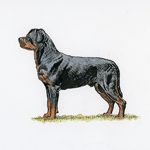
The Rottweiler stands out as a large, imposing dog with an athletic, compact, and powerful structure. Its body is robust and well-muscled, with a deep, broad chest and a stable, straight back that allows for agility, strength, and stamina. Male Rottweilers generally stand between 25–27 inches at the shoulder, while females are slightly smaller, at 23–25 inches. Despite their size and musculature, the breed’s proportions remain balanced, giving an impression of seamless strength and agility.
The head of the Rottweiler is of medium length and substantial width between the ears, with a moderately arched forehead and well-developed though not exaggerated cheeks. Their eyes are medium-sized, almond-shaped, and always a dark brown, conveying a calm and confident expression. Pendant ears—small relative to the head and set high and wide apart—lie flat against the cheeks. The muzzle is strong and deep, the nose is always black, and the mouth has strong teeth meeting in a scissor bite.
The Rottweiler’s coat is short, dense, and somewhat coarse to the touch, with a distinguished topcoat layered over an essential undercoat, mainly around the neck and thighs. The most recognizable feature is its black coloring with rich tan to mahogany markings. These distinct markings appear above the eyes, on the cheeks, muzzle, chest, legs, and beneath the tail. Excessive markings or any deviation from the classic coloration is undesirable in the breed standard. The tail, previously often docked, is now left natural, strong, and aligned with the croup, carried level or slightly curved based on the dog’s mood and activity.
Temperament & Behavior
The Rottweiler’s temperament is a hallmark of the breed. These dogs are inherently good-natured, confident, courageous, and stable. They do not display unnecessary nervousness or aggression; rather, their calm gaze and assured demeanor reflect inner strength and loyalty. At home, a Rottweiler is often affectionate and deeply attached to its family, showing playful and even humorous sides to those it trusts.
With their origins rooted in the working group, Rottweilers have centuries-old instincts for guarding and protecting. Their natural vigilance means they are highly alert to changes in their environment, making them natural watchdogs. Socialization from an early age is essential to ensure their guarding instincts are balanced and that they grow up to be sociable, well-mannered companions.
When introduced properly and given boundaries, Rottweilers typically do well with children and can be patient and tolerant with youngsters, especially if accustomed to children from puppyhood. With other dogs and animals, results can vary; early positive exposure is crucial for good canine manners.
This breed thrives when given routine, structure, and purposeful activities. Job-oriented by nature, Rottweilers excel in obedience, agility, working trials, and as companions for those who stay active. Without sufficient outlets for energy and mental stimulation, they may become bored or develop unwanted behaviors. For those willing to provide leadership and commitment, a Rottweiler is a devoted and dependable household member.
Care & Living Needs for the Rottweiler
The Rottweiler’s energy and enthusiasm mean it requires more than two hours of varied exercise every day. This breed loves brisk walks, play sessions, and challenging activities that engage both mind and body. A large house with a spacious, secure garden best suits this breed, offering plenty of room to move, explore, and patrol. However, Rottweilers can adapt to both town and country living provided their physical and mental needs are met consistently.
Grooming needs are moderate and manageable, with weekly brushing sufficient to keep their short, dense coat in good condition and to help manage year-round shedding. Bathing is rarely necessary unless the dog gets particularly dirty. The double coat, consisting of a coarse outer layer with undercoat at the neck and thighs, insulates the dog and repels dirt naturally. Routine grooming also offers a chance to check their skin, ears, and nails for good overall health.
Training and mental stimulation are essentials for this intelligent breed. Rottweilers are quick learners who respond best to firm, consistent, and positive guidance. Advanced training activities such as obedience trials, scent games, or structured play offer outlets for their brains and can help reinforce the bond between dog and owner. Socialization from early puppyhood helps prevent unnecessary suspicion and ensures confidence in a variety of situations.
This breed is not for those seeking a low-maintenance, placid pet or those who have limited time for daily exercise and engagement. Rottweilers require thoughtful leadership and structured routines. They are best suited for experienced, committed individuals or families with a genuine interest in fulfilling their mental and physical requirements. Apartment dwellers or first-time dog owners may find this breed’s needs challenging to meet.
Health & Common Issues
Like other large, powerful breeds, Rottweilers benefit most from responsible care, balanced nutrition, and plenty of physical activity. While no specific health concerns are highlighted in the current breed data, owners should be mindful of general large breed considerations such as weight management and the importance of routine veterinary care.
Maintaining a healthy weight ensures minimal stress on joints and bones, crucial for keeping your Rottweiler active and comfortable throughout its life. Regular exercise not only burns energy but also keeps muscles and connective tissues strong, supporting proper movement and reducing age-related issues later in life.
With a typical lifespan under ten years, it’s important for owners to partner with veterinarians for preventive health checks and to monitor for any changes in gait, appetite, or behavior early. Good dental hygiene, coat care, and attention to nail length also play a part in overall wellness. Early socialization and training can make routine care stress-free for both dog and owner.
Official Breed Standard Summary
The official breed standard for the Rottweiler emphasizes a powerful, compact build with proportions that support strength, maneuverability, and endurance. A well-bred Rottweiler should present a confident, courageous appearance with natural athleticism and a harmonious outline. His size, stature, and determination serve as hallmarks of the breed’s long tradition as a working dog and companion.
Acceptable size ranges from 25–27 inches at the shoulder for males and 23–25 inches for females, with proportion and health taking precedence over specific measurements. The preferred coat is short to medium in length, coarse and flat with a necessary undercoat on the neck and thighs. Coloring is strictly black with clearly defined rich tan to mahogany markings in specific regions. Any deviation in color or excessive markings, as well as features like long or wavy hair, are highly undesirable according to the standard.
Movement should be strong, enduring, and unrestricted, reflecting the breed’s functional roots. Structural soundness is critically important, and animals displaying exaggerated features that could detract from health or mobility are discouraged. The tail is now customarily left natural, and should be strong and carried in line with the overall balance of the dog, without kinks or deviations.
Prospective owners and breeders are reminded that the official standard is meant as a guideline for the ideal dog, and actual dogs may fall slightly outside the described height range. Soundness, temperament, and function are always of the utmost importance in evaluating a Rottweiler.
Frequently Asked Questions about the Rottweiler
Is the Rottweiler good for first-time dog owners?
The Rottweiler is best suited to experienced owners with knowledge of training and canine behavior. Their strength, intelligence, and guarding instincts require firm, confident leadership and commitment to responsible socialization.
How much exercise does a Rottweiler need daily?
This breed requires more than two hours of varied physical activity every day. Walks, playtime, and structured tasks are all important to keep a Rottweiler fit and content.
Is the Rottweiler good with children?
Rottweilers can be affectionate and protective toward children when raised together and properly socialized from a young age. Supervision and teaching both children and the dog proper interactions are essential for a positive relationship.
Can the Rottweiler live in an apartment?
While adaptable, Rottweilers do best in larger homes with secure areas for exercise and play. Apartment living can be challenging unless the owner is highly committed to meeting the breed’s daily exercise and social needs.
How much grooming does a Rottweiler need?
The Rottweiler’s short, dense coat is low maintenance, requiring only weekly brushing to control shedding and keep the skin healthy. Occasional baths are sufficient to keep them clean.
Are there common health concerns in this breed?
No specific issues are highlighted, but like all large breeds, owners should monitor weight, provide routine vet care, and ensure balanced exercise to protect joints and overall health.


