
What Are the Traits and Care Tips for Bull Terriers?
The Bull Terrier stands out among canine companions, appealing to those who seek a spirited, charismatic dog with a powerful physique and a playful disposition. With its iconic egg-shaped head, muscular frame, and sharp intelligence, this breed makes its mark as an energetic and loving member of any household, suiting active individuals, couples, and families who have time to dedicate to its unique needs.
Known for its bold personality and memorable looks, the Bull Terrier thrives as a lively family companion. Its history and temperament make it a favorite among dog lovers seeking both affection and a dog that truly believes it’s part of the family action, whether at play or simply enjoying time together at home.
- Overview of the Bull Terrier
- Key Characteristics
- Appearance of the Bull Terrier
- Temperament & Behavior
- Care & Living Needs
- Health & Common Issues
- Official Breed Standard Summary
- Frequently Asked Questions
Group: Terrier
Size: Medium
Exercise needs: Up to 1 hour per day
Coat length: Short
Grooming: Once a week
Shedding: Yes
Lifespan: Over 10 years
Ideal home type: Small house
Town or country: Either
Garden needs: Small/ medium garden
Overview of the Bull Terrier
The Bull Terrier’s origins can be traced back to 19th-century England, where the breed was developed from crosses of the Bulldog and the now-extinct White English Terrier. This blend was initially intended for dog fighting, a harsh past that shaped the Bull Terrier’s robust build and courageous spirit. Over the decades, careful breeding—particularly by James Hinks in Birmingham—refined the Bull Terrier into the distinctive dog we see today, even incorporating Collie and potentially Dalmatian lineage to enhance aspects of form and temperament.
Originally, most Bull Terriers were pure white, but colored variations were later introduced and became valued—partly to address certain breeding issues such as congenital deafness frequently seen in all-white dogs. As a result, today’s Bull Terrier comes in a range of colors and exhibits a more diverse and healthy genetic pool.
The breed fits well with active owners who appreciate a playful yet tenacious companion. Whether as a lively family dog or a devoted friend to singles and couples, the Bull Terrier’s combination of strength and comic personality ensures it’s never lost in the crowd.
Key Characteristics
- Energy level – High; Bull Terriers are lively dogs, frequently seeking activity and interaction.
- Trainability – Intelligent but can be obstinate; requires consistent and positive training methods.
- Intelligence – Highly perceptive, often picking up cues quickly, but also displaying an independent streak.
- Prey drive – Strong due to original breeding for vermin control, so supervision around small animals is important.
- Social needs – Thrive on companionship and being included in family life.
- Compatibility with families and children – Generally excellent, known for their playful and loving nature with people.
- Compatibility with other dogs – Varies by individual; socialization from a young age is key.
- Guarding or watchdog tendencies – Alert and determined, but usually more playful than aggressive; protective if needed.
- Adaptability to city or country life – Comfortable in both environments provided they get sufficient exercise.
- Best suited owner type – Active individuals or families willing to establish clear boundaries and spend quality time exercising and training.
- Typical daily routine – Play sessions, outdoor walks, interactive games, and plenty of time around people.
Appearance of the Bull Terrier
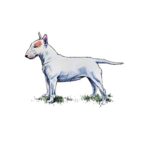
The Bull Terrier is unmistakable with its strong, muscular build and distinctive head shape, often described as “egg-shaped” when viewed from the front. The face is long and deep, with a smooth, downward curve from the skull to the nose, ending in a black, downward-turned tip. The jaw is notably strong, and the teeth should form a clean, regular scissor bite, all set within tight, clean lips.
The breed’s eyes are another signature feature: small, narrow, triangular, and positioned obliquely to enhance the dog’s characteristic intense expression. The ears are thin, small, and set close together, always carried upright, which further emphasizes their alertness and personality.
Athleticism shows throughout the Bull Terrier’s frame. The neck is long, muscular, and elegantly arched, leading into well-laid-back shoulders and straight, heavily boned forelegs. The chest is broad, with a short, muscular back and a gentle upward curve from brisket to belly, giving a powerful yet agile silhouette. The hindquarters are parallel and muscular, providing the drive necessary for their typical jaunty, easy movement.
The coat lies short, flat, and harsh to the touch, reflecting a healthy gloss. Color may range from pure white (with permissible head markings) to brindle, fawn, red, tricolor, and various combinations with white. Blue and liver shades are undesirable within the breed standard. There are no strict size or weight limits; instead, overall substance, balance, and proportion are paramount, with males appearing masculine and females embodying a feminine expression.
Temperament & Behavior
At home, the Bull Terrier is renowned for its even temperament and amenability to discipline. While a bit stubborn at times, the breed is notably affectionate and good-natured around people. Owners often find their Bull Terrier spirited and courageous, bringing mischief and entertainment into everyday life with its fun-loving attitude.
The Bull Terrier originated as a working dog, bred to hunt vermin both above and below ground. That enduring tenacity translates into the modern breed’s confidence and curiosity. Most Bull Terriers blossom with close human contact, forming tight bonds with their owners and thriving on involvement in family activities.
When properly socialized, Bull Terriers can be excellent companions for children, enjoying active play and forming gentle relationships. They can coexist with other dogs with the right introductions, though supervision and patient acclimatization help ensure harmony, particularly around unfamiliar animals due to their strong prey drive.
Bull Terriers shine in homes where clear leadership, consistency, and affection are present. Their playful stubbornness means they might test boundaries, so owners benefit from maintaining routines and using positive reinforcement to guide behavior. The breed’s zest for life and famed sense of humor endears them to those looking for a companion that’s never dull.
Care & Living Needs for the Bull Terrier
The Bull Terrier’s exercise requirements are moderate to high—up to an hour of activity each day keeps them happy and healthy. Outdoor walks, play sessions in a secure garden, and stimulating games all help channel their abundant energy and reduce the risk of unwanted behaviors from boredom.
This breed adapts well to small homes, such as a modest house, provided there’s regular opportunity for outdoor time in a small or medium-sized garden. Although well-suited for both town and country living, ensuring safe fenced areas and ample mental stimulation is crucial wherever you are.
With a short, tight-fitting coat, grooming is refreshingly low-maintenance: a thorough brushing once a week typically removes dead hair and keeps the coat sleek. While Bull Terriers do shed, this is manageable for most owners. Staying on top of nail trims, ear checks, and dental care is recommended, as with all breeds.
Bull Terriers are clever and can benefit greatly from training that is fun and varied. They appreciate learning tricks, scent games, and interactive toys. Early, positive socialization shapes them into confident, well-mannered adults. Conversely, this breed may not suit those seeking a completely sedate or independent pet—owners who prefer quiet, low-energy companions, or who cannot commit regular time to socialization and play, may find other breeds a better match.
Health & Common Issues
Routine veterinary care and attention to balanced exercise and diet help ensure Bull Terriers enjoy healthy, active lives. Regular checks of teeth and ears, coupled with weight management, support overall wellness and longevity, which often exceeds ten years for this breed.
The introduction of colored Bull Terriers helped address earlier issues like congenital deafness seen in the all-white strains, resulting in more robust modern dogs. Owners should stay alert for any unusual changes in mobility, appetite, or behavior by observing their dogs during daily routines and activities.
As with all breeds, responsible breeding and regular health monitoring are important. Establishing a good relationship with your veterinarian can help detect and prevent potential issues before they become significant, ensuring your Bull Terrier remains as lively and affectionate as the day you brought them home.
Official Breed Standard Summary
The official breed standard for the Bull Terrier sets forth guidelines detailing the ideal structure, temperament, and appearance considered fit for the breed’s original function. A strong, muscular physique combined with a well-balanced, agile build forms the essential impression, with males showing clear masculinity and females distinct femininity.
The hallmark is the unique, downfaced head, forming an egg-like profile, enhanced by small, dark, triangular eyes and upright ears that together deliver a determined and intelligent expression. The coat is always short and flat, with a harsh texture and healthy gloss, and the accepted colors range from pure white to brindle, red, fawn, and tricolor options. Certain colors, like blue and liver, are considered highly undesirable, reflecting priorities for breed health and appearance.
Proper movement is distinctive—covering ground smoothly with spirited, easy strides and a confident air. There are no prescribed limits on size or weight, but every Bull Terrier should demonstrate maximum substance for its build commensurate with sex and overall quality.
Faults in conformation or temperament may be penalized relative to their effect on health and well-being. The breed standard is a reference point for breeders and owners who aspire to uphold this unique dog’s integrity, reminding prospective owners that individual dogs may vary from ideal measurements or characteristics.
Frequently Asked Questions about the Bull Terrier
Is the Bull Terrier good for first-time dog owners?
Bull Terriers are intelligent and affectionate, but their independent and sometimes stubborn nature can challenge first-time owners. Those willing to invest time in consistent training and socialization often enjoy rewarding relationships with this breed.
How much exercise does a Bull Terrier need daily?
Bull Terriers benefit from up to an hour of physical activity each day, including walks, play sessions, and mentally stimulating games. Sufficient exercise helps keep them happy and prevents boredom-related mischief.
Is the Bull Terrier good with children?
When raised and socialized well, Bull Terriers are known for their loving and playful attitude with children. Supervision and teaching respectful interaction help foster safe and positive relationships.
Can the Bull Terrier live in an apartment?
While they can adapt to smaller living spaces, Bull Terriers need daily opportunities for exercise and play to thrive. Access to a secure outdoor area or regular outings is important for their well-being.
How much grooming does a Bull Terrier need?
Grooming the Bull Terrier is straightforward: a weekly brushing keeps its short coat clean and glossy. The breed does shed but maintenance is easy compared to longer-coated breeds.
Are there common health concerns in this breed?
Modern Bull Terriers are relatively robust, especially since the expansion of color varieties addressed early issues related to deafness. Regular veterinary checkups and attentive care contribute to a long, active life.


