
What Are the Traits and Care Tips for the Hungarian Pumi?
The Hungarian Pumi is a spirited herding breed known for its lively personality and distinctive appearance. Bred originally for working livestock, the Pumi is now finding a strong following among active families and dog enthusiasts who appreciate its intelligence, agility, and expressive nature. Owners attracted to this breed often enjoy interactive activities, mental challenges, and the loyal companionship that the Pumi brings into the home.
With its roots in Hungary and a relatively recent arrival on the international scene, the Hungarian Pumi fits equally well in rural or urban settings, provided its needs for exercise and stimulation are met. Its curly, weather-resistant coat and compact size make it versatile and appealing, whether as a keen sporting partner, attentive watchdog, or energetic member of the family.
- Overview of the Hungarian Pumi
- Key Characteristics
- Appearance of the Hungarian Pumi
- Temperament & Behavior
- Care & Living Needs
- Health & Common Issues
- Official Breed Standard Summary
- Frequently Asked Questions
Group: Pastoral
Size: Small
Exercise needs: Up to 1 hour per day
Coat length: Medium
Grooming: Once a week
Shedding: No
Lifespan: Over 12 years
Ideal home type: Small house
Town or country: Either
Garden needs: Small/ medium garden
Overview of the Hungarian Pumi
The Hungarian Pumi is a breed with a rich history intertwined with the pastoral life of Hungary. It emerged in the late 17th and 18th centuries as a result of crossing local herding dogs, particularly the Puli, with terriers and German Spitz types. This unique blend of herding instinct and tenacious character has resulted in a smart, agile dog that is able to work livestock and keep properties free of vermin.
Until the early 20th century, the Pumi was often considered a mere variety of the older Puli breed. A notable shift occurred in the 1920s, when deliberate breeding programs began to highlight its traits, leading to a stable and distinct breed type by 1960. While the Pumi remains a staple on Hungarian farms as an energetic herder, its outgoing and intelligent personality have also attracted pet owners worldwide, especially those looking for a dog who thrives on activity and involvement.
The Hungarian Pumi is a good match for individuals or families who want an active companion, enjoy training, and have time to engage in regular exercise or canine sports. Its manageable size, cheerful demeanor, and adaptability to a variety of environments make it suitable for both town and country living, as long as its needs for mental and physical stimulation are met.
Key Characteristics
- Energy level – High; the Pumi needs daily activity to stay content and healthy.
- Trainability – Highly trainable and responsive due to its herding background and intelligence.
- Intelligence – Exceptionally clever, able to solve problems and learn new tasks quickly.
- Prey drive – Moderate; the breed’s terrier ancestry gives it a nose for vermin and small animals.
- Social needs – Enjoys companionship and thrives when included in all family activities.
- Compatibility with families and children – Generally good, particularly with active families familiar with dog behavior.
- Compatibility with other dogs – Typically polite but may be vocal and assertive, especially with unfamiliar dogs.
- Guarding or watchdog tendencies – Alert and expressive, always ready to announce visitors with a bark.
- Adaptability to city or country life – Well-suited to either, provided exercise needs are fulfilled.
- Best suited owner type – Active individuals or families who enjoy training, playtime, and engaging with their dog.
- Typical daily routine – A mix of walks, interactive games, mental challenges, and social time with people.
Appearance of the Hungarian Pumi
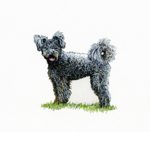
The Hungarian Pumi embodies a unique blend of elegance and robustness in a compact, medium-sized frame. This breed gives a square impression, being just as long as it is tall, with a sturdy yet agile build. Both males and females are moderate in size, with males typically measuring 17 to 17.75 inches at the shoulder, and females slightly smaller. Their weight ranges from approximately 22 to 29 pounds, demonstrating a balance between strength and nimbleness.
The head of the Pumi is distinctive, characterized by a relatively long, narrow shape with an elongated muzzle. The face displays alertness, framed by triangular ears that stand erect with the upper third tipping forward, a true hallmark of the breed. The eyes are oval, dark brown, and set slightly obliquely, giving a bright, intelligent expression. Tight, dark-pigmented lips and a strong jaw provide further definition to the face. The neck is medium in length, gently arched, and well-muscled, seamlessly joining the lean shoulders and level back.
In profile, the body displays well-developed muscles, a level topline, and a tucked-up belly. The forelegs are long, lean, and set straight under the body, while the hind legs are strong, well-muscled, and moderately angulated for agility. Rounded, cat-like feet with strong, dark nails contribute to the breed’s efficient movement. One notable feature is the high-set tail that curls over the croup, showcasing a plume of longer, wiry hair underneath.
The coat of the Hungarian Pumi is striking—dense, curly, and elastic. It combines a crisp outer coat with a soft undercoat and falls between 1½ to 3 inches in length. The breed comes in a range of colors: various shades of grey (often fading from black puppy coats), intense black, pure white, and a fawn shade known locally as “fako,” which exhibits red, yellow, or cream tones with a notable mask. Limited white markings may appear on the chest and toes, but mixed or unusual colors are not acceptable in the breed standard.
Temperament & Behavior
The Hungarian Pumi is renowned for its lively temperament and energetic spirit. Traditionally a herder, the breed displays the alertness and quick reflexes of its working ancestors. The Pumi loves to be in the center of activity, eagerly participating in games, herding exercises, or any interactive task that satisfies its need for both physical and mental engagement.
At home, the Pumi is typically expressive and bold, forming strong bonds with its family. It is a little suspicious of strangers, making it an efficient urban or rural watchdog, but it should never display undue aggression or excessive shyness. Its vocals are another breed trait; Pumik are known to announce anything unusual, which can be managed with proper training and early socialization.
Active families with children often find the Pumi a delightful companion, as long as respectful boundaries are established. The dog’s terrier side makes it both playful and alert, always ready for a challenge. With other dogs, it is generally sociable but may assert its place, especially if not well-socialized from a young age. Its heritage from the Pastoral Group means the Pumi retains an impressive stamina and adaptability, whether herding in the countryside or joining owners on hikes and excursions in city parks.
Overall, the strengths of the Hungarian Pumi lie in its trainability, responsiveness, and affectionate loyalty. Its challenges, such as a strong voice and need for activity, are easily managed by informed owners who can provide positive outlets for the breed’s enthusiasm.
Care & Living Needs for the Hungarian Pumi
The Hungarian Pumi thrives on regular activity, requiring about an hour of exercise per day to satisfy its energetic nature. Walks, off-leash runs in a secure area, interactive games, and dog sports all help meet this need. Its moderate size allows it to adapt to small houses or apartments, as long as it has the opportunity to expend its energy outdoors each day. A small to medium garden is ideal for daily play and scent games, but the Pumi is also comfortable in more urban settings if given proper outlets.
Grooming is relatively straightforward, requiring brushing or combing once a week to keep the medium-length, wavy and curly coat in good condition. The breed is not prone to shedding, which is an added bonus for those who appreciate a tidy home. Regular grooming also helps keep the coat free of mats while maintaining the breed’s characteristic natural appearance. Occasional trimming may be needed on the body, head, and legs, but over-trimming should be avoided.
Mental stimulation is a must for the Hungarian Pumi. Puzzle toys, scent work, agility courses, and training exercises prevent boredom and reduce the risk of unwanted behaviors such as excessive barking. Early socialization and positive reinforcement training are highly effective, channeling the Pumi’s intelligence into desirable habits.
This breed is not suited for sedentary households or owners who cannot provide daily engagement. Those who lead a quiet lifestyle, travel frequently without their dog, or are unwilling to invest time in active training and play may find the Pumi’s lively energy overwhelming.
Health & Common Issues
Information on specific hereditary health conditions in the Hungarian Pumi is not broadly highlighted in current breed descriptions. Generally, the breed is noted for its robust constitution and adaptability, with many individuals enjoying a lifespan of over 12 years.
As with any active and intelligent breed, routine veterinary care, proper weight management, and balanced exercise are important to maintain health and wellbeing. Attending regular health checks, monitoring dental hygiene, and providing a high-quality diet all contribute to the continued vigor of the Pumi.
Owners should be attentive to the typical needs of a medium-sized, active dog, including routine vaccinations, parasite prevention, and basic health monitoring. With appropriate preventive care and a stimulating environment, most Hungarian Pumik will remain healthy and full of vitality throughout their lives.
Official Breed Standard Summary
The official breed standard for the Hungarian Pumi outlines an agile, squarely proportioned dog with a sturdy, muscular frame and moderately fine bone. The Pumi is instantly recognizable by its high-set, partly forward-folded ears and expressive face. The coat should be of medium length, elastic, wavy, and curly, never forming cords or appearing matted, with a crisp outer coat and soft undercoat. Clipping and grooming should preserve the natural texture and lively style.
Acceptable colors according to the standard include black, various shades of grey, intense white, and the uniquely fawn “fako” shade with desirable pigmentation. Size is specific: adult males should stand around 43–45 cm at the shoulder, females slightly less, with a suitable tolerance given for individual variation. Any deviation from those features—whether in size, appearance, color, or expression—should be viewed in relation to its impact on the dog’s welfare and ability to perform its traditional functions.
Movement should be lively, light, and well-balanced, reflecting the breed’s background as a worker and athlete. The standard also specifies correct bite, pigmentation, and mandatory features such as two testicles fully descended in males. Potential puppy buyers should be aware that the ideal described in the standard is a guideline, and natural variation within the breed is expected and acceptable as long as health and function remain uncompromised.
Frequently Asked Questions about the Hungarian Pumi
Is the Hungarian Pumi good for first-time dog owners?
The Pumi’s intelligence and lively nature suit owners who are engaged and willing to invest time in training and daily exercise. While not difficult to handle, those new to dog ownership should be prepared for the breed’s need for activity and mental stimulation.
How much exercise does a Hungarian Pumi need daily?
About one hour of varied exercise each day is recommended. This can include brisk walks, playtime, or participation in dog sports to keep both mind and body busy.
Is the Hungarian Pumi good with children?
Hungarian Pumis are generally good companions for children, especially in active households where respectful interactions are encouraged. Supervision and early socialization help ensure positive relationships.
Can the Hungarian Pumi live in an apartment?
The breed adapts well to apartment living as long as it receives adequate daily exercise and opportunities for play. Access to a small garden or daily park visits is beneficial but not strictly required if exercise needs are otherwise met.
How much grooming does a Hungarian Pumi need?
The curly, medium-length coat is relatively easy to maintain with weekly brushing or combing. The breed is low-shedding, but occasional trimming may be useful to maintain its neat appearance.
Are there common health concerns in this breed?
The Hungarian Pumi is generally a robust breed without widely recognized breed-specific health problems. Routine veterinary care and preventive measures are important to ensure long-term wellbeing.


