Siberian Husky: moderate proportions and an active daily routine
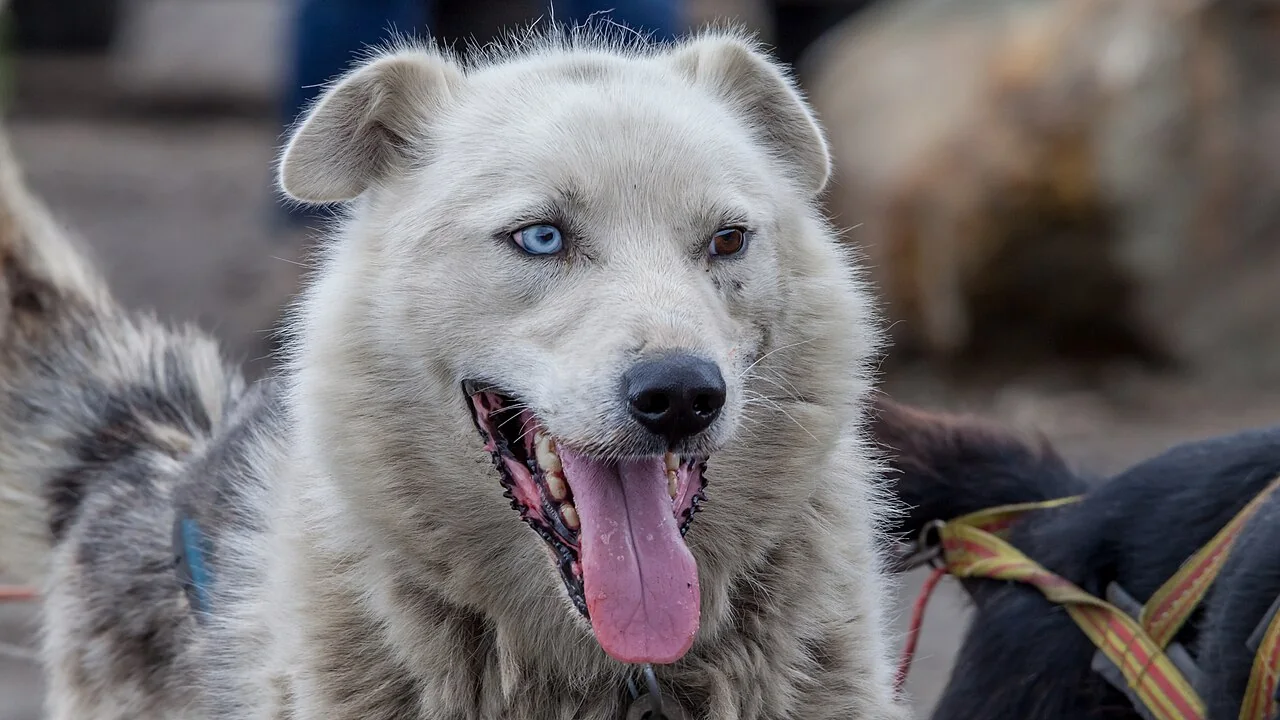
The Siberian Husky has a moderately built frame, slightly longer than tall, and a smooth-lying double coat. Its lighter outline differs from the heavy-freighting Malamute. Substantial exercise, secure outings and extra undercoat work during shedding are practical parts of the week.
Proportion matters within the ranges
The FCI gives males 53.5–60 cm and 20.5–28 kg, females 50.5–56 cm and 15.5–23 kg. These are extreme limits with no preference for either end; weight must be proportional to height. The earlier UK figures differ: 53–60 cm and 20–27 kg for males, 51–56 cm and 16–23 kg for females.
The FCI coat is medium in length, with straight, smoothly lying guard hair rather than harsh, standing or shaggy hair. The soft, dense undercoat may be absent during shedding, which the standard explicitly regards as normal. The UK overview’s short-coat category is broader than that detailed description.
Weekly brushing, more during the shed
The AKC recommends weekly brushing and usually only a few baths yearly for a pet. During the twice-yearly undercoat shed it advises continually removing loose hair with a pin brush and metal comb. The coat may look less full during that period without needing to be shaped back into a fuller outline.
The same care guide includes keeping nails trimmed. The earlier UK grooming category is more than once weekly, so plan regular coat checks and extra time when the undercoat comes out. Discuss the tools and technique with a groomer before relying on a quick surface brush.
A secure exercise plan
The UK guide places exercise above two hours daily and describes a large house and garden in the country. The AKC also includes urban walks and dog play groups among possible exercise options, while stressing a lead, harness or fenced space. Its working-dog exercise advice calls for substantial activity and something to do with the owner.
Compare northern routines
The Malamute’s preferred freighting sizes describe a more substantial dog with daily brushing. The Samoyed has a standing ruff and harsh outer coat, also with a daily brush routine. Their similar UK exercise categories do not make the grooming methods or underlying body proportions the same.
Sources and further reading
Siberian Husky at a glance
These earlier UK breed guides are starting points for comparison. Details may have changed, and individual dogs vary.
- Breed group
- Working
- Size
- Medium–large
- Daily exercise
- More than 2 hours per day
- Grooming frequency
- More than once a week
- Coat length
- Short
- Sheds
- Yes
- Suggested home size
- Large house
- Town or country
- Country
- Garden recommendation
- Large garden
- Lifespan
- Over 10 years
FCI breed standard
Standard guidance describes the breed ideal; individual dogs vary.
- Origin
- U.S.A
- Group
- 5 - Spitz and primitive types
- Section
- 1 - Nordic Sledge Dogs
- Height
- Males: 53.5–60 cm; Females: 50.5–56 cm
- Weight
- Males: 20.5–28 kg; in proportion to height; Females: 15.5–23 kg; in proportion to height
The Husky figures are the stated extreme limits, with neither end preferred. Weight must be in proportion to height; this is not the desirable freighting-size scheme used for the Malamute.
Official FCI standard (PDF)
Standard effective from 2022-11-14; checked 2026-10-15