
What Are the Traits and Care Tips for Tibetan Terriers?
The Tibetan Terrier brings a unique combination of heritage, character, and versatility to the world of dog lovers. Well suited for individuals and families looking for an affectionate and clever companion, the breed stands out through its lively personality, distinct appearance, and adaptable nature. Whether you’re living in a cozy townhome or a rural setting, the Tibetan Terrier often fits right in, making itself a beloved member of any household.
This breed is perfect for those who appreciate dogs with both a working legacy and a companion’s heart. Its engaging temperament, moderate exercise needs, and friendly yet reserved attitude toward strangers make it just as appealing for first-time owners as it is for more experienced dog enthusiasts. If you value a sociable dog that enjoys both activity and quiet time with the family, the Tibetan Terrier may well be the perfect addition to your home.
- Overview of the Tibetan Terrier
- Key Characteristics
- Appearance of the Tibetan Terrier
- Temperament & Behavior
- Care & Living Needs
- Health & Common Issues
- Official Breed Standard Summary
- Frequently Asked Questions
Group: Utility
Size: Medium
Exercise needs: Up to 1 hour per day
Coat length: Long
Grooming: Every day
Shedding: No
Lifespan: Over 12 years
Ideal home type: Small house
Town or country: Either
Garden needs: Small/ medium garden
Overview of the Tibetan Terrier
The Tibetan Terrier carries a remarkable story that starts in the mountains of Tibet, where it was initially bred—not as a true terrier, despite its name—but as an agile herding dog assisting with sheep. This breed was originally grouped with the Lhasa Apso and called the Lhasa Terrier at early UK dog shows, highlighting its close relationship with Tibet’s iconic dogs. While not a strictly working breed by Western definitions, its agility and adaptability made it invaluable to nomadic and monastic life in its homeland.
The breed’s journey to broader popularity began in the early 20th century. Dr. Greig, an English surgeon stationed on the Indian/Tibetan border in the 1920s, became enchanted with these unique dogs. Upon returning to England in the 1930s, she brought her Tibetan Terriers back with her. Her early foundation stock played a crucial role in developing and popularizing the breed, ensuring its recognition in both the UK and the USA by the 1930s. Since then, the breed has cemented itself as both a cherished companion and a show ring favorite.
Today’s Tibetan Terrier is suited for those who value both personality and history in their four-legged friend. Their sturdy, rustic appearance and easygoing yet lively demeanor make them a fit for households looking for a medium-sized dog with spirit, loyalty, and character.
Key Characteristics
- Energy level – Moderate; usually content with up to an hour of daily exercise.
- Trainability – Intelligent but can show an independent streak, requiring positive reinforcement and consistency.
- Intelligence – Quick to learn, enjoys mental challenges and interactive play.
- Prey drive – Not typically high; originally bred more for herding than hunting.
- Social needs – Strong bond with family, but can be reserved around new people until familiar.
- Compatibility with families and children – Generally very good, forming loyal and gentle relationships.
- Compatibility with other dogs – Sociable with early socialization, but best introduced gradually to new dogs.
- Guarding or watchdog tendencies – Alert and willing to sound the alarm; not aggressive, but makes a vigilant watchdog.
- Adaptability to city or country life – Thrives in both environments provided daily needs are met.
- Best suited owner type – Responsive to owners who provide regular grooming, exercise, and companionship.
- Typical daily routine – Enjoys walks, interactive play, and family time, balanced with periods of calm relaxation.
Appearance of the Tibetan Terrier
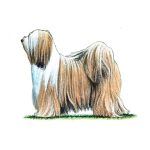
The Tibetan Terrier is instantly recognizable by its well-balanced, square outline and rustic appeal. As a medium-sized dog, adult males typically stand between 14 and 16 inches (36–41 cm) at the shoulder, with bitches running slightly smaller. The breed’s solid, compact build highlights its working origins, combining muscle with porter-like proportions that are neither delicate nor exaggerated.
Distinctive features include a moderately long skull, slightly narrowing from the ears towards the eyes and displaying a strong, determined expression adorned with a signature beard. The large, round, dark brown eyes convey intelligence, while the V-shaped, pendant ears are set high and enveloped in flowing feathering. The muzzle’s strength, complete with a well-developed jaw and black nose, suggests capability without coarseness. Full dentition and a scissor or reverse scissor bite are characteristic, adding to the impression of robustness.
The Tibetan Terrier’s double coat is one of its most striking traits—profuse, fine, and long, yet neither silky nor woolly. The undercoat is soft and woolly, providing insulation, while the topcoat flows in straight or gently waved locks. Regular grooming is essential due to this substantial coat, but owners are rewarded with a dog that sheds minimally. The breed comes in a dazzling array of colors, including white, gold, cream, grey, black, and various combinations. The only unacceptable shades are chocolate, liver, or merle.
Rounded feet with ample fur between the toes and a medium-length tail carried in a distinct curl over the back further complete the picture. The Tibetan Terrier’s overall impression is that of a sturdy, joyous, and eminently touchable dog—perfectly blending show-quality beauty with practical resilience.
Temperament & Behavior
The Tibetan Terrier exemplifies a blend of liveliness, intelligence, and steady loyalty. Described as outgoing and alert, this breed is typically neither aggressive nor overly shy, making it a manageable and pleasant companion for many different households. While affectionate and playful with their own family, Tibetan Terriers tend to be a little guarded toward strangers, taking time to warm up but rarely displaying fear or undue aggression.
As a breed from the Utility Group—which includes many of the world’s oldest and most functionally diverse dogs—the Tibetan Terrier was designed for life as a multi-purpose companion, combining the alert sensibilities of a watchdog with a strong desire for human company. They form deep attachments with their loved ones, often seeking out family activities and contentedly participating in day-to-day life. Their nature is typically game and spirited, but they seldom tip into unruly exuberance.
Interactions with other animals are usually cooperative, particularly when the dog has been properly socialized from an early age. Tibetan Terriers can be vigilant barkers, alerting their families to new visitors or unusual sounds, but they lack the fierce territorial drive found in some classic guard breeds. For many owners, the balance of warmth and sensitivity they offer becomes one of their most cherished attributes.
Potential challenges include a tendency toward independence—a trait that traces back to their resourceful Tibetan roots. Gentle and patient training helps to overcome any stubbornness, ensuring all of the breed’s intelligence and charm can shine through in both home and social settings.
Care & Living Needs for the Tibetan Terrier
The Tibetan Terrier’s medium energy level means daily exercise is important but not demanding. A walk lasting up to an hour, paired with play in a secure garden or yard, usually suffices. This breed’s adaptable nature makes it suitable for various home environments, from smaller houses in the city to countryside residences, provided there is a small to medium garden for activity and exploration.
Grooming is one of the Tibetan Terrier’s most significant care requirements. Its long double coat needs daily attention to prevent matting and to maintain the striking appearance this breed is known for. Although it is renowned for minimal shedding, the profuse hair can quickly tangle and accumulate debris, making thorough brushing and occasional trimming essential.
Mental stimulation is equally vital. Intelligence and a keen sense of curiosity mean that Tibetan Terriers excel when provided with training challenges, interactive toys, and time spent learning tricks or simple obedience tasks. Socialization from puppyhood and gentle, positive-reinforcement training help the breed develop its best traits. These dogs thrive on companionship and are happiest when included as part of the family’s daily rhythm.
The breed may not be the perfect fit for people seeking a low-maintenance, independent pet or those unable to commit to regular grooming. Households looking for a dog happy to entertain itself for long periods or requiring only minimal attention in coat care may find the Tibetan Terrier’s needs to be more than anticipated.
Health & Common Issues
The Tibetan Terrier is known for its overall sturdy constitution and can often enjoy a lifespan of over 12 years with proper care. Like all breeds, routine veterinary checks, a balanced diet, and regular exercise are important to maintaining good health. Attention to weight control helps to ease any potential strain on joints, which is wise for a medium-sized, active breed.
Given their full dentition and strong jaw, monitoring dental hygiene is important. Regular brushing and appropriate chew toys can assist in maintaining healthy teeth and gums. Regular checks for cleanliness around the ears, eyes, and toes—especially due to their heavily furnished coat—can help spot issues early and prevent discomfort.
Daily grooming not only keeps the coat in top condition but also provides an opportunity for owners to check their dog for lumps, bumps, or signs of skin irritation. Combined with an active, enriching lifestyle and ongoing attention to health, the Tibetan Terrier can be a robust and delightful member of the household for many years.
Official Breed Standard Summary
The official breed standard for the Tibetan Terrier sets guidelines for the breed’s appearance, movement, and character. The ideal Tibetan Terrier should present as a sturdy, squarely built, medium-sized dog—in balance, free from exaggeration, and fully capable of the tasks it originally performed. Soundness and health remain paramount, and breeders or judges are keenly aware of avoiding features that could compromise wellbeing.
Size, as indicated by the standard, places males at 14–16 inches at the shoulder, with bitches slightly smaller. The coat is a hallmark feature: a double layer, profuse and long, fine but not silky or excessively woolly, with either straight or waved texture. Coloration is impressively varied, ranging across shades from white, cream, gold, and grey to black, including many combinations—though chocolate, liver, or merle are not acceptable.
Movement in the Tibetan Terrier should appear smooth and effortless, marked by a powerful but elegant stride. The breed’s outline should always look square and balanced, while the tail’s characteristic curl and feathering adds distinct charm. While the breed standard provides a valuable template, it’s understood that living dogs may fall slightly outside the exact measurements, with temperament and overall soundness being of utmost importance.
Any deviation from the ideal, particularly if it impacts health or welfare, is seen as a fault relative to its severity. Prospective owners are encouraged to appreciate the breed standard as a guideline—breed health, personality, and function are just as important as looks when choosing a Tibetan Terrier.
Frequently Asked Questions about the Tibetan Terrier
Is the Tibetan Terrier good for first-time dog owners?
The Tibetan Terrier’s affectionate personality, intelligence, and manageable exercise needs make it a fine choice for many first-time dog owners. Consistent training and a willingness to commit to regular grooming are important for the best experience.
How much exercise does a Tibetan Terrier need daily?
This breed enjoys up to an hour of exercise per day. Walks, play sessions, and opportunities to explore a garden or secure yard usually meet their needs.
Is the Tibetan Terrier good with children?
Generally, the Tibetan Terrier gets along well with children, forming loyal and gentle relationships. As with all dogs, interactions should be supervised, especially with younger children, to ensure mutual respect and safety.
Can the Tibetan Terrier live in an apartment?
With their medium size and adaptable nature, Tibetan Terriers can do well in apartments as long as they receive sufficient daily exercise and mental stimulation. Access to a small garden or nearby park can be beneficial.
How much grooming does a Tibetan Terrier need?
This breed requires daily grooming to keep its long, profuse coat in good condition. Regular brushing helps prevent mats and tangles, while also minimizing debris and keeping the coat attractive.
Are there common health concerns in this breed?
The Tibetan Terrier is generally robust and healthy. Routine veterinary care, weight management, dental hygiene, and regular monitoring for skin or eye issues help maintain their wellbeing throughout life.


