
What Are the Traits and Care Tips for Whippets?
The Whippet is a graceful, medium-sized sighthound cherished by those looking for an affectionate companion with streamlined elegance and surprising athleticism. Bred for both the show ring and the comfort of the family home, the breed has gained a reputation as a beloved companion for individuals, couples, and families seeking a gentle-natured yet energetic dog. This breed stands out for its ability to strike a balance between a calm housemate and a spirited exercise partner.
Owners captivated by the Whippet will find a dog that transitions easily from curling up on the sofa to dashing through a garden or park. For anyone interested in a low-maintenance, affectionate, and agile breed, the Whippet has much to offer. As a family pet, it is known for its kind disposition and adaptability, making it suitable for a wide variety of home environments.
- Overview of the Whippet
- Key Characteristics
- Appearance of the Whippet
- Temperament & Behavior
- Care & Living Needs
- Health & Common Issues
- Official Breed Standard Summary
- Frequently Asked Questions
Group: Hound
Size: Small
Exercise needs: Up to 1 hour per day
Coat length: Short
Grooming: Once a week
Shedding: Yes
Lifespan: Over 12 years
Ideal home type: Small house
Town or country: Either
Garden needs: Small/ medium garden
Overview of the Whippet
The Whippet traces its lineage back to the Middle Ages, where dogs of its type were familiar companions and workmates. Its development owes much to the Greyhound, with ancient roots stretching into Celtic and Roman times. By the 1800s, dedicated breeding had given rise to the Whippet as a distinct breed, highly prized for both hunting small game and as a skilled vermin controller. These skills later took center stage in the form of Whippet racing, a popular pastime in mining communities as well as urban areas across the United Kingdom.
As years passed, the Whippet gradually shifted from a working dog and competitor to a household favorite and show dog. Its serene nature, elegant looks, and fluid movement have enchanted judges and spectators alike in the show ring. Despite its racing heritage, the modern Whippet is valued just as much for companionship and its effortless blend into domestic life.
The Whippet thrives in homes where its need for gentle affection and moderate daily activity is met. It is well-suited for both urban and rural living, making a comfortable addition to apartments, small homes, or properties with a modest garden. Ideal owners for the Whippet appreciate both active pursuits outdoors and quiet relaxation indoors.
Key Characteristics
- Energy level – Whippets are lively outdoors but settle into calmness indoors, enjoying periods of relaxation.
- Trainability – They are eager to please and learn quickly, responding best to gentle, consistent guidance.
- Intelligence – Intelligent and observant, Whippets thrive on mental stimulation and enjoy puzzle-based activities.
- Prey drive – Bred to chase, they have a strong instinct to pursue small animals; care is needed around wildlife.
- Social needs – Whippets bond closely with their people and enjoy the company of both humans and other dogs.
- Compatibility with families and children – Known for their gentleness, Whippets are well-suited to families with respectful children.
- Compatibility with other dogs – They usually get along well with other dogs, especially fellow sighthounds.
- Guarding or watchdog tendencies – Not natural guard dogs; they rarely show aggression or loud warning behavior.
- Adaptability to city or country life – Equally comfortable in towns or rural settings, provided their exercise needs are met.
- Best suited owner type – Ideal for owners who offer affection, moderate exercise, and a cozy spot indoors.
- Typical daily routine – A mixture of outdoor play and restful indoor time, with opportunities for occasional sprints.
Appearance of the Whippet
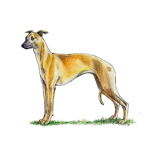
The Whippet presents a harmonious blend of power, trimness, and elegance. Medium in size with a streamlined silhouette, this breed embodies speed without sacrificing refinement. Standing between 17½ and 20 inches tall, Whippet males and females possess a balance of strength and grace, giving them their signature “Greyhound in miniature” look while remaining unique in their own right.
The head is long and lean, featuring a flat top which tapers smoothly toward a clean-cut muzzle. Wide-set, oval eyes convey a bright, alert expression, framed by small, rose-shaped ears with fine texture. The neck is long, moderately arched, and muscular, flowing into well-laid-back shoulders and a deep, roomy chest. The Whippet’s back is broad, with a gentle arch over the loin but never humped, and the definite tuck-up highlights its athletic build.
Strong and broad hindquarters provide powerful propulsion, while the straight, upright forearms keep the breed agile and ready for a sprint. Their tail is characteristically long and tapering, curving gracefully without exceeding the line of the back, and their feet are oval with arched knuckles and thick pads for cushioning during high-speed runs.
The coat is fine, short, and closely textured, requiring minimal grooming. Whippets are available in an impressive variety of colors and combinations, ranging from black and blue to brindle, cream, fawn, red, silver, white, and assorted particolors. The breed standard allows almost any color except for merle.
Temperament & Behavior
The Whippet is best described as gentle and affectionate, possessing an even and stable temperament that has made the breed so cherished in family settings. Their adaptability shines—in both sporting environments and the home—where they move seamlessly between active play and peaceful relaxation.
Living with a Whippet means enjoying a companion who is quietly loyal and adores being part of daily family life. The breed tends to form strong bonds with all household members, offering affection without being demanding or overbearing. With children, Whippets are patient and sweet-natured, provided respectful interaction is the norm.
Despite being dignified and sometimes aloof with strangers, Whippets are trustworthy companions. They generally get along well with other dogs, especially within their own breed or among other sighthounds. Their prey drive is notable, however, so smaller pets or wildlife may trigger their chase instinct—something owners should be mindful of in unsecured environments.
Challenges for owners are typically minor and revolve around understanding the breed’s need for a soft approach. Harsh training methods do not suit the sensitive Whippet; patience and kindness go much further in fostering confidence and desirable behaviors. They rarely bark or show aggression, making them less suitable for families looking for a dedicated watchdog.
Care & Living Needs for the Whippet
Whippets benefit most from up to one hour of exercise each day. This can include brisk walks, on-lead running, or sessions in secure areas where they can safely stretch their legs with short sprints. Their moderate energy makes them versatile companions for urban and country dwellers alike, as long as their daily need for movement is respected.
The breed is well-suited for small houses or apartments, requiring only a small or medium garden for play. They’re happy to adapt to both town and rural life, provided they are included in the family’s daily routine and have opportunities to explore the outdoors in a safe, enclosed space.
Grooming is simple; a weekly brush is usually sufficient to keep the coat healthy and shiny. Their fine, short coat does shed, though not excessively, and it lacks undercoat, making them less suited for outdoor living in cold climates. Occasional baths, nail trims, and dental care are also recommended as part of their routine upkeep.
Engagement is important for the Whippet’s mental well-being. They excel with positive reinforcement training and enjoy learning tricks, playing games, or using puzzle feeders. Owners should provide a mix of physical activity and mental stimulation to keep their Whippet content and well-behaved. This breed may not suit those seeking a rugged outdoor dog or those unable to offer ample attention and companionship.
Health & Common Issues
Whippets are generally known for their longevity, routinely exceeding 12 years with appropriate care. Their lithe build and balanced proportions contribute to their overall soundness, particularly with respect to movement and physical function. The breed’s official guidelines emphasize the importance of avoiding exaggerated features that could compromise welfare or mobility.
Because the Whippet’s coat is fine and their body lacks excess padding, they may be more susceptible to knocks, chills, and bruises than heavier-coated breeds. Owners should take care to provide a comfortable, soft resting area and protect them from extreme cold. As with any breed, maintaining a healthy weight, supplying a balanced diet, and ensuring appropriately paced exercise are the keys to avoiding strain on joints and maintaining vitality throughout the dog’s life.
Routine veterinary checks remain the best defense for detecting any emerging issues, including dental care and general wellness checks. There are no breed-specific health concerns listed that distinguish the Whippet from average, healthy, well-bred dogs. Keeping the dog mentally engaged and physically fit supports both quality and length of life for this elegant breed.
Official Breed Standard Summary
The official Whippet breed standard outlines a dog that exemplifies muscular power, athletic strength, and effortless grace. Whippets should appear balanced and free of exaggeration, constructed for both speed and endurance, with an emphasis on soundness and overall fitness. The ideal Whippet is neither too fine nor too coarse, displaying harmony throughout its proportions.
Coat texture is fine, short, and close to the body, and coloration is inclusive of nearly all varieties—black, blue, fawn, brindle, cream, red, silver, white, and numerous combinatory particolors. The only disallowed color pattern is merle. The breed’s movement should reflect efficiency: a long, easy stride, plenty of freedom of action, forelegs low over the ground, and hind legs gathered well under the body for power.
Height standards for adult Whippet males are set between 18½ and 20 inches, with females ideally standing between 17½ and 18½ inches. The breed notes highlight that these measurements serve as guidelines, and individual dogs may be slightly larger or smaller.
To maintain health and welfare, any deviation from the breed’s ideal—particularly features or traits that could undermine function or quality of life—should be treated as faults. Soundness, robust health, and absence of exaggeration remain the standard’s guiding principles.
Frequently Asked Questions about the Whippet
Is the Whippet good for first-time dog owners?
Yes, the Whippet is well suited for responsible first-time owners. Their gentle personality, moderate exercise needs, and adaptability make them accessible, though new owners should be prepared for their prey drive and sensitivity.
How much exercise does a Whippet need daily?
The breed thrives with up to one hour of exercise per day. This can include walks, runs, or the opportunity to dash around in an enclosed space to satisfy their need for periodic bursts of speed.
Is the Whippet good with children?
Whippets are known for their affectionate and gentle disposition with children. They blend well with families who teach respectful interactions and supervise play, especially with young kids.
Can the Whippet live in an apartment?
Whippets adapt well to apartment living as long as they receive regular walks and occasional opportunities for free running in a safe area. They are quiet, clean, and love relaxing indoors, making them good city companions.
How much grooming does a Whippet need?
Grooming requirements are minimal; a weekly brush is usually sufficient to remove dead hairs and maintain the coat’s shine. Regular attention to teeth and nails will help keep them in top condition.
Are there common health concerns in this breed?
The Whippet is generally robust and healthy with proper care. Their lean build calls for protection from cold and rough play, and routine veterinary care is recommended to monitor overall wellness.


