
What Are the Traits and Care Tips for Mastiffs?
The Mastiff is a true giant among dog breeds, blending historic significance with a dignified, loyal, and powerfully built presence. This stately dog has served for centuries as a guardian and protector, making it an appealing choice for experienced owners seeking a steadfast companion who offers both security and unshakeable loyalty. With their calm demeanor and affectionate nature, Mastiffs can become devoted family members for the right owners willing to accommodate their size and specific needs.
Ideal for those with large homes and country lifestyles, the Mastiff is less suited to compact living but excels in spacious environments where their protective instincts and gentle giant reputation shine. Whether patrolling an estate or quietly watching over the household, this breed offers a unique combination of courage, friendliness toward loved ones, and indifference to strangers, making it an excellent choice for families seeking both companionship and steadfast vigilance.
- Overview of the Mastiff
- Key Characteristics
- Appearance of the Mastiff
- Temperament & Behavior
- Care & Living Needs
- Health & Common Issues
- Official Breed Standard Summary
- Frequently Asked Questions
Group: Working
Size: Large
Exercise needs: Up to 1 hour per day
Coat length: Short
Grooming: Once a week
Shedding: Yes
Lifespan: Under 10 years
Ideal home type: Large house
Town or country: Country
Garden needs: Large garden
Overview of the Mastiff
The Mastiff is a breed steeped in history, tracing its lineage back to ancient Britain where large, brave dogs guarded homes and estates long before the Romans arrived. Roman invaders, in awe of the breed’s physical size and courage, brought Mastiffs back to Rome, where they were celebrated for their prowess in the arena as opponents for wild animals. Over the centuries, these dogs evolved to fulfill a wide variety of roles, from guardians and hunters to protectors of estates and even, at darker points, participants in blood sports before such activities were outlawed.
By the 20th century, the breed faced significant threats to its survival, especially after the decline in demand for their traditional roles and the devastation of the Second World War. The Mastiff’s resilience owes much to a combination of passionate devotees and international breeding collaborations, which restored the population using dogs previously exported abroad. Today, Mastiffs remain rare but are cherished by a dedicated community committed to preserving their characteristic blend of size, substance, and sound movement.
The modern Mastiff is best suited for experienced owners who can handle a large, powerful dog and who have the space to provide for its needs. While they are not especially numerous, Mastiffs reward their owners with unwavering loyalty and gentle companionship, thriving in environments where their heritage and temperament are fully appreciated.
Key Characteristics
- Energy level – Gentle and calm, Mastiffs have moderate exercise requirements and are generally not hyperactive.
- Trainability – Intelligent yet sometimes independent, they respond well to patient, consistent training.
- Intelligence – Possess good problem-solving abilities and tend to pick up on routines quickly.
- Prey drive – Typically low, as the breed has been developed more for guarding than for hunting.
- Social needs – Form strong bonds with family and are happiest when integrated into the household routine.
- Compatibility with families and children – Known for being affectionate and gentle with their loved ones, particularly with respectful children.
- Compatibility with other dogs – Can generally coexist with other dogs when properly introduced, though their size means supervision is essential.
- Guarding or watchdog tendencies – Natural protectors, Mastiffs are excellent watchdogs without being unnecessarily aggressive.
- Adaptability to city or country life – Vastly prefer open spaces and country settings, often struggling in confined, urban homes.
- Best suited owner type – Experienced, physically capable individuals or families with ample indoor and outdoor space.
- Typical daily routine – Relatively relaxed, with moderate walks, time for bonding, and opportunities for mental stimulation.
Appearance of the Mastiff
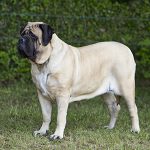
The Mastiff’s imposing stature is matched by its commanding physical presence. These giants are powerfully built, with broad, deep bodies and well-defined muscles. When viewed from any angle, the head appears square, accentuated by a broad skull and a flat, distinctly wrinkled forehead when attentive. The proportions are carefully balanced, striving for an ideal blend of height, substance, and quality movement that reflects both strength and soundness.
The breed’s facial features are distinct: the muzzle is short and broad, forming a nearly right angle with the upper line of the face. Deep-set, hazel brown eyes are widely spaced, conveying a calm yet alert expression. Small, thin ears are set high, lying flat and close to the cheeks, continuing the outline of the skull’s summit. Their jaw is strong, with wide-apart canines and either a level bite or a slightly undershot jaw that never shows teeth when the mouth is closed.
Physically, the Mastiff displays a broad chest and well-rounded ribs, supporting a back and loins that are muscular and robust. The hindquarters are especially powerful, ensuring strength and an easy, ground-covering gait. Their large, round feet and strong, upright pasterns contribute to both stability and endurance. The tail is broad at the root, tapering elegantly and reaching at least to the hocks, curving slightly when the dog is excited but never carried over the back.
The coat is short, dense, and lies close to the body, feeling coarser over the neck and shoulders. Acceptable colors include apricot, fawn, and brindle, always with a black muzzle, ears, and nose, plus black pigment around the eye rims extending between the eyes. Any excessive white markings are undesirable, and other color combinations are not accepted by the breed standard. The Mastiff’s entire impression is one of grandeur, strength, and surety.
Temperament & Behavior
The Mastiff is renowned for its calm and affectionate nature toward its owners, combining gentleness with a natural suspicion toward strangers. While never shy or timid, the breed prefers to observe new people with a watchful detachment, only stepping into action if it senses a genuine threat to its family or territory. Such self-control, coupled with its imposing presence, has made the Mastiff a legendary guardian for centuries.
At home, Mastiffs thrive as loyal companions who form deep attachments to their family members. They are particularly affectionate with those they know and trust, enjoying time spent in the presence of loved ones while often displaying an understated, almost noble dignity. Their calm attitude makes them well suited for families seeking a quiet but vigilant companion.
With the right early socialization, Mastiffs can get along harmoniously with children and other animals. Their sheer size calls for careful supervision around young kids and smaller pets, and proper introductions to other dogs are recommended. Owners appreciate the Mastiff’s reliability—while they are willing to defend their home if needed, they are not inclined to unprovoked aggression or unruly behavior.
Belonging to the Working group, the Mastiff exemplifies the qualities of a specialized, reliable canine partner. Their temperament makes them excellent at guardianship and provides families with a gentle giant who is both watchful and loving. However, their independent streak means they benefit most from confident, assertive handlers who can provide consistent leadership.
Care & Living Needs for the Mastiff
Mastiffs need daily exercise, but their requirements are moderate compared to more energetic breeds. One hour of walking or playtime per day typically suffices, helping maintain both their physique and psychological well-being. A home with a spacious garden and ample opportunity to move around is ideal, and their preference for country living means they thrive in more rural settings with plenty of space to patrol.
The breed’s imposing size calls for a large house and a securely fenced garden, as Mastiffs are not well suited to apartment life or small homes. They need room to stretch, relax, and quietly monitor their environment. This is a breed that appreciates its own space and enjoys the security of a familiar territory.
Grooming is relatively low-maintenance thanks to their short, close-lying coat. A good brushing once a week is generally enough to remove dead hairs and keep the coat looking healthy. While Mastiffs shed, routine care limits loose fur and keeps their skin in good condition. Their coat is practical and easy to manage, though periodic checks for cleanliness and overall health remain important.
Mental stimulation is as important as physical exercise for these intelligent, independent dogs. Training sessions should focus on positive reinforcement, patience, and consistency. While generally eager to please, a Mastiff can sometimes display an independent streak, so gentle, clear guidance is most effective. The breed is not the best fit for first-time or physically frail owners, as managing a dog of this size requires both experience and confidence.
Health & Common Issues
The available information does not include specific health warnings for the Mastiff; however, as a large and powerful breed, responsible owners should be proactive about their pet’s wellbeing. Regular veterinary check-ups, a balanced diet, and controlled exercise will contribute significantly to a Mastiff’s overall quality of life. Weight management is particularly important, as excess pounds can put unnecessary strain on joints and the cardiovascular system.
The breed’s relatively short lifespan under ten years highlights the need for attentive, preventative care. Owners should carefully monitor their Mastiff’s mobility, provide supportive bedding for joints, and avoid overexertion during periods of rapid growth or in old age. Good dental hygiene and routine health screenings help catch potential issues early, ensuring any concerns are addressed promptly.
Routine grooming and regular assessment of the eyes, ears, and nails help maintain general health and comfort. Given the Mastiff’s size and strength, any subtle signs of discomfort deserve prompt attention, as even minor issues can become significant if ignored.
Official Breed Standard Summary
The official breed standard for the Mastiff outlines the essential qualities that define this remarkable dog: a combination of grandeur, power, and calm confidence. The standard emphasizes a square outline to the head, broad and deep body, large yet well-balanced proportions, and a focus on sound movement and health. Size is prized, but only when paired with structure and quality that support the Mastiff’s function and longevity.
Key features include a broad skull with a short, truncated muzzle, moderate hazel brown eyes, high-set ears lying close to the head, and strong, wide jaws. The chest is deep and wide, ribs well sprung, and the topline level. Hindquarters are especially powerful, and the tail is carried straight or with a gentle curve when alert. Coat texture is short and dense, and the accepted colors are apricot, fawn, or brindle, with the signature black mask. White markings are undesirable, and any other color combinations are disallowed.
Movement is expected to be powerful, fluid, and ground-covering, driven from the rear without a tendency to pace. Any departures from these qualities are considered faults, especially features that might compromise health or functional ability. Absolute soundness and avoidance of unwanted exaggerations are paramount.
The standard provides guidance on the breed’s ideal characteristics while acknowledging natural variation. Size measurements are guides rather than strict requirements, making room for individual differences as long as overall health, soundness, and function are maintained. The presence of two descended testicles is a point of note for males.
Frequently Asked Questions about the Mastiff
Is the Mastiff good for first-time dog owners?
The Mastiff’s size and strength make it better suited for experienced owners. Those new to large breeds may find its management challenging without prior dog-handling experience.
How much exercise does a Mastiff need daily?
Mastiffs typically require up to one hour of exercise per day. Consistent, moderate walks and playtime meet their needs, without the need for intense activity.
Is the Mastiff good with children?
When properly socialized, Mastiffs are remarkably gentle and affectionate with children. Supervision is important due to their large size to prevent accidental knocks.
Can the Mastiff live in an apartment?
Mastiffs are not ideal apartment dogs. Their size and need for space mean they are happiest in large homes, preferably with a sizable, secure garden.
How much grooming does a Mastiff need?
Regular brushing once a week keeps the Mastiff’s short coat in good condition. They shed, but their grooming needs are considered low upkeep compared to longer-haired breeds.
Are there common health concerns in this breed?
No specific health concerns are outlined, but due to their size, Mastiffs benefit from careful weight management and regular general health checks. Monitoring mobility and maintaining overall fitness are key to their well-being.


