
What Are the Traits and Care Requirements of a Neapolitan Mastiff?
The Neapolitan Mastiff is a distinctive and powerful breed well-suited to experienced dog owners searching for a loyal companion or committed guardian. With ancient roots stretching back to Roman times, these impressive dogs were once bred for war and protection, and today they carry much of that heritage into their modern role as loyal protectors of home and property.
This is not a dog for small spaces or laid-back lifestyles. The Neapolitan Mastiff excels in spacious rural environments where their majestic presence and natural wariness can be appreciated. For families or individuals ready to invest time in socialization, training, and daily engagement, the Neapolitan Mastiff repays the effort with fierce devotion and watchful loyalty.
- Overview of the Neapolitan Mastiff
- Key Characteristics
- Appearance of the Neapolitan Mastiff
- Temperament & Behavior
- Care & Living Needs
- Health & Common Issues
- Official Breed Standard Summary
- Frequently Asked Questions
Group: Working
Size: Large
Exercise needs: Up to 1 hour per day
Coat length: Short
Grooming: Once a week
Shedding: Yes
Lifespan: Under 10 years
Ideal home type: Large house
Town or country: Country
Garden needs: Large garden
Overview of the Neapolitan Mastiff
The Neapolitan Mastiff’s story is steeped in legend, with popular accounts describing these dogs at the side of Roman legionnaires, evoking fear and respect on ancient battlefields. Their impressive, imposing frame and unmistakable jowls hint at their formidable history as war dogs and fierce guardians. Today’s Neapolitan Mastiffs maintain much of this aura, offering protection and loyalty to families and properties.
The modern breed owes much to the efforts of Italian breeder and artist Piero Scanziani, who preserved and refined the breed’s unique qualities in the mid-20th century. His breeding program stabilized the Neapolitan Mastiff’s striking appearance while aiming to reduce excessive skin folds that could impact their wellbeing. Recent visibility in popular culture, including well-known films, has brought renewed attention to the breed—but breeders are committed to maintaining their health and core characteristics without exaggeration.
The Neapolitan Mastiff is well-suited to experienced owners who appreciate the combination of majestic authority and quiet companionship. These dogs thrive in spacious country homes with secure gardens and clear boundaries, fitting best with owners dedicated to providing the structure and respect such a noble breed requires.
Key Characteristics
- Energy level – Despite their impressive size, they are calm indoors and need moderate daily exercise.
- Trainability – Responds well to firm, consistent leadership; early training and socialization are essential.
- Intelligence – Highly intelligent, often displaying independent thinking and a strong sense of territory.
- Prey drive – Generally low, but their guardian instinct is strong.
- Social needs – Can be aloof with strangers, but deeply devoted to their inner circle.
- Compatibility with families and children – Very loyal to family and often good with respectful children.
- Compatibility with other dogs – May be wary or dominant; early socialization important for harmonious multi-dog households.
- Guarding or watchdog tendencies – Exceptional natural protectors, vigilant by nature.
- Adaptability to city or country life – Suited mainly to rural or spacious suburban homes with secure gardens.
- Best suited owner type – Experienced, confident handlers who can set boundaries and provide structure.
- Typical daily routine – Moderate walks, social interaction, and periods of rest throughout the day.
Appearance of the Neapolitan Mastiff
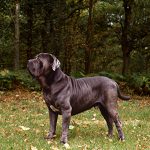
The Neapolitan Mastiff is a strikingly large, powerfully built dog with a commanding presence. Its frame is rectangular, slightly longer than it is tall, emphasizing both strength and agility. Males can reach 65-75 cm (25½-29½ inches) at the withers and weigh between 110-154 pounds, with females somewhat less, giving the breed a distinctly robust and muscular outline.
The head is broad and massive, complemented by a short, deep muzzle and loose but not excessive skin. Wrinkles and folds, especially around the cheeks and lips, are characteristic but carefully managed to prevent health issues. Their eyes are clean, set forward, and carry a noble, alert expression. Ears are relatively small for the head’s size, triangular, and hang close to the cheeks.
The body boasts a deep, well-muscled chest, straight topline, and a solid, broad loin. The hindquarters are powerful, driving purposeful movement with slow, steady strides. Neapolitan Mastiffs have large, rounded feet with strong, dark nails and thick, hard pads. Their tail is thick at the root, tapering to a point, and may be either docked or left natural, but it is never carried over the back.
The coat is short, dense, even, and has a hard texture with a noticeable sheen. Accepted colors include black, blue, all shades of grey, brindles, brown, fawn, mahogany, and red, often with limited white on the chest and toes. The overall effect is majestic and imposing—clearly reflecting their ancient heritage as dogs of strength, dignity, and endurance.
Temperament & Behavior
The Neapolitan Mastiff has a temperament rooted in loyalty, steadiness, and vigilance. These dogs are known for their devotion to their families and can be slightly reserved with strangers, which makes them excellent natural guardians. At home, they are steady and calm, rarely seeking attention from anyone outside their immediate circle but lavishing affection on those they trust.
Interactions with children are generally positive, especially when the dog is raised within the family and socialized early. They are protective, making them reliable companions for those seeking security as well as companionship. However, due to their imposing size, all interactions with smaller children should be respectfully supervised.
With other dogs, the Neapolitan Mastiff may display dominant tendencies, so comprehensive socialization from an early age is advisable. Their approach can be both dignified and somewhat aloof—not one to seek out play with every dog they meet. The breed’s origins in the working group highlight a natural instinct for guarding and search-and-rescue roles, and this background shines through in both their work ethic and sense of duty.
Owners must recognize that Neapolitan Mastiffs thrive on clear boundaries and consistent routines. Without proper leadership, they can become stubborn or overly self-reliant. These are not dogs that accommodate rough handling or constant activity; instead, they are happiest in calm, confident homes where their value is understood and respected.
Care & Living Needs for the Neapolitan Mastiff
Exercise for the Neapolitan Mastiff is best described as moderate. About an hour each day is often sufficient, which can include steady walking or a secure, supervised play session in a large garden. Due to their sheer size and strength, they require secure fencing and plenty of space to move at their own pace, ideally within a rural or large suburban home setting.
An ideal home for a Neapolitan Mastiff includes a large house and a generous garden. This breed is not well-suited to confined environments, and city apartments are particularly challenging for their wellbeing. They thrive in the quiet of the countryside, where their natural guarding instincts can be channeled productively and without risk to neighbors.
Grooming needs are surprisingly manageable for such a large breed. With a short, dense coat, the Neapolitan Mastiff only requires brushing about once a week to remove loose hair and maintain the sheen of their coat. However, their wrinkles and facial folds should be gently checked and cleaned to prevent irritation. Regular shedding can be expected.
Mental stimulation is crucial; while these dogs are not overly energetic, they are intelligent and need activities that engage their minds. Early and ongoing positive training will help shape their behavior and build the trust necessary for a respectful relationship. First-time dog owners should be aware that the Neapolitan Mastiff’s size, strength, and independent streak make them a better choice for experienced handlers comfortable with large guarding breeds.
Health & Common Issues
The Neapolitan Mastiff’s health profile is influenced by its large size and the distinctive body and facial features that define the breed. While the dataset does not list specific health conditions, owners should aim for regular veterinary checkups and mindful weight management to keep their dog in top condition.
The breed’s loose skin, especially around the head, requires attention to prevent irritation in the folds. Checking the eyes and ears for cleanliness is a sensible part of the grooming routine. Because they are a large and heavy breed, care should be taken not to over-exercise young dogs while their joints are developing.
A balanced diet, regular moderate exercise, and routine health monitoring contribute to a comfortable and rewarding life for the Neapolitan Mastiff. As with all large breeds, proactive care and attention can make a meaningful difference in quality and longevity of life.
Official Breed Standard Summary
The official breed standard sets out the ideal characteristics and appearance for the Neapolitan Mastiff. This breed is marked by strong bone, substantial musculature, and a body slightly longer than it is tall. A noble, majestic presence is a hallmark, and while some loose skin is permitted, exaggeration is discouraged for the health and welfare of the dog. Features like skin folds, head proportions, and muscular build are all balanced to support soundness and functional ability.
Size for males typically falls between 65 to 75 cm at the withers, with weights ranging from 110 to 154 pounds. Females are somewhat smaller. Acceptable coat colors include black, blue, various greys, brown, fawn, mahogany, red, and brindle patterns, often with a permissible white marking on the chest or toes. The coat itself is short, dense, and even in texture, with a good sheen and no feathering.
Movement should be slow yet purposeful, distinguished by strong thrust from the hindquarters and a steady, level topline on the move. Scissor or level bite is acceptable, and nails and pads should be robust. The tail is broad at the base, tapering to a point, whether docked or left natural, but never curled over the back. Males should have two normally descended testicles.
The official standard emphasizes function and soundness above all, guiding breeders and owners to avoid any feature or exaggeration that might affect the dog’s health and natural abilities. Size and other measurements should be interpreted as an ideal, with sensible variation permitted. The preservation of type, character, and health is always prioritized.
Frequently Asked Questions about the Neapolitan Mastiff
Is the Neapolitan Mastiff good for first-time dog owners?
This breed is best suited to experienced owners who understand large, strong-willed dogs. Their training and management needs can be challenging for someone new to dog ownership.
How much exercise does a Neapolitan Mastiff need daily?
Neapolitan Mastiffs need up to one hour of exercise a day, including steady walks and time in a secure garden. They appreciate gentle activity rather than strenuous workouts.
Is the Neapolitan Mastiff good with children?
The breed is typically loyal and protective with children in the family. However, their large size means supervision is required, and interactions should always be respectful and gentle.
Can the Neapolitan Mastiff live in an apartment?
Due to their size and exercise needs, the Neapolitan Mastiff is not well-suited for apartment living. They thrive in homes with plenty of space and a large, secure outdoor area.
How much grooming does a Neapolitan Mastiff need?
Grooming is fairly low-maintenance, requiring brushing about once a week. Regular attention to facial folds and basic care keeps them looking and feeling their best.
Are there common health concerns in this breed?
While no specific health issues are highlighted, owners should be attentive to the care of the breed’s joints, skin folds, and overall condition. Routine veterinary care is important for large breeds like the Neapolitan Mastiff.


