Dobermann: short-coat handling and separate size descriptions
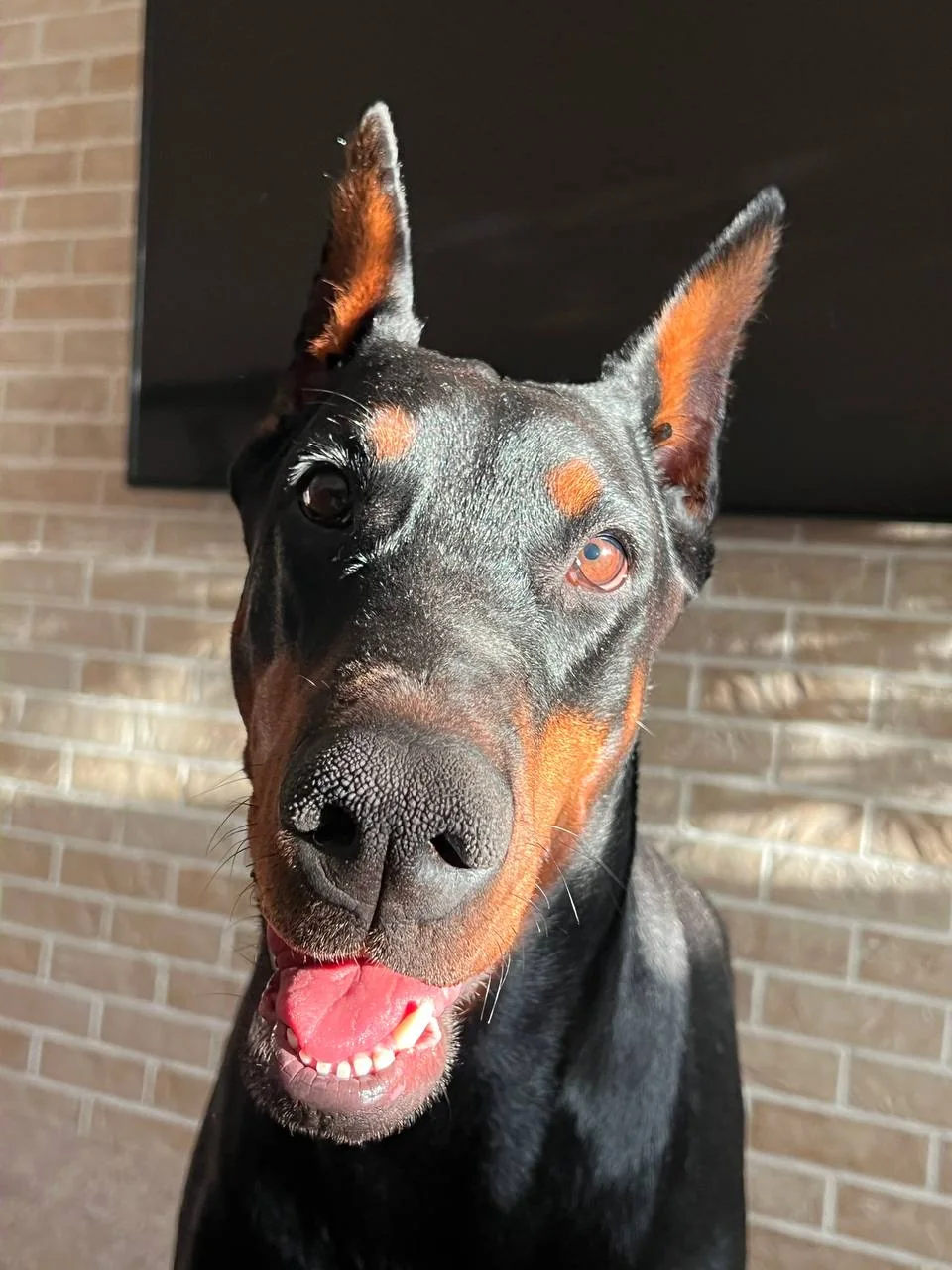
The Dobermann has a compact, muscular outline beneath a short, close coat. Brief coat sessions still leave nails, teeth and ears needing regular attention. Its own dimensions and daily routine should be considered separately from those of the smaller German Pinscher.
Ideal heights and FCI ranges
The earlier UK guide gives ideal heights of 69 cm for males and 65 cm for females, without numerical weights here. FCI gives 68–72 cm and about 40–45 kg for males, with 63–68 cm and about 32–35 kg for females; medium size within those height ranges is desirable. These ranges and ideals describe their respective standards rather than interchangeable limits.
The compact outline and close coat
UK describes a square body and allows females to be slightly longer through the loin. FCI limits body length above height to 5 percent in males and 10 percent in females. Both describe short, hard, dense hair lying smooth and close. UK permits imperceptible undercoat on the neck, while FCI does not allow undercoat. Keep that small but explicit difference with its own account.
Brief care, regularly repeated
AKC’s Doberman Pinscher guidance recommends a quick daily pass with a short-bristled brush or grooming mitt, infrequent bathing, nail trimming at least monthly and regular tooth brushing. The UK grooming category is weekly, so it should not erase the shorter daily handling suggested by AKC. For ears, ask a veterinarian to demonstrate an appropriate cleaning routine rather than choosing a product or technique from a general description. The short coat does not remove those other handling commitments.
Outings alongside coat care
UK lists more than two hours of daily exercise, a large house and large garden, in town or country. AKC describes long daily walks or hikes, shared activity and space within a large fenced area, without supplying an hourly minimum. Plan the routine around the individual dog. Compare the German Pinscher’s smaller measurements and weekly brush, or the Canadian Eskimo Dog’s very different undercoat work, without assuming that a working-group label gives them the same needs.
Sources and further reading
Dobermann at a glance
These earlier UK breed guides are starting points for comparison. Details may have changed, and individual dogs vary.
- Breed group
- Working
- Size
- Large
- Daily exercise
- More than 2 hours per day
- Grooming frequency
- Once a week
- Coat length
- Short
- Sheds
- Yes
- Suggested home size
- Large house
- Town or country
- Town or country
- Garden recommendation
- Large garden
- Lifespan
- Over 10 years
FCI breed standard
Standard guidance describes the breed ideal; individual dogs vary.
- Origin
- Germany
- Group
- 2 - Pinscher and Schnauzer, Molossian type Dogs and Swiss Mountain and Cattle Dogs
- Section
- 1 - Pinscher and Schnauzer
- Height
- Males: 68–72 cm; Females: 63–68 cm
- Weight
- Males: About 40–45 kg; Females: About 32–35 kg
The compact, short-coated Dobermann reference keeps its own measurements. The earlier UK coat text permits imperceptible neck undercoat; FCI143 does not allow undercoat, so the two standards are not field-equivalent.
Official FCI standard (PDF)
Standard effective from 2015-11-13; checked 2026-10-15