
What Are the Traits and Care Tips for Great Danes?
The Great Dane is an imposing yet graceful companion, famous for its extraordinary size and gentle presence. Loved by families and admired by breed enthusiasts, this dog attracts attention wherever it goes. The Great Dane suits households with plenty of space and owners dedicated to meeting both its physical and emotional needs.
With a rich heritage as a hunting and working breed, the Great Dane has transitioned into a beloved family member for many. Its temperament and elegance make it an outstanding choice for those seeking a loyal, noble dog with a commanding but affectionate personality.
- Overview of the Great Dane
- Key Characteristics
- Appearance of the Great Dane
- Temperament & Behavior
- Care & Living Needs
- Health & Common Issues
- Official Breed Standard Summary
- Frequently Asked Questions
Group: Working
Size: Extra large
Exercise needs: More than 2 hours per day
Coat length: Short
Grooming: Once a week
Shedding: Yes
Lifespan: Under 10 years
Ideal home type: Large house
Town or country: Either
Garden needs: Large garden
Overview of the Great Dane
Originating from Germany rather than Denmark, the Great Dane’s lineage traces back to large hunting dogs used in packs for pursuing wild boar. Earlier Great Danes were heavier in build and valued for their strength in the field, but selective breeding has given rise to a taller and more elegant modern dog. Some enthusiasts even see hints of sighthound characteristics in the breed, contributing to its reputation for grace and style.
Today’s Great Dane carries a noble air, often described as the Apollo among dogs for its striking appearance and poised manner. Despite intimidating stature, the breed is recognized for being kind and fiercely loyal, integrating well with family life. The Great Dane’s versatility and adaptability make it suitable for both urban and rural environments, provided its substantial needs are met.
With a blend of dash, courage, and affectionate devotion, the Great Dane is ideal for active households prepared to offer time, training, and plenty of living space. Its roots as a working dog mean it thrives when given activities and structure, yet it is as content to relax alongside family members as it is to accompany them on adventures.
Key Characteristics
- Energy level – High; needs more than 2 hours of exercise daily to stay healthy and content.
- Trainability – Generally eager to please and learns quickly when handled with consistency and positive reinforcement.
- Intelligence – Bright and observant, with a keen capacity to adapt to its environment and routine.
- Prey drive – Retains some hunting instinct from its origins, so care with smaller animals is recommended.
- Social needs – Thrives on regular interaction with people and often bonds closely with family members.
- Compatibility with families and children – Known for a gentle and tolerant nature, making it a popular choice for homes with children.
- Compatibility with other dogs – Friendly and sociable with other dogs when well socialized from an early age.
- Guarding or watchdog tendencies – Protective of home and loved ones without being overly aggressive or nervous.
- Adaptability to city or country life – Equally happy in town or countryside as long as it gets sufficient space and activity.
- Best suited owner type – Ideal for experienced, confident owners with a large home and garden who can dedicate time to training and exercise.
- Typical daily routine – Needs daily walks, play in a spacious area, structured downtime, and ongoing companionship.
Appearance of the Great Dane
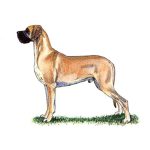
The Great Dane is one of the tallest and most imposing members of the canine world. Its body is both muscular and elegantly proportioned, giving an impression of effortless strength and readiness. When moving, the breed carries its head and neck high with a proud, noble stance; the tail is an extension of the straight back, never curled over the hindquarters.
The head of the Great Dane is long and powerful, with a balanced muzzle and a relatively narrow, flat skull. The skull shows a gentle rise above the eyes, leading to a well-chiseled, strong jawline. The characteristic ears are medium-sized, triangular, and folded forward high on the skull, contributing to the breed’s alert expression. Eyes are of medium size, set fairly deep and preferably dark, giving an intelligent, dignified look, while the mouth features a correct scissor bite and solid jaw strength.
The body structure includes a deep chest reaching to the elbow, well-sprung ribs, a slightly arched loin, and muscular fore and hindquarters that provide galloping power and graceful movement. The legs are long and straight, ending in cat-like feet with arched toes and strong, curved nails. The coat is short, dense, and sleek, always smooth and never rough, highlighting the dog’s outline and muscle definition.
Coat colors are varied and striking: black, blue, brindle, fawn, harlequin, and mantle are all recognized. While the solid colors are classic, harlequin and mantle patterns add dramatic flair. White patches on the chest and feet are generally discouraged except in specific color varieties. Height standards are impressive—adult males stand at least 30 inches at the shoulder and females at least 28 inches, with weight scaling accordingly.
Temperament & Behavior
The Great Dane’s temperament combines alert dignity with kindness and sociability. At home, it is gentle and easy-going, typically displaying friendliness toward both family members and visitors. The breed is well known for being loving and devoted, forming deep bonds with its owners and showing particular patience with children.
This dog’s working background as a guardian and protector is reflected in its loyalty and readiness to look after its family. While protective, the Great Dane rarely demonstrates nervousness or unwarranted aggression, and it welcomes positive interactions with people and other dogs, especially when socialized from an early age.
Majestic presence and power do not translate into dominance or stubbornness with the Great Dane; it responds best to training that is consistent, gentle, and based on encouragement rather than harsh discipline. Its intelligence and desire to please make it quick to learn routines and commands, but its size and strength mean it is best suited to confident owners who can provide clear boundaries.
The Great Dane excels not just as a companion but also in its professional roots among working breeds. Historically celebrated for their heroism and reliability, members of the working group like the Great Dane have aided humans in many vital roles, from guarding to search and rescue. Within the home, their dignified calm and adaptability shine, provided their needs for exercise and engagement are met.
Care & Living Needs for the Great Dane
Due to their considerable size and energy, Great Danes demand a home environment that accommodates their space and exercise requirements. A large house with a spacious garden is ideal, though they can adapt to town or country life as long as they have room to stretch out and a secure outdoor area for play. Daily exercise of more than two hours, spread across walks and active sessions, is necessary to keep them physically and mentally fulfilled.
While their short coat means grooming is straightforward, a weekly brush helps remove loose hairs and keeps the sleek coat in top condition. Shedding is moderate, so regular upkeep will reduce hair in the home. Bathing and routine care of ears, nails, and teeth should also be part of maintenance, as with any large breed.
Training and mental stimulation are important for the breed’s happiness. Introducing new challenges, consistent routines, and gentle but firm leadership help a Great Dane thrive. Early socialization with other dogs, people, and different environments will lead to a well-rounded companion. While the breed is affectionate and likes human company, it is not ideal for owners with limited time or very small living spaces, as loneliness or confinement can lead to stress behaviors.
Prospective owners should assess their own ability to provide both the space and the structured attention this breed needs. Those living in small apartments or unable to offer sufficient exercise may find it challenging to meet the Great Dane’s needs.
Health & Common Issues
The provided dataset does not list specific health issues for the Great Dane. Given its extra-large size, attentive owners and breeders prioritize regular veterinary care, weight management, and age-appropriate exercise throughout the dog’s life. These basic routines help maintain comfort and well-being for as long as possible.
Routine checks and a healthy diet are important for joint and bone health in larger breeds. Monitoring for any signs of discomfort or stiffness, especially in older dogs, can help ensure treatment is sought early if needed. Reliable breeders prioritize soundness and vitality, meaning puppies benefit from careful selection for disposition and physical health.
Poorly matched exercise, overfeeding, or lack of proper grooming can contribute to everyday discomforts, so awareness and proactive care by owners make a significant difference in the Great Dane’s quality of life. Regular, moderate exercise that avoids excess strain during puppyhood is always recommended.
Official Breed Standard Summary
The official breed standard for the Great Dane outlines the defining qualities that set it apart: elegance paired with muscular build, a noble outline, and an expressive, dignified way of moving. The head and neck should be long, clean, and well defined, with proportional structure and an alert, powerful presence. Absolute soundness—meaning freedom from exaggerations or features detrimental to health or movement—is held as essential for the breed.
Great Danes are expected to meet a minimum height at maturity (30 inches for males, 28 for females) and possess a well-muscled body, deep brisket, and strong bone throughout. The accepted coat colors include black, blue, brindle, fawn, harlequin, and mantle, and the coat must always be short and sleek. Exceptions are made regarding eye and nail color in certain color varieties (such as harlequins), and white markings outside breed-specific varieties are not sought after in showing dogs.
The breed’s gait should be free, springy, and ground-covering, with the head carried high in movement. Any faults—departures from the breed’s ideal—should be assessed in proportion to the impact on the dog’s health and welfare. For owners and breeders, attention to the standard means not just aesthetics but also robust structure and a happy, functional companion.
Prospective owners should understand that the breed standard offers a guide rather than an absolute for every individual dog. Variations in height or weight outside official minimums may occur and do not imply unsuitability or lack of quality in a pet setting.
Frequently Asked Questions about the Great Dane
Is the Great Dane good for first-time dog owners?
The Great Dane can be a wonderful partner for new owners who are confident, well informed, and ready to commit to their substantial care and training requirements. However, experience with large breeds or a willingness to learn about them is helpful.
How much exercise does a Great Dane need daily?
This breed requires more than two hours of daily physical activity, including walks, play, and opportunities to stretch out in a safe space. Consistent, balanced routines help maintain their health and happiness.
Is the Great Dane good with children?
Great Danes are known for their kind and patient nature around children. Supervision is recommended due to their size, but their tolerant demeanor makes them a favorite in family settings.
Can the Great Dane live in an apartment?
While adaptable in many ways, the Great Dane’s extra-large size and activity level make apartment living challenging. A large home with access to a garden or safe outdoor area is best for their comfort and health.
How much grooming does a Great Dane need?
Grooming the Great Dane is relatively simple, thanks to its short coat. A weekly brushing is usually enough to keep shedding to a minimum and maintain a sleek appearance.
Are there common health concerns in this breed?
The provided information does not list specific health problems, but regular vet visits and mindful daily care are important for long-term well-being. Focus on diet, exercise, and observation for any signs of discomfort is key.


