
What Are the Traits and Care Tips for Great Swiss Mountain Dogs?
If you’re seeking a loyal companion with a steady temperament and impressive presence, the Great Swiss Mountain Dog might capture your heart. Suited to active owners and families in roomy settings, this breed brings together strength, versatility, and warmth. Known for their robust build and working heritage, Great Swiss Mountain Dogs are happiest when they have both space and purpose, thriving in environments where they can be close to their people and participate in daily life.
With origins as a herder, cart puller, and all-around farm helper in Switzerland’s rolling countryside, the Great Swiss Mountain Dog excels as a devoted family member and a vigilant guardian. Their steadfast personality and love of belonging make them ideal for households wanting a large, affectionate, and reliable canine partner. Whether exploring the outdoors or resting indoors with the family, they are as versatile as they are striking.
- Overview of the Great Swiss Mountain Dog
- Key Characteristics
- Appearance of the Great Swiss Mountain Dog
- Temperament & Behavior
- Care & Living Needs
- Health & Common Issues
- Official Breed Standard Summary
- Frequently Asked Questions
Group: Working
Size: Large
Exercise needs: Up to 1 hour per day
Coat length: Short
Grooming: Once a week
Shedding: Yes
Lifespan: Over 10 years
Ideal home type: Large house
Town or country: Country
Garden needs: Large garden
Overview of the Great Swiss Mountain Dog
The Great Swiss Mountain Dog stands out as the largest and most substantial of the traditional Swiss herding breeds. Its legacy is intertwined with rural Swiss life, where these dogs were relied upon for herding cattle, pulling carts, and guarding livestock and property. This hard-working breed contributed to daily farm operations, often pulling milk carts in pairs and transporting cheese from dairy farms to marketplaces.
With an impressive physique and characteristic tricolor markings, the Great Swiss Mountain Dog offers both utility and beauty. Their alert, dignified presence is matched by a dependable and self-assured personality, making them an excellent choice for experienced owners who appreciate a working dog with a calm, balanced temperament. They are especially well suited to homes with ample outdoor space and owners who value an active, versatile canine companion.
This breed thrives in country settings but can settle well within any spacious, structured home environment that allows them the opportunity for regular activity and plenty of interaction. Their affectionate nature makes them a devoted addition to families who can accommodate their size, energetic nature, and desire to be involved in family routines.
Key Characteristics
- Energy level – Moderate; benefits from daily outings and interactive play but is content with measured activity.
- Trainability – Generally responsive and eager to please, though firm, consistent guidance is recommended.
- Intelligence – Demonstrates solid problem-solving skills and adapts well to training and new routines.
- Prey drive – Tends to be low; historic focus on herding and guarding rather than hunting.
- Social needs – Strongly bonds with family and prefers not to be left alone for extended periods.
- Compatibility with families and children – Traditionally great with children when socialized properly, offering a steady and tolerant attitude.
- Compatibility with other dogs – Peaceful with other dogs, especially when introduced thoughtfully from a young age.
- Guarding or watchdog tendencies – Naturally alert and protective, without unnecessary aggression; effective at guarding property and family.
- Adaptability to city or country life – Best suited for country or suburban life with plenty of space, not ideal for cramped living.
- Best suited owner type – Experienced, active owners or families with time and space to offer structure and companionship.
- Typical daily routine – Relishes outdoor time, regular walks, supervised play, and inclusion in household activities.
Appearance of the Great Swiss Mountain Dog
The Great Swiss Mountain Dog is both imposing and balanced, exuding power without sacrificing agility. Males and females demonstrate distinct differences in size and substance, but all individuals share a sturdy, well-muscled frame with heavy, solid bone structure. Standing between 23.5 to 28.25 inches at the shoulder, this breed is slightly longer than it is tall, combining strength with a purposeful, working build.
The breed’s head is broad and flat, imparting a nobility that complements its kind, alert expression. The skull and muzzle are balanced in length, with strong jaws and a square, well-defined muzzle. Their almond-shaped eyes, in hues from hazel to dark brown, project intelligence and warmth. Medium-sized, triangular ears sit high and rest flat when relaxed, rising slightly when the dog is attentive.
Moving down the body, the neck is strong and muscular, free of excessive skin. Shoulders are long and sloping, indicating an aptitude for physical work. The chest is broad and oval, with a robust forechest and well-sprung ribs, while loins and back remain level, underlining the dog’s endurance. Hindquarters are equally developed, with muscular thighs and sturdy, well-angled hocks, ensuring capable movement and drive from the rear.
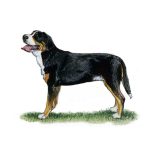
Feet are round and compact, with arched toes and strong nails for traction. The tail is heavy, reaching down to the hock, carried either low at rest or raised gently in motion but never curled over the back. The breed’s coat is a short, dense double layer: a medium-length outer coat over a gray or black undercoat. The classic tricolor pattern combines a dominant black base with symmetrical, rich tan markings and clean white highlights on the face, chest, feet, and tip of the tail, creating the unmistakable Swiss heritage look.
Temperament & Behavior
Great Swiss Mountain Dogs are renowned for their steady, self-assured temperament. At home, they epitomize the ideal combination of alertness, devotion, and calm confidence. These dogs observe their environment closely, responding to visitors with poise, making them both reliable guardians and welcoming members of the household. They are typically friendly but reserved, and take their time getting comfortable with new people.
This breed thrives on strong bonds with its family. Their affectionate, even-tempered nature makes them trustworthy companions for households with children, as they exhibit patience and gentle play. When properly socialized, they integrate well with other dogs and can accept animals of all sizes under supervision.
Bred for multi-purpose work, the Great Swiss Mountain Dog’s heritage as a guardian and search and rescue companion informs their vigilant but stable demeanor. They carry a quiet confidence, stepping into roles that require courage and reliability, and display a devotion to their home and loved ones. Although protective instincts run deep, unwarranted aggression is not part of their profile. Rather, they act as fair-minded deterrents who respond appropriately to their family’s cues.
The typical challenges of owning a Great Swiss Mountain Dog often stem from their size, strength, and desire to participate in family life. They need clear direction and early training to help channel their protective and inquisitive instincts into positive, manageable behaviors.
Care & Living Needs for the Great Swiss Mountain Dog
Daily exercise remains an important component in a Great Swiss Mountain Dog’s routine. They require up to one hour of activity per day, which can be divided between walks, moderate play sessions, and light carting or working tasks. A large, fenced garden provides a secure environment for off-lead enjoyment and helps meet their natural inclination to roam and explore.
This breed is best matched with homes that offer ample indoor and outdoor space – a large house in a country or spacious suburban setting. Apartments and urban environments can be challenging due to their size and activity needs. The presence of a large yard where they can patrol, relax, and join in family activities enriches their daily life.
Grooming requirements are relatively low-maintenance. Their short, dense double coat needs a thorough brushing around once a week to manage shedding and keep the coat healthy. These dogs do shed, so regular grooming supports the removal of loose hair and preserves their distinctive shine. Simple checks for ears, teeth, and nails during grooming sessions help maintain their overall wellbeing.
Mental stimulation is just as crucial as physical exercise. These intelligent, problem-solving dogs respond well to positive, reward-based training methods that encourage good manners and service skills. Activities that engage their brain—such as scent games, basic obedience, and even pulling dog carts—keep them content and connected to their family. Potential owners who are frequently absent or unable to provide daily engagement may find this breed a difficult fit, as the Great Swiss Mountain Dog craves interaction and purpose.
Owners who are new to large working breeds or who live in smaller, busy environments may find the Swissy’s appetite for space and involvement demands greater experience. Those committed to providing an active, secure home will find this breed a loyal and joyful companion.
Health & Common Issues
The provided data does not list specific health concerns for the Great Swiss Mountain Dog. As with all large breeds, routine veterinary care, early health checks, and attention to diet and exercise are important for their overall longevity and comfort.
Maintaining an appropriate weight is crucial for supporting their joints and mobility. Owners should prioritize moderate exercise to keep muscles strong and prevent excess weight, which can compound the strain on bones and ligaments in a large-bodied dog. Regular dental hygiene, attention to ear cleanliness, and annual veterinary assessments further support their long-term health.
Consistent care routines and attentive observation for any changes in gait, appetite, or energy levels will help catch issues early and ensure your Swissy enjoys an active, healthy life as part of the family.
Official Breed Standard Summary
The official breed standard provides a blueprint for the ideal Great Swiss Mountain Dog, outlining the preferred appearance, demeanor, and structure that guide responsible breeding and judging. A hallmark of the breed is its distinctive tricolored appearance, strong musculature, and clear differentiation between the sexes. Soundness, health, and functional, balanced movement are prioritized without exaggeration or physical extremes.
The recommended size for males is 25.5 to 28.25 inches at the shoulder, and for females, 23.5 to 26.75 inches. The body should be slightly longer than tall, showcasing strength and endurance. The coat is short and dense, with a black base, symmetrical tan markings, and specific white accents. Movements should appear purposeful and balanced, with a stride that is both forward-reaching and driven from the hindquarters.
The breed standard emphasizes features that contribute to the dog’s ability to work, including a broad skull, firm musculature, and a steady gait. Faults are evaluated according to their effect on the dog’s function, health, and welfare. Guidance suggests that while the ideal is specified, some dogs may fall above or below size parameters without compromising overall quality.
Breeders and potential owners are advised to watch for qualities directly impacting the dog’s soundness or quality of life, and to select for temperament and health as well as external appearance.
Frequently Asked Questions about the Great Swiss Mountain Dog
Is the Great Swiss Mountain Dog good for first-time dog owners?
This breed is best suited to experienced owners who understand the needs of large, working dogs. First-time owners may find their size and strength challenging without prior knowledge of positive, consistent training techniques.
How much exercise does a Great Swiss Mountain Dog need daily?
These dogs require up to one hour of daily exercise, including walks, play, and time to roam in a secure area. Structured activity helps maintain their fitness and fulfills their working nature.
Is the Great Swiss Mountain Dog good with children?
The breed is known for a gentle, patient demeanor with children, particularly when included in family life from an early age. As with all large dogs, supervision is recommended during interactions to ensure safety for both dog and child.
Can the Great Swiss Mountain Dog live in an apartment?
This breed is not ideal for apartment living due to its size, energy level, and exercise needs. Great Swiss Mountain Dogs thrive in homes with ample indoor and outdoor space.
How much grooming does a Great Swiss Mountain Dog need?
Grooming is straightforward, requiring brushing about once a week to manage their short, double coat and control shedding. Occasional baths and regular checks of ears, teeth, and nails are recommended.
Are there common health concerns in this breed?
No specific health concerns are indicated in the available information, but like all large breeds, maintaining a healthy weight and regular veterinary care are important. Keeping up with exercise and grooming supports overall wellness.


