Keeshond: working through the ruff and undercoat
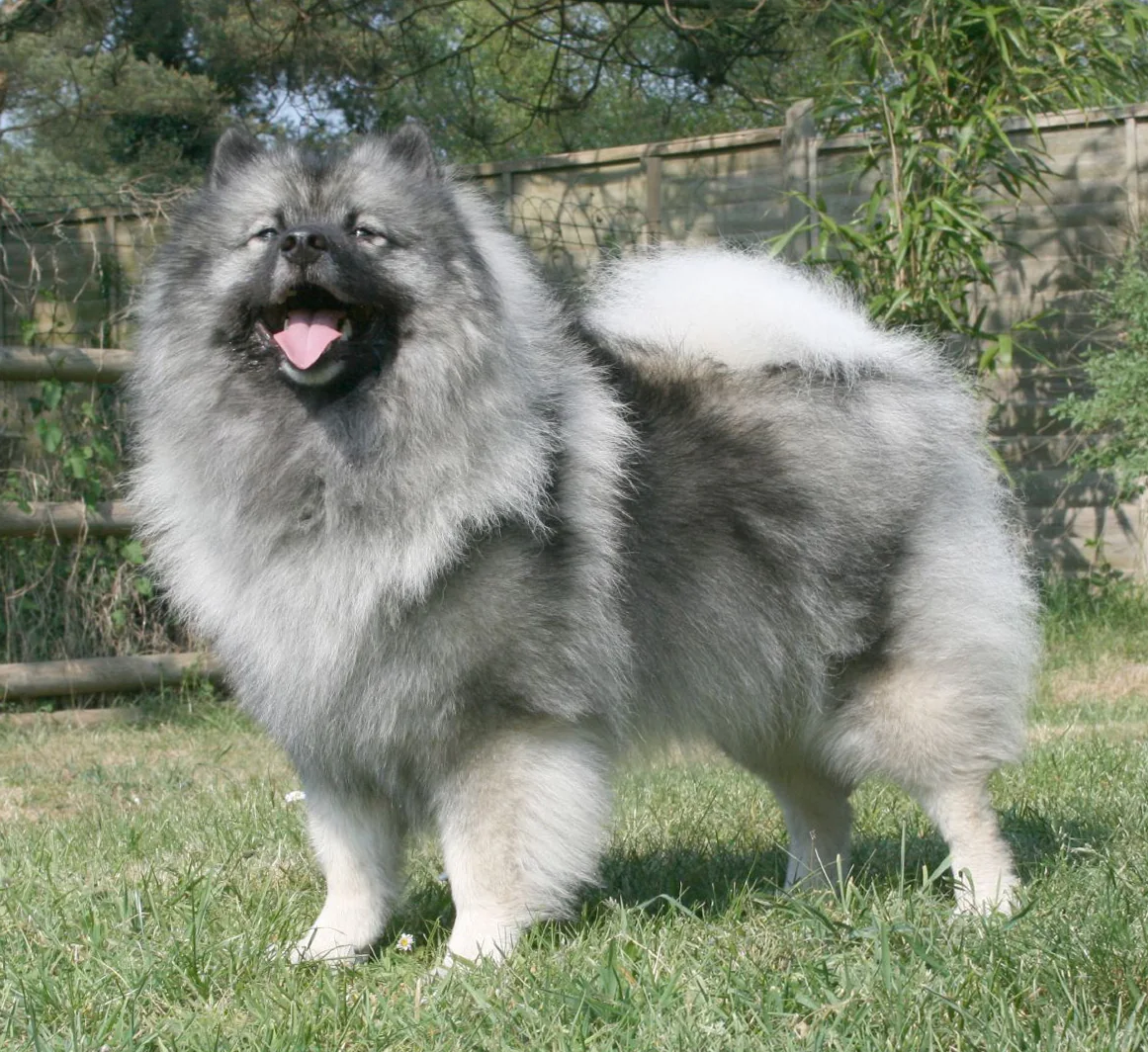
The Keeshond’s ruff, bushy tail and grey-shaded coat can make its outline look larger than the frame beneath it. A thorough weekly brush-through and regular pet grooming are practical commitments. Its square proportions and own size description distinguish it from other German Spitz profiles.
Square proportions and different height figures
The Keeshond section of FCI standard 97 gives a shoulder height of 49 cm with 6 cm tolerance either way, without separating males and females. Weight should correspond to size. The earlier UK description instead gives ideals of 46 cm for males and 43 cm for females, without a numerical weight range.
The FCI body ratio is 1:1. Long, straight, firm outer hair stands over short, thick undercoat, with a substantial mane, leg feathering and bushy tail. The coat is not meant to be wavy, curly or parted along the back.
A thorough weekly coat session
The AKC Keeshond guide recommends going through the coat with a pin brush weekly to remove loose undercoat. Its pet routine adds a bath and blow-dry every four to six weeks, at home or with a groomer. Feet, pads and hocks may need tidying; this is different from reshaping the whole coat.
The earlier UK guide uses a daily grooming category. Shorter checks between thorough sessions can help you notice where more work is needed. Discuss a realistic brushing and bathing routine with the groomer, including the heavier undercoat periods, rather than leaving all maintenance to the next appointment.
Daily company and exercise
The UK category is up to one hour, with a small house and small or medium garden in either setting. The AKC guide describes daily walks or a run and participation with the family across different living environments. Plan an actual outing and shared activity even when there is space at home.
Compare similar coats on different frames
The Mittel has separate FCI variety measurements and shares a general German Spitz care guide with the Klein. The Eurasier is slightly longer than tall and has looser guard hair without a mane. Its seasonal daily combing also shows why a single weekly grooming label does not describe every part of the year.
Sources and further reading
Keeshond at a glance
These earlier UK breed guides are starting points for comparison. Details may have changed, and individual dogs vary.
- Breed group
- Utility
- Size
- Medium
- Daily exercise
- Up to 1 hour per day
- Grooming frequency
- Every day
- Coat length
- Medium
- Sheds
- Yes
- Suggested home size
- Small house
- Town or country
- Town or country
- Garden recommendation
- Small / medium garden
- Lifespan
- Over 10 years
FCI breed standard
Standard guidance describes the breed ideal; individual dogs vary.
- Origin
- Germany
- Group
- 5 - Spitz and primitive types
- Section
- 4 - European Spitz
- Variety covered
- Wolfsspitz/Keeshond
- Height
- 49 cm; Tolerance: 6 cm above or below
- Weight
- In proportion to height; no numeric weight given
These are the Wolfsspitz/Keeshond figures from the shared German Spitz document. FCI gives one reference height with 6 cm allowance and weight proportional to size; the UK male and female ideals remain separate.
Official FCI standard (PDF)
Standard effective from 2024-09-03; checked 2026-10-15