
What Are the Traits and Care Tips for the Komondor Breed?
The Komondor stands out among large dog breeds for both its remarkable appearance and its unwavering devotion. With origins deeply rooted in Hungarian pastoral life, the Komondor was bred as a formidable guardian of livestock, specializing in protecting flocks with strength, intelligence, and an iconic corded coat. This breed is best matched for individuals or families living in the countryside who value a dedicated, low-shedding guardian that demands both respect and significant daily interaction.
This breed is not just a visually striking companion; the Komondor possesses a temperament that is both loyal and protective. While deeply bonded to its family, the Komondor retains a protective streak and a territorial nature, making it an ideal watchdog for rural homes with ample outdoor space. Its needs and personality are best suited to experienced dog owners committed to strong leadership, regular exercise, and intensive grooming routines.
- Overview of the Komondor
- Key Characteristics
- Appearance of the Komondor
- Temperament & Behavior
- Care & Living Needs
- Health & Common Issues
- Official Breed Standard Summary
- Frequently Asked Questions
Group: Pastoral
Size: Large
Exercise needs: Up to 1 hour per day
Coat length: Long
Grooming: More than once a week
Shedding: No
Lifespan: Under 10 years
Ideal home type: Large house
Town or country: Country
Garden needs: Large garden
Overview of the Komondor
The Komondor is a distinctive pastoral dog originating from Hungary, where it earned its reputation as a vital protector of sheep and cattle. Its role was more than that of a herding dog; the Komondor guarded flocks with a combination of size, power, and an intimidating appearance that deterred predators. As the largest of Hungary’s traditional pastoral breeds, the Komondor shares ancestry with the Puli and Kuvasz, reflecting centuries of breeding for resilience and guarding instinct.
This breed is defined by both its presence and its character. Mature Komondors are large, muscular, and immediately recognizable due to their unique corded white coat. Their dedication to guarding persists today, making them an excellent choice for households seeking a steadfast protector. Owners who select a Komondor benefit most when providing an environment where the dog’s territorial instincts are an asset – such as properties with extensive land or livestock.
Because of its temperament and upkeep requirements, the Komondor thrives with committed owners who have experience with strong-willed working dogs. Those willing to provide training, ample socialization, and ongoing care will be rewarded with a loyal companion that offers both security and striking companionship.
Key Characteristics
- Energy level – The Komondor maintains moderate energy, enjoying about an hour of structured outdoor activity each day.
- Trainability – This breed is intelligent but independent; consistent, confident guidance is necessary during training.
- Intelligence – High intelligence is matched by a strong-willed nature, well-suited for problem-solving as a guardian.
- Prey drive – Instinctively attuned to guarding, but less driven to chase small animals than typical hunting breeds.
- Social needs – Loyal to family but naturally reserved or suspicious toward strangers and unknown animals.
- Compatibility with families and children – Deeply protective and devoted to its own household, including children who respect boundaries.
- Compatibility with other dogs – Can be territorial; early, positive introductions are important for multi-dog homes.
- Guarding or watchdog tendencies – Exceptional guarding instincts; always vigilant and ready to alert owners to potential threats.
- Adaptability to city or country life – Suited mainly to rural life with secure outdoor access; less adaptable to urban environments.
- Best suited owner type – Experienced, confident owners accustomed to large, independent breeds.
- Typical daily routine – Includes periods of observation and patrolling, balanced with social time and training exercises.
Appearance of the Komondor
The Komondor’s appearance is striking and unmistakable, marked primarily by its imposing size and thick, corded white coat. Males typically average 80 centimeters (31.5 inches) at the shoulder, weighing 110 to 135 pounds, while females are slightly smaller, standing around 70 centimeters (27.5 inches) and weighing 80 to 110 pounds. The breed’s body is muscular, broad, and slightly longer than it is tall, conveying strength and durability essential to its working legacy.
The Komondor’s head is broad and slightly shorter relative to its width, with a moderately arched skull and a strong, not overly pointed muzzle. Dark eyes are medium-sized and set in expressive, close-fitting rims, imparting both alertness and depth of character. Ears are medium and hang naturally in a U-shape, never erect or raised. Jaws are strong with a preferred scissor bite; black lips and nose are preferred but very dark grey or brown are tolerated.
The overall body posture is solid and balanced. Shoulders are tight and well-laid, forelegs straight and muscular, and the hindquarters powerful with good angulation. The Komondor’s tail aligns with the line of the rump, reaching to the hock and curving slightly at the tip—lifted in excitement but otherwise carried low.
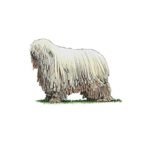
The breed is famed for its coat: a distinctive long, coarse outer coat with a softer undercoat. The hair naturally forms into cords resembling tassels or dreadlocks, which create a rugged, protective layer. While puppies display a soft, fluffy coat, the iconic cording process typically begins at six to nine months and continues until around two years of age. The coat is always white, providing both a practical and iconic look.
Temperament & Behavior
The Komondor embodies a purposeful, alert nature, ideally suited to its historic role as a guardian. It is both faithful and devoted, forging a deep bond with its family, yet maintaining an aloof attitude toward strangers. This strong, sometimes sharp-tempered dog is not one to display indiscriminate affection, instead forming close attachments to those it knows and trusts. Early socialization helps maintain the balance between protectiveness and appropriate behavior with visitors.
In the home, the Komondor is known for its vigilance. It is quick to sound the alarm if it perceives anything unusual and is steadfast in its role as a protector. Unlike some herding breeds that are in constant motion, the Komondor favors observation, positioning itself to watch over its environment. This means it does best in settings where its guarding tendencies are appreciated, such as family farms or rural properties.
When it comes to living with children and other animals, the Komondor’s protective side can shine. It is generally compatible with respectful children, particularly those raised alongside it. However, due to its instinctive guarding drive, careful introductions and supervision are recommended, especially with unfamiliar visitors or pets. This breed’s intelligence and self-reliance can be a challenge for novice owners, as it requires consistent guidance and leadership without being harsh or forceful.
Belonging to the Pastoral Group, the Komondor is naturally equipped for life in the elements, typically possessing a weather-resistant double coat. Its temperament makes it an excellent, courageous guardian, but ongoing training and leadership from its owner are key to shaping a well-balanced companion.
Care & Living Needs for the Komondor
The Komondor needs regular physical activity, with up to an hour of daily exercise as a healthy target. Large, fenced gardens or ranches offer the opportunity to roam and patrol, which satisfies the breed’s natural guarding instincts. Apartment living is not recommended because of the breed’s size, energy, and need to observe its territory.
Best suited to a large house in the countryside, the Komondor thrives with plenty of space and the ability to spend much of its day outdoors. A substantial garden is highly beneficial, allowing the dog to fulfill its drive to monitor its environment and exercise independently.
Grooming is a major consideration for the Komondor. The long, corded coat must be managed more than once a week to prevent cords from forming into uncomfortable mats or plates. While the breed doesn’t shed in the traditional sense, maintaining the coat requires routine separation of cords and careful cleaning, particularly after outdoor excursions. Owners should be prepared for the time-intensive care needed to keep the coat clean and healthy.
Mental stimulation is crucial, given the breed’s intelligence and independent thinking. Training sessions that incorporate structure and problem-solving are beneficial, as is consistent, calm leadership. The Komondor is not ideal for those seeking an easygoing, low-maintenance companion—first-time owners or those lacking ample space may find this breed overwhelming. Instead, it is best for experienced dog guardians who can meet both its mental and physical requirements.
Health & Common Issues
There is no specific health information noted for the Komondor based on the provided data. Like all large breeds, Komondors will benefit from attentive care that supports joint health and overall well-being throughout their lifespan. Their size and working background suggest an emphasis on maintaining a healthy weight, as excess pounds can place added stress on joints and bones.
Routine veterinary check-ups are important for spotting any signs of common large breed health challenges early. Basic preventive care, regular grooming, and balancing exercise with rest are essential to promoting a long, functional life for the Komondor. Ensuring proper oral health and coat maintenance further supports their comfort and vitality.
Owners should be proactive in managing the dog’s activity level, nutrition, and environment to prevent avoidable stress or injuries. Staying attentive to the unique needs of this breed, coupled with regular professional health assessments, is key for a happy, healthy Komondor.
Official Breed Standard Summary
The official breed standard for the Komondor is designed to preserve and promote the qualities that make the breed effective as a guardian and companion. The standard calls for a large, muscular dog with a well-proportioned, balanced outline and powerful conformation. Both males and females are sizable, with no maximum height specified, but balance and overall appearance are taken into account during assessment.
The Komondor’s coat is always white, with a natural tendency to cord into tassel-like structures that serve both functional and aesthetic purposes. The cords are slow to form, typically not fully developed until the dog is around two years old, and create a felt-like texture that protects against the elements. The coat varies in length, being longest on the rump, loins, and tail, and shorter around the face and lower legs. Skin is ideally grey but pink skin is also permissible.
The breed standard stresses absolute soundness and overall health, discouraging any exaggerations or features that could negatively impact welfare. Ideal movement is described as light and easy, with a long stride. Any departures from these standards are considered faults, with the effect on health and well-being guiding their seriousness. Male Komondors should have two normal testicles fully descended.
Prospective owners are reminded that the breed standard describes the ideal—actual dogs may vary slightly in height or weight, and this does not impact their suitability as companions or working dogs. Judges and breeders focus on both maintaining breed characteristics and prioritizing function, health, and welfare in every Komondor.
Frequently Asked Questions about the Komondor
Is the Komondor good for first-time dog owners?
The Komondor is best suited to experienced dog owners who understand strong, independent breeds. Its guarding instincts, size, and grooming needs can be challenging for those new to dog ownership.
How much exercise does a Komondor need daily?
This breed requires up to one hour of daily exercise, including both structured activities and opportunities to patrol a secure area outdoors. Mental stimulation is equally important to prevent boredom.
Is the Komondor good with children?
The Komondor is loyal and protective toward children in its own household, especially those who treat it respectfully. Supervision and early socialization support positive interactions.
Can the Komondor live in an apartment?
This breed is not well suited for apartment living due to its size, exercise requirements, and territorial nature. A large house with a secure garden or rural property is ideal.
How much grooming does a Komondor need?
The breed’s unique corded coat needs careful attention more than once a week. While it does not shed in the usual sense, the cords require regular separation and cleaning to prevent matting.
Are there common health concerns in this breed?
No specific health issues are listed for the Komondor here. As with any large breed, routine veterinary care and appropriate management of weight, exercise, and grooming are important.


