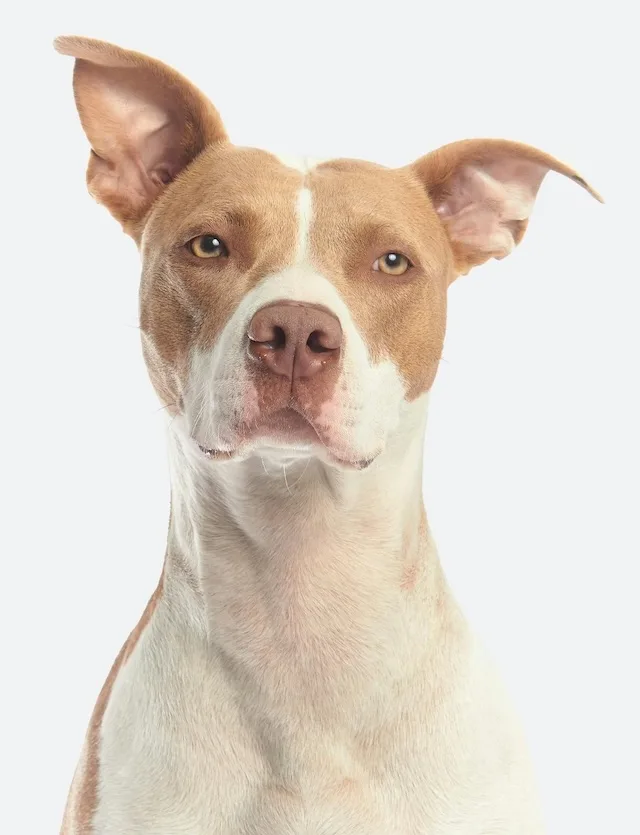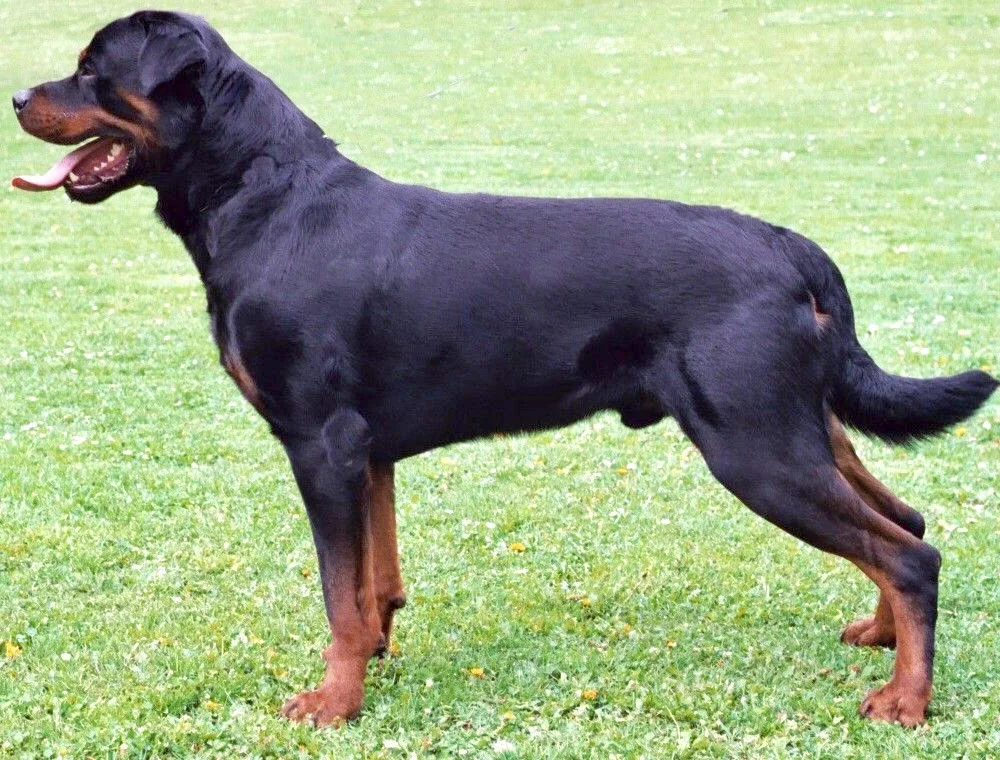
Rottweiler: a substantial outline with an undercoat
The Rottweiler has a compact, powerful build in its FCI description, with neither a leggy nor a heavy outline. Its coat has two layers: a coarse, dense topcoat lying flat over an undercoat that should not show through. The hair is a little longer on the hind legs.
Short in the guide, layered in the standard
The earlier UK guide places the Rottweiler in the short-coat category. The FCI standard describes the topcoat as medium length. These descriptions draw attention to different details of the same coat, including the undercoat beneath it.
Black with clearly defined tan markings is the FCI color description. The Boxer’s short, close coat and square build make a useful contrast, while the German Shepherd offers a comparison with more conspicuous longer hair in its long double-coat variety.
Make room for time and space
The earlier UK guide lists weekly grooming, more than two hours of daily exercise, a large house and large garden, in town or country. The Boxer has the same broad categories. The German Shepherd’s grooming entry is more than once a week.
These older categories can help organise a comparison without deciding which individual dog will suit a household.
Read the full height range first
FCI heights span 61–68 cm for males and 56–63 cm for females. Within those ranges, 65–66 cm for males and 60–61 cm for females are labelled large, correct height. Those narrower groups do not replace the full ranges.
The Boxer comparison is particularly useful because its weight figures are linked to reference heights, rather than expressed in the same way as the Rottweiler’s measurements.
Sources and further reading
Rottweiler at a glance
These earlier UK breed guides are starting points for comparison. Details may have changed, and individual dogs vary.
- Breed group
- Working
- Size
- Large
- Daily exercise
- More than 2 hours per day
- Grooming frequency
- Once a week
- Coat length
- Short
- Sheds
- Yes
- Suggested home size
- Large house
- Town or country
- Town or country
- Garden recommendation
- Large garden
- Lifespan
- Under 10 years
FCI breed standard
Standard guidance describes the breed ideal; individual dogs vary.
- Origin
- Germany
- Group
- 2 - Pinscher and Schnauzer type, Molossian type, Swiss Mountain- and Cattle Dogs
- Section
- 2.1 - Molossian type, Mastiff type
- Height
- Males: 61–68 cm; Females: 56–63 cm; Males: 65–66 cm labelled “large – correct height”; Females: 60–61 cm labelled “large – correct height”
- Weight
- Males: 50 kg; Females: About 42 kg
Official FCI standard (PDF)
Standard effective from 2018-06-15; checked 2026-10-15
DogTime description
Different DogTime sections are shown separately. Read 15 October 2026; later page updates may not be reflected. These descriptions are not breed-standard limits or guarantees for individual dogs.
- Height at shoulder
- Size: Males: Typically 24–27 in; Size: Females: Typically 22–25 in; Statistics: 22–27 in
- Weight
- Size: Males: Typically 95–130 lb; Size: Females: Typically 85–115 lb; Statistics: 85–130 lb