
What Are the Traits and Care Requirements of the Saluki Breed?
The Saluki is an ancient and elegant hound breed, prized for its unique mix of grace, speed, and dignified temperament. Best suited to active owners who appreciate an independent and sensitive canine companion, the Saluki’s combination of beauty, athleticism, and quiet devotion makes it a unique choice for those drawn to the world of sighthounds. This is not a typical family dog for everyone, but in the right environment, Salukis thrive as loyal companions and athletic partners.
Rooted in Middle Eastern culture and once esteemed by Bedouins for hunting prowess, the Saluki brings an illustrious heritage to modern households. Owners captivated by history, artistry, and an active outdoor lifestyle will find much to admire, as Salukis are not only mesmerizing to watch but also possess gentleness and intelligence that enrich daily life.
- Overview of the Saluki
- Key Characteristics
- Appearance of the Saluki
- Temperament & Behavior
- Care & Living Needs
- Health & Common Issues
- Official Breed Standard Summary
- Frequently Asked Questions
Group: Hound
Size: Large
Exercise needs: More than 2 hours per day
Coat length: Short
Grooming: Once a week
Shedding: Yes
Lifespan: Over 12 years
Ideal home type: Large house
Town or country: Country
Garden needs: Large garden
Overview of the Saluki
The Saluki is a hound breed synonymous with the romantic deserts and rugged mountains of the Middle East. Their legacy stretches back to ancient times, where Bedouin tribes revered Salukis alongside their horses and prized them as fast and enduring hunting partners. These hounds excelled at chasing down swift prey such as hare, fox, and gazelle across challenging terrain, often working in tandem with falcons during spectacular mounted hunts. Over generations, careful record-keeping by Middle Eastern Sheikhs maintained the breed’s refinement and exceptional abilities.
This breed’s appearance and temperament reflect its purpose as a fleet-footed, independent hunter. Variation within the breed exists, shaped by the different demands of mountain and desert hunting, making each Saluki unique yet always maintaining an unmistakable air of elegance. The breed’s name likely stems from ancient Arabian cities or the Syrian town of Seleucia, reinforcing its deep-rooted cultural and historical significance.
Ideal for those who lead active lifestyles and have room for a large, athletic dog, the Saluki thrives with owners who appreciate its sensitive, dignified nature. It is best suited for spacious homes with access to secure gardens or open country, where its light, graceful movement can be fully appreciated.
Key Characteristics
- Energy level – Salukis are built for stamina and speed, requiring considerable daily exercise to stay healthy and happy.
- Trainability – Intelligent and independent, this breed responds best to gentle, consistent training that respects its sensitivity.
- Intelligence – Salukis are smart and observant, often displaying thoughtfulness and problem-solving ability.
- Prey drive – As a classic sighthound, the Saluki has strong instincts to chase small, fast-moving animals.
- Social needs – Generally reserved with strangers, they bond deeply with their family and remain loyal companions.
- Compatibility with families and children – With their gentle, dignified temperament, Salukis can do well in families that understand their need for respectful handling and calm environments.
- Compatibility with other dogs – They usually get along with other canines, especially those of similar size and temperament.
- Guarding or watchdog tendencies – Salukis are not natural guard dogs, showing little aggression and favoring avoidance over confrontation.
- Adaptability to city or country life – Ideally suited to country living with space to run, Salukis may struggle in small urban homes without adequate exercise.
- Best suited owner type – Active, patient individuals or families with experience of hounds or independent breeds.
- Typical daily routine – A mix of long walks, controlled running time, and quiet relaxation alongside their family suits them best.
Appearance of the Saluki
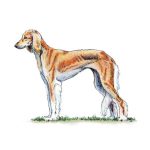
The Saluki presents a striking picture of grace, symmetry, and lithe athleticism. This large sighthound typically stands between 23 to 28 inches at the shoulder for males, with females being proportionately smaller. There is noticeable variation in type, reflecting the breed’s diverse origins, but a refined, aristocratic presence remains consistent throughout.
The head is long, narrow, and elegant, capped by a moderately wide skull that is never domed. Dark to hazel oval-shaped eyes offer a bright and far-seeing expression. Long, mobile ears hang close to the skull and are often adorned with soft, silky feathering—though smooth varieties exist with less feathering. The Saluki’s body is deep-chested and fairly narrow, with a slightly arched loin and strong, well-muscled legs designed for speed and endurance.
Salukis have either feathered or smooth short coats, both of which are soft and silky to the touch. Feathering is most often seen on the ears, legs, and tails. Their tails are long, set low, and naturally carried in a graceful curve, with feathering underneath but never bushy. Colors are abundant, with almost any shade or combination permitted except for brindle, blue, or merle. Common color varieties include fawn, gold, cream, black and tan, grizzle, red, and white.
The feet are strong yet supple, with long, well-arched toes, and the movement of a Saluki is often described as light, lifting, and flowing. The breed’s appearance should never seem coarse or heavy, always reflecting an ideal of poised elegance and power.
Temperament & Behavior
Salukis are known for their dignified reserve and gentle, independent spirit. While they may appear aloof with strangers, they are deeply loyal to their own family and form close bonds with the people they trust. This sense of reserve does not translate into nervousness or aggression; instead, the Saluki exhibits calm confidence and emotional sensitivity in social situations.
Within the home, Salukis enjoy a quiet and predictable routine. They are often content to lounge in comfortable spots, observing their surroundings with intelligent, watchful eyes. While affectionate with their chosen people, they generally prefer subtle attention to overt displays of affection.
When interacting with other dogs, Salukis tend to be amicable, especially when socialized early with breeds of similar temperament. Their strong prey drive, however, means care should be taken around small animals or unsecured spaces. The breed group’s description of dignified, aloof, but trustworthy companionship is particularly apt—Salukis demand respect and respond poorly to harsh treatment. Gentle and consistent handling brings out their best qualities, making them rewarding companions for patient owners.
As a breed originally selected for independent hunting, the Saluki’s strengths also present challenges. Recalls in open areas may not always be reliable, and they may not perform well with repetitive or traditional obedience routines. Stimulating their minds with variety and positive reinforcement, rather than demanding strict obedience, allows their intelligence and sensitivity to shine.
Care & Living Needs for the Saluki
The Saluki’s high exercise needs require a commitment from owners to provide more than two hours of physical activity each day. Long walks, opportunities to run in safe, enclosed areas, and activities that allow them to stretch their legs are essential. A large house with a sizeable, secure garden set in the countryside offers the ideal environment, as apartment living rarely meets their need for space and freedom.
Grooming requirements are moderate despite their elegant appearance. A weekly session is usually enough to keep the Saluki’s fine coat looking and feeling its best, focusing on the feathered areas to prevent tangles. Since the breed sheds, some hair management will be necessary, but overall, the short, silky coat is relatively low maintenance compared to many other long-haired breeds.
Mental stimulation is vital. Intelligence and independence mean that Salukis excel with training approaches based on positive reinforcement, incorporating variety and gentle consistency. Boredom or lack of engagement can lead to stress or undesirable behaviors. Owners should understand that these hounds will perform best in a calm, stable environment with ample exercise and the freedom to observe or retreat when desired.
The Saluki may not be the right choice for those who live in small city apartments, lack outdoor space, or cannot devote time to daily exercise. Inexperienced owners should be aware that the breed’s independent streak and sighthound instincts may challenge those hoping for a biddable or overly affectionate dog.
Health & Common Issues
The Saluki is generally considered a robust and healthy breed, particularly when given the proper care, diet, and regular veterinary attention. As a sighthound, maintaining an appropriate weight and physical condition helps to prevent joint or muscle strain and supports their natural athleticism throughout their lives.
Routine veterinary care is recommended to monitor dental hygiene, joint health, and to keep vaccinations up to date. Owners should keep an eye on weight management, as excessive weight can put stress on the Saluki’s slender frame and impact their agility and comfort.
The breed’s lifespan often extends beyond twelve years, which is quite long for a large dog. By providing suitable exercise, routine care, and a loving home, Salukis can remain active and healthy well into their older years.
Official Breed Standard Summary
The official breed standard for the Saluki outlines the desired qualities, looks, and temperament that make this breed unique. The standard emphasizes a dog of grace, speed, and endurance, paired with strength and a harmonious outline. Variety within the breed is acknowledged, reflecting its extensive geographic history, but the overall goal is an animal built for both aesthetic beauty and functional ability.
Colors are unrestricted except for brindle, blue, and merle, which are considered unacceptable. The coat may be either feathered or smooth, but should always be soft and silky. Size ranges from 23 to 28 inches at the shoulder for males, with bitches being proportionately smaller, though exact measurements can vary without penalty. Movement is described as light, lifting, and effortless, never heavy or pounding.
The standard provides detailed guidance on structure, covering features from the long, supple neck to the strong, well-arched toes. Faults are judged based on their effect on the dog’s health and welfare. Male dogs should have two normal testicles fully descended.
Prospective owners and breeders are reminded that the breed standard exists as an ideal, and individual dogs may fall outside specific measurements. Health, soundness, and suitability for the breed’s functions should always take precedence over appearance alone.
Frequently Asked Questions about the Saluki
Is the Saluki good for first-time dog owners?
Salukis are best suited to owners who have some experience with independent or sensitive breeds. Their unique personality and exercise needs may challenge those new to dog ownership.
How much exercise does a Saluki need daily?
A Saluki requires at least two hours of activity each day. This should include opportunities for safe running and plenty of variety to satisfy both body and mind.
Is the Saluki good with children?
The Saluki’s gentle and dignified temperament allows for good relationships with respectful children. Supervision and education are essential, as the breed is sensitive and may not enjoy rough handling.
Can the Saluki live in an apartment?
Salukis are not well suited to apartment life. They thrive in spacious homes with large, secure gardens and benefit from access to open countryside where they can run safely.
How much grooming does a Saluki need?
Once a week grooming is generally sufficient for a Saluki. Owners should pay particular attention to the feathered parts of the coat, but overall maintenance is straightforward.
Are there common health concerns in this breed?
No specific health concerns are highlighted for Salukis in breed literature. Regular vet visits, proper weight management, and balanced exercise are recommended to maintain good health.


