
What Are the Traits and Care Tips for a Soft Coated Wheaten Terrier?
If you’re seeking a medium-sized companion with endless charm and a spirited personality, the Soft Coated Wheaten Terrier stands out as a distinctive choice. Renowned for its uniquely soft, flowing wheaten-colored coat and a lively, affectionate demeanor, this breed suits those who want an intelligent, engaging dog that thrives in an interactive home. The Soft Coated Wheaten Terrier enjoys activities and has a zest for life, making it a valued member of any household that can match its enthusiasm and provide consistent companionship.
This terrier’s blend of playful energy and strong family loyalty makes it an excellent fit for a variety of lifestyles, from active singles to bustling families. Once bred as a farm dog and natural vermin hunter, the Wheaten today is popular as a loyal friend, full of humor and spirit. Owners with an appreciation for daily grooming, regular exercise, and a little terrier mischief will be rewarded with a loving and steadfast companion.
- Overview of the Soft Coated Wheaten Terrier
- Key Characteristics
- Appearance of the Soft Coated Wheaten Terrier
- Temperament & Behavior
- Care & Living Needs
- Health & Common Issues
- Official Breed Standard Summary
- Frequently Asked Questions
Group: Terrier
Size: Medium
Exercise needs: Up to 1 hour per day
Coat length: Medium
Grooming: Every day
Shedding: No
Lifespan: Over 12 years
Ideal home type: Small house
Town or country: Either
Garden needs: Small/ medium garden
Overview of the Soft Coated Wheaten Terrier
The Soft Coated Wheaten Terrier boasts a long-standing legacy as an Irish breed, with its roots going back to the rugged countryside where these dogs worked as farm helpers and hunters. Recognized in Ireland in the 1930s, the breed was cherished for its ability to track and hunt badgers and otters, tasks demanding intelligence, courage, and stamina. Its distinctive coat not only names the breed but also provided both camouflage and some protection against the elements during days spent outdoors.
Today’s Soft Coated Wheaten Terrier remains true to its heritage—alert, sturdy, and always ready for an adventure—yet has become better known as a dedicated family member and adaptable urban or country companion. Its historical foundation as a natural “earth dog” has imbued the breed with robust health and a spirited, game personality that still shines through, even as a household pet.
Due to their size and adaptability, these terriers can thrive in smaller homes or apartments as long as their exercise and mental needs are met. Prospective owners drawn to breeds with an even mix of affection, humor, and terrier boldness will find a tremendous companion in the Wheaten, especially if they appreciate the regular grooming that comes with maintaining its beautiful coat.
Key Characteristics
- Energy level – Active and spirited, best suited to owners who can provide plenty of daily play and exercise.
- Trainability – Intelligent and eager to please, but benefits from consistent, positive training methods.
- Intelligence – Quick-witted and sharp, often picking up new tricks and routines rapidly.
- Prey drive – Retains a natural drive to chase smaller animals due to its background as a vermin hunter.
- Social needs – Enjoys close company with family members and forming strong bonds with humans.
- Compatibility with families and children – Generally affectionate, playful, and gentle with children when well-socialized.
- Compatibility with other dogs – Typically gets along with other dogs, although supervision is wise due to terrier boldness.
- Guarding or watchdog tendencies – Naturally alert with a keen sense of territory, often quick to announce visitors but not overly aggressive.
- Adaptability to city or country life – Equally at home in urban or rural settings if exercise and stimulation needs are met.
- Best suited owner type – Active individuals, couples, or families willing to invest time in grooming, exercise, and training.
- Typical daily routine – Morning and evening walks, playtime, social interaction, and daily coat maintenance.
Appearance of the Soft Coated Wheaten Terrier
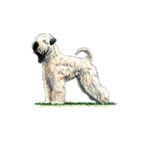
The Soft Coated Wheaten Terrier presents itself as a medium-sized, well-balanced terrier with an unmistakable coat that flows in soft curls or loose waves. Its overall build is compact and sturdy, giving off an impression of both strength and agility. When standing alert, this terrier gives a lively, cheerful aura—its head held high, tail up, and unmistakable terrier confidence.
The breed’s head is moderately long, covered in abundant coat that often falls forward over dark hazel eyes. The skull is broad but never coarse, blending into a powerful, straight muzzle topped with a large black nose. Ears form a neat V-shape, folded level with the skull, lying close to the cheeks and adorned with a subtle fringe. The strong jaws are equipped with a scissor bite and tight black lips.
This terrier’s neck is muscular and arched, flowing smoothly into well-set, angled shoulders. The body is compact with a strong, level back and well-sprung ribs, creating a deep chest but not an exaggerated outline. Both forelegs and hindquarters display strong bone and muscle, giving it a capable, free-moving gait. Feet are compact and strong, with black toenails adding to the breed’s signature look.
The tail, whether docked or undocked, is set high and carried gaily—never curled over the back—complementing the confident stance. The coat, perhaps the breed’s most distinctive feature, feels soft and silky rather than wiry or woolly. It covers the entire body in loose, natural waves, draping most heavily over the head and legs. The color is a clear wheaten, varying from pale “ripening wheat” shades to deeper gold tones, but never red or pure white. In young dogs, darker markings may be present but should clear as the mature coat develops.
Size-wise, males typically stand 18 to 19½ inches at the shoulder and weigh about 35–45 pounds, with females somewhat smaller in both height and weight. The balance of proportions, coupled with a flowing, well-maintained coat, makes the Soft Coated Wheaten Terrier striking both in the home and in the show ring.
Temperament & Behavior
The Soft Coated Wheaten Terrier is best known for its friendly, confident, and affectionate nature. With a temperament that draws smiles and laughter, Wheatens are often considered delightful companions who adore being part of the daily action. Their inherent intelligence and lively spirit are paired with a signature sense of humor, ensuring that life with a Wheaten is rarely dull.
This terrier’s roots as a farmhouse worker and vermin hunter have fostered a bold, inquisitive personality. Wheatens tend to be game and outgoing, unafraid to seek out adventure and eager to engage in group activities, games, or walks. Their “game” attitude, described as spirited and hardy, means they thrive in families where their hearts and minds are kept active.
Sociable at heart, the Wheaten builds deep attachments to household members and is usually gentle, even playful, around children. While their terrier independence can manifest as stubbornness, positive training and patience help shape these clever dogs into well-mannered companions. With early socialization, they often get along well with other dogs.
As with many terriers, the Soft Coated Wheaten possesses a natural instinct to alert its family to new arrivals or potential intruders, barking to announce guests. However, they seldom display true aggression unless provoked, preferring instead to investigate with curiosity. The breed’s confident, cheerful disposition also means they usually adjust well to different home environments, as long as their need for interaction and activity is met.
Care & Living Needs for the Soft Coated Wheaten Terrier
The Soft Coated Wheaten Terrier enjoys an active lifestyle and benefits from up to an hour of exercise each day. Daily walks, games of fetch, or playful romps in a fenced yard satisfy their terrier energy. They do well in small houses and are quite adaptable, thriving in either city or rural locations, provided they have a small to medium garden or regular outdoor access for activities and mental engagement.
One of the breed’s most notable care requirements is grooming. With a medium-length, silky coat that does not shed, Wheatens require thorough brushing every day to prevent mats and tangles. Routine grooming also keeps their abundant head and leg hair looking neat and ensures the soft texture prevails. While show dogs may be tidied for a neat outline, over-trimming is discouraged, and keeping the coat natural is preferred. Bathing should be done as needed to maintain their coat’s unique luster and cleanliness.
Wheatens love new experiences and benefit greatly from regular training sessions that focus on positive reinforcement. Puzzle toys, obedience exercises, and new tricks help channel their intelligence and keep boredom at bay, which is essential for preventing mischief or undesirable behaviors. They can become vocal or independent if left to their own devices too frequently, so homes where people are absent for most of the day may not be an ideal match.
This breed is not a perfect fit for everyone. Those unwilling to commit to daily coat care or unable to provide regular exercise may find the Wheaten a challenge. Also, first-time owners who prefer a dog without any terrier stubbornness or spirited behavior may wish to consider breeds with a more placid temperament.
Health & Common Issues
The Soft Coated Wheaten Terrier benefits from a history as a working farm dog, which has contributed to its hardy constitution. While the breed is not noted for any unique or serious breed-specific health problems in the information available, maintaining a balanced lifestyle is still important.
Regular veterinary check-ups help to ensure early detection of any potential issues related to general canine health, such as oral hygiene, joint maintenance, and skin condition beneath the abundant coat. Keeping the dog at a healthy weight through proper diet and portion control supports overall longevity and well-being.
Consistent daily exercise and regular grooming help prevent some common dog issues, such as matting, poor muscle tone, and overgrown nails. Monitoring ears, eyes, and teeth as part of routine care will help keep your Wheaten feeling and looking its best.
Official Breed Standard Summary
The official breed standard outlines the Soft Coated Wheaten Terrier as a medium-sized, robust terrier marked by balance, substance, and an exuberant character. The appearance is meant to be natural, with a soft, wavy-to-curly wheaten-colored coat that covers the body abundantly, especially on the head and legs. The overall effect should be one of harmony and fitness—never exaggerated or stylized—with both structure and movement carrying equal importance.
The coat is soft and silky, without woolliness or wiriness, and should flow naturally in loose waves or large curls. A dog’s coloration ranges from pale to deeper wheaten shades, and while darker markings can appear in young dogs, these should fade as adulthood nears. Over-trimming is discouraged in the show ring, and the mature coat’s unique texture and length should be maintained without extremes.
Head and body proportions balance strength and substance with elegance, from the straight, parallel muzzle tip to the strong, sprung ribs and compact loin. Movement is free, graceful, and lively—marked by long, low strides and a level backline. Size standards place males at 18–19½ inches tall and 35–45 pounds, with females slightly smaller. The ideal is a dog that stands four-square, with tail and head held high, exuding delight and confidence.
Minor faults in coat, color, structure, or movement are judged by severity and impact on the dog’s fitness and health. Those considering a puppy should keep in mind that the official breed standard provides a guide for ideal size and type, but individual dogs may vary. Males should display two normal, fully descended testicles as per breeding guidelines.
Frequently Asked Questions about the Soft Coated Wheaten Terrier
Is the Soft Coated Wheaten Terrier good for first-time dog owners?
This breed can be a rewarding choice for engaged first-time owners willing to invest time in training, daily exercise, and regular coat grooming. Consistency and patience are key due to the terrier’s lively spirit.
How much exercise does a Soft Coated Wheaten Terrier need daily?
Wheatens benefit from up to an hour of activity each day, including walks, playtime, and mentally stimulating games. Fulfilling their exercise needs helps prevent boredom and behavioral issues.
Is the Soft Coated Wheaten Terrier good with children?
When properly socialized, this breed is affectionate and playful with children, making them a great addition to family homes. Supervision is recommended with younger children due to their enthusiastic play style.
Can the Soft Coated Wheaten Terrier live in an apartment?
Yes, this adaptable breed can be comfortable in an apartment or small house, provided its exercise and activity needs are met and regular outings are part of the daily routine.
How much grooming does a Soft Coated Wheaten Terrier need?
Daily brushing is necessary to keep the distinctive coat healthy and free from tangles. Regular maintenance ensures the dog stays comfortable and looks its best.
Are there common health concerns in this breed?
There are no noted breed-specific health concerns identified here, but responsible ownership includes regular check-ups, balanced nutrition, and proper grooming to maintain general wellness.


