
What Are the Traits and Care Tips for the Australian Silky Terrier?
The Australian Silky Terrier is a charming companion that blends a striking appearance with a lively personality. With its small size and elegant coat, this breed fits naturally into the homes of city dwellers and suburban families alike. Those seeking a cheerful, intelligent, and affectionate dog for company—not just for show—will find much to love in the Australian Silky Terrier.
Originally bred to offer both companionship and pest control, the Australian Silky Terrier holds true to its terrier roots. Its manageable exercise needs and adaptability make it a solid option for singles, couples, and families, provided they can commit to regular grooming and appreciate an energetic, alert little dog.
- Overview of the Australian Silky Terrier
- Key Characteristics
- Appearance of the Australian Silky Terrier
- Temperament & Behavior
- Care & Living Needs
- Health & Common Issues
- Official Breed Standard Summary
- Frequently Asked Questions
Group: Toy
Size: Small
Exercise needs: Up to 30 minutes per day
Coat length: Medium
Grooming: Every day
Shedding: Yes
Lifespan: Over 12 years
Ideal home type: Flat/ Apartment
Town or country: Either
Garden needs: Small/ medium garden
Overview of the Australian Silky Terrier
The Australian Silky Terrier’s origins trace back to purposeful breeding between the Australian Terrier and the Yorkshire Terrier. Developed in Australia, particularly gaining early fame through the efforts of breeders like Macarthur Little in Sydney, the breed was once commonly known as the Sydney Silky. Fusing the glistening, soft coat of the Yorkshire Terrier with the self-assured spirit of the Australian Terrier, this breed offers both visual appeal and a true terrier heart.
Though considered a Toy breed thanks to its petite frame, the Silky Terrier is by no means a delicate lapdog alone. Its history includes work as a popular rodent hunter, showing it has drive and practicality beyond the show ring. The breed’s moderate size and manageable exercise needs make it a good fit for smaller homes, apartments, or city living, while its keen energy keeps it engaging for active individuals and families.
The Australian Silky Terrier’s compact size and adaptability allow it to thrive in a variety of environments. Its sociable and affectionate nature endears it to those looking for a companion that is both loving and lively. With devoted care, the Silky can be a delightful and long-lived addition to many household settings.
Key Characteristics
- Energy level – Lively and spirited, these dogs enjoy play and short daily walks but are content with moderate activity.
- Trainability – Responsive to positive reinforcement and eager to please, though an independent streak may appear at times.
- Intelligence – Bright and inquisitive, quick to learn routines and commands.
- Prey drive – Retains strong rodent-hunting instincts from terrier ancestry; supervision around small pets is wise.
- Social needs – Highly people-oriented, enjoys human attention and doesn’t like to be left alone for long periods.
- Compatibility with families and children – Generally good with respectful children, thrives in active family environments with supervision.
- Compatibility with other dogs – Can coexist well with other dogs if properly socialized; may be assertive due to terrier temperament.
- Guarding or watchdog tendencies – Naturally alert and will sound the alarm for visitors or unfamiliar noises.
- Adaptability to city or country life – Comfortable in both apartments and homes with gardens, with easy adjustment to urban or suburban spaces.
- Best suited owner type – Ideal for individuals, couples, or families who can provide interaction, mental engagement, and dedicate time to grooming.
- Typical daily routine – Enjoys structured walks, interactive play, companionship, and regular grooming sessions.
Appearance of the Australian Silky Terrier
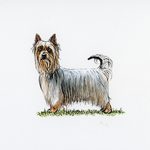
The Australian Silky Terrier presents as a refined, compact dog with a balanced build. They are moderately low-set and carry themselves with confidence, their size lending them an air of elegance while still exuding the robustness expected in a terrier. Males generally reach 9 to 10 inches at the withers, with females slightly smaller, and weight remains proportional and elegant rather than heavyset.
The breed’s defining feature is its straight, flat, silky coat, ideally between 5 to 6 inches in length from behind the ears to the base of the tail. The texture is fine and glossy, never wooly or curly, and the coat should be well-groomed and parted down the center of the back. Acceptable colors include various combinations of blue and tan, silver, and grey blue, with rich, well-defined distribution. Puppies may be born with some black, but the classic blue and tan body develops as they mature, often set by 18 months of age.
Head structure is of moderate length, showcasing a strong terrier character. The skull is flat, with a silky topknot not obscuring the eyes. Eyes are dark, oval, and keen, while the V-shaped, high-set ears are pricked and free of long hair. Teeth meet in a regular scissor bite and should sit square within a strong jaw. The neck carries a slight crest and blends smoothly into fine, well-laid shoulders.
The body appears moderately long relative to height, with a level topline both standing and in motion. Ribs are well sprung, giving a sturdy yet refined impression, and loins are strong. The hindquarters are muscular without being bulky, allowing for free, straight, and energetic movement. The tail, whether naturally long or docked, should stand erect and complement the breed’s balanced silhouette.
Feet are small, cat-like, and firmly padded, with toes closely knit and nails ideally black or very dark. All combined, the Australian Silky Terrier projects a spirited yet graceful presence that is unmistakable among Toy breeds.
Temperament & Behavior
The Australian Silky Terrier is best described as keen, friendly, and exceptionally quick to respond. This is a breed that loves to be at the center of household activities, eager to participate in family routines. At home, Silky Terriers are lively without being hyperactive, settling in quietly but always ready for play or attention.
Thanks to their roots as Toy dogs bred for companionship, Australian Silky Terriers carry a strong social need and love receiving attention. They bond closely with their owners and typically develop outgoing personalities when socialized early. Their terrier sass makes them alert watchdogs, prone to raising the alarm at unfamiliar sounds, but this alertness is rarely paired with aggression.
Interactions with people are positive, especially if children know how to gently handle small dogs. Their small stature means youngsters should be supervised to prevent accidental injury. The breed’s quick wit makes them responsive to training and eager to learn tricks, but their intelligence also means they can become easily bored if left under-stimulated.
With other dogs, especially those raised together, the Silky Terrier is generally compatible. As is typical of terriers, they can show assertiveness, so introductions should be managed thoughtfully. They are not always ideal with small pets like rodents due to their strong prey drive.
Owners seeking a dog that is lively yet adaptable, friendly yet slightly mischievous, will find the Silky’s temperament rewarding. They’re happiest with interactive families or individuals who appreciate their affectionate, playful spirit.
Care & Living Needs for the Australian Silky Terrier
While the Australian Silky Terrier is full of energy, its exercise requirements remain modest compared to some terriers. About 30 minutes of daily activity—walks, interactive play, or supervised garden time—will keep most Silkies content and healthy. This makes them excellent companions for those in apartments or homes without access to extensive outdoor spaces.
The breed adapts easily to flats, apartments, or houses with small to medium-sized gardens, as long as they are included as part of daily family routines. They are equally at home in the city or country but should have secure spaces, as terrier curiosity can tempt them to explore.
Grooming is a high-priority aspect of Silky care. Their distinctive medium-length coat requires daily brushing to prevent tangles and to keep it sleek and glossy. Excess hair must be trimmed around the face and feet, ensuring it does not impede movement or vision. Though the breed does shed, regular grooming minimizes loose hair and matting, and it offers an excellent opportunity for owner bonding.
Training sessions should be varied, upbeat, and positive, focusing on encouragement and short, engaging lessons. Silky Terriers benefit from toys and puzzles to stimulate their bright minds. Socialization from a young age ensures that the breed is outgoing and well-mannered around strangers, pets, and children.
This breed is not suited for owners who cannot dedicate regular time to grooming, or those away from home for long hours, as Silky Terriers crave companionship and interactive routines. Households willing to meet these needs will be rewarded with a devoted, energetic friend.
Health & Common Issues
Australian Silky Terriers are generally known for their robust constitution and excellent lifespan, often living well beyond 12 years. There are no specific or recurring health issues noted in official breed summaries for this breed.
General canine care principles apply: regular veterinary checkups, balanced nutrition, and monitoring of weight will support the Silky’s well-being throughout its life. Teeth should be cleaned regularly to prevent tartar buildup—a good policy for all small breeds. Moderate exercise and plenty of mental stimulation help ensure a vibrant, healthy life.
Responsible breeders aim to produce sound, healthy dogs, so seeking out puppies or adults with known familial backgrounds will support the long-term wellness of your Australian Silky Terrier. Routine care and attentive observation will help catch any concerns early on.
Official Breed Standard Summary
The official breed standard for the Australian Silky Terrier offers a comprehensive guideline outlining the ideal appearance, temperament, and health for the breed. It emphasizes a medium-length, low-set, compact build with sufficient substance, reflecting the breed’s historic utility as a rodent hunter while maintaining refined structure and elegance. A straight, glossy, and silky coat, parted from the neck to the tail, is distinctive and essential for the overall look.
Colors should be rich and well-defined, with various established shades of blue and tan including blue & tan, grey blue & tan, silver & tan, and silver blue & tan. The coloration pattern is specific, and only these combinations are acceptable by official standards. The topline is level both when the dog is standing and moving, and movement itself should be free, straight, and true, showing strength and flexibility without exaggeration.
Size is defined as 9 to 10 inches at the withers for males, with females being slightly smaller, but healthy weight should remain proportional. Any notable deviations from these features or the general appearance—such as incorrect bite, color, size, or movement—are considered faults. Such faults are weighed according to their effect on the health and welfare of the dog.
The standard also encourages prospective owners to remember that individual dogs may vary outside the described measurements. The focus should remain on soundness, well-being, and the hallmark attributes of this vibrant breed.
Frequently Asked Questions about the Australian Silky Terrier
Is the Australian Silky Terrier good for first-time dog owners?
Yes, this breed is a good choice for dedicated first-time owners willing to provide daily grooming, socialization, and attention. Their intelligence and manageable size make them accessible for newcomers to dog ownership.
How much exercise does an Australian Silky Terrier need daily?
Australian Silky Terriers require up to 30 minutes of exercise each day. Short walks, playful games, and some mental stimulation will help keep them healthy and content.
Is the Australian Silky Terrier good with children?
They can be a friendly and playful companion for respectful children and thrive in family environments. Due to their small size, interactions with young children should be supervised to ensure gentle handling.
Can the Australian Silky Terrier live in an apartment?
Absolutely—this breed is well suited to apartment living if exercised daily and kept mentally occupied. They fit well into smaller spaces and adapt easily to urban life.
How much grooming does an Australian Silky Terrier need?
Daily grooming is needed to maintain their medium-length, silky coat and prevent tangles and mats. Regular attention to trimming and brushing keeps their fur in optimal condition.
Are there common health concerns in this breed?
Australian Silky Terriers are generally a healthy breed with no widespread breed-specific health concerns. Regular vet visits and routine care will help ensure continued well-being.


