
What Are the Traits and Care Tips for Cairn Terriers?
The Cairn Terrier is an energetic and sturdy small breed well-known for its spirited personality and natural ruggedness. Highly adaptable and brimming with character, this breed has found its place as both a devoted companion and a lively family member. The Cairn’s origins as a working terrier contribute to its bold, fearless presence in any home.
Potential owners drawn to playful, alert dogs that thrive on interaction will find the Cairn Terrier rewarding. Its compact size, weather-resistant coat, and zest for life make it suitable for apartments or houses with small to medium gardens. This breed adapts well to a range of households, especially those seeking a dog that can keep up with both urban and rural lifestyles while offering plenty of companionship.
- Overview of the Cairn Terrier
- Key Characteristics
- Appearance of the Cairn Terrier
- Temperament & Behavior
- Care & Living Needs
- Health & Common Issues
- Official Breed Standard Summary
- Frequently Asked Questions
Group: Terrier
Size: Small
Exercise needs: Up to 1 hour per day
Coat length: Medium
Grooming: More than once a week
Shedding: Yes
Lifespan: Over 10 years
Ideal home type: Flat/ Apartment
Town or country: Either
Garden needs: Small/ medium garden
Overview of the Cairn Terrier
Originating from Scotland, the Cairn Terrier has a long history as a reliable and spirited working dog. This breed traces its roots back to the 17th century, where it was developed in the rugged Western Highlands and the Isle of Skye. Bred primarily to keep down vermin that threatened livestock and game, Cairns were often found working in small, efficient packs. Their name comes from the “cairn”—the small, rocky outcrops scattered across the moors—where these dogs would hunt and flush out foxes, rats, and other pests.
The Cairn Terrier’s history intersects with several other Scottish breeds, sharing common ancestry with the Skye Terrier, Scottish Terrier, and West Highland White Terrier. Over time, the Cairn remained remarkably consistent in appearance, maintaining a lighter look than some of its Scottish terrier relatives, yet always exuding the same rugged determination. Today, the Cairn fits seamlessly into both family life and more adventurous homes where an observant, hearty, and playful companion is desired.
This breed suits a wide range of owners, from individuals seeking a compact canine friend to families who enjoy interactive, engaged dogs. Whether the living space is a city apartment or a house with a small garden, the Cairn Terrier offers flexibility, loyalty, and an ongoing zest for daily adventures.
Key Characteristics
- Energy level – Lively and spirited, requiring regular play and walks to stay content.
- Trainability – Smart and responsive with proper guidance, but may display an independent streak common in terriers.
- Intelligence – Quick-witted and alert, the Cairn Terrier enjoys mental challenges and interactive games.
- Prey drive – Instinctively strong due to its background in hunting vermin, so a secure garden is beneficial.
- Social needs – Enjoys human companionship and integrates well into a busy household.
- Compatibility with families and children – Generally affectionate and energetic with children, but benefits from supervision and respectful play.
- Compatibility with other dogs – Socialized Cairns do well with other dogs, especially those raised together from a young age.
- Guarding or watchdog tendencies – Naturally alert and inclined to bark at unfamiliar noises or visitors.
- Adaptability to city or country life – Thrives in both apartments and country homes, as long as daily exercise needs are met.
- Best suited owner type – Active singles, couples, or families seeking a bright, animated companion.
- Typical daily routine – Includes one or more walks, active play sessions, and time spent participating in family life.
Appearance of the Cairn Terrier
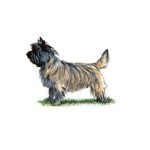
The Cairn Terrier presents an agile, alert, and workmanlike look, standing confidently on well-set forepaws. With a naturally rugged build, this breed combines deep ribs, strong quarters, and a supple yet compact body structure. At the withers, Cairns typically stand 11–12 inches (28–31 cm) tall and weigh ideally between 14 to 16 pounds (6–7.5 kg), although there can be slight variations above or below these figures.
The head is proportionately small but broad, featuring a distinct stop and well-furnished muzzle. Dark hazel eyes, set wide apart and framed by shaggy eyebrows, give the Cairn an intelligent, piercing expression. Small, erect ears with minimal feathering contribute to the breed’s characteristic alertness. The mouth houses large teeth with a correct scissor bite, indicative of the breed’s robust hunting past.
Muscled fore and hindquarters enable the Cairn’s signature free movement and agility. Medium-length legs, a level back, well-sprung ribs, and strong loins provide stability and flexibility. The tail is short, covered with hair but not plumed, and is carried gaily without curving towards the back.
The coat sets the Cairn apart: it’s double-layered, weather-resistant, and harsh to the touch on top, with a short, soft undercoat. Typical colors range across cream, wheaten, red, grey, and even nearly black, with various brindle shades permissible. Dark accents, particularly on the ears and muzzle, are hallmarks of the breed. Solid black, white, or black and tan are not acceptable for conformation.
Temperament & Behavior
Described as fearless with a cheerful disposition, the Cairn Terrier is assertive yet not aggressive. This blend of vivacity and confidence makes for a charming companion at home. Energetic by nature, Cairns thrive when included in daily activities and quickly become valued members of any household.
Given their origins as terriers tasked with flushin’ out vermin, Cairns are naturally game, hardy, and quick to react to any sign of movement or sound. This alertness often translates to being an excellent watchdog, though their size and friendly nature rarely make them intimidating.
In a family setting, Cairns are usually warm and affectionate, forming strong bonds with adults and children alike. Their energy suits active children who can engage in play, though, as with any breed, interactions should be supervised to teach respectful boundaries. Social Cairns usually mix well with other dogs, especially when raised together, while their hunting instincts may encourage chasing smaller animals.
Adaptable in most environments, these terriers adjust happily to quieter households or lively families but will always crave time to engage, discover, and participate in shared routines. The independent streak inherent in most terriers means owners benefit from consistent, positive training and plenty of activities to channel the Cairn’s considerable spirit.
Care & Living Needs for the Cairn Terrier
The Cairn Terrier’s exercise requirements are moderate, making this breed well-suited to a variety of homes. As little as an hour of active play, walks, or garden exploration each day keeps these dogs satisfied. Their small yet robust frame fits easily in flats or apartments, provided owners can offer regular outdoor breaks and enrichment. A small or medium garden adds freedom for safe off-leash fun, but is by no means necessary for a happy Cairn.
Grooming needs are distinctive: more regular brushing is recommended, at least several times a week, to manage the medium-length, double-layered coat. The harsh outer layer must be kept tidy to maintain the waterproof qualities, while the undercoat benefits from removal of loose fur to reduce shedding around the house. Cairns are known to shed, so those with allergies should take this into account. Occasional professional grooming may help with coat management.
Mental stimulation is crucial for this curious and sharp-witted terrier. Training sessions focusing on positive reinforcement, food puzzles, and a variety of toys will keep boredom at bay. The breed’s natural prey drive and independence mean they respond best to consistent routines and clear, patient instruction.
This is not a breed for owners who want a sedentary or highly compliant dog. Prospective owners should be prepared for a dog with personality, a possible tendency to dig or bark, and the need for daily interaction. Those seeking a docile lapdog or a breed tolerant of long hours alone may wish to consider another type.
Health & Common Issues
The dataset does not specify particular health concerns for the Cairn Terrier. Generally, this breed is hardy and can enjoy a long life of over 10 years when provided with balanced care. Regular veterinary checks are essential to catch early signs of issues related to teeth, skin, and general fitness, which are typical considerations for all small breeds.
Owners should monitor weight and ensure that daily exercise needs are met to prevent obesity, which can place unnecessary strain on joints and organs. Grooming plays a role in general skin and coat health, and keeping nails trimmed and teeth clean is advised.
While Cairns are not listed as vulnerable or predisposed to severe genetic disorders in the dataset, every dog benefits from basic preventive care and observation for any changes in mobility, appetite, or energy level. Thoughtful breeding and responsible ownership remain the best defenses against most potential issues.
Official Breed Standard Summary
The official breed standard for the Cairn Terrier outlines a dog that is agile, alert, and strongly built while maintaining a natural, unexaggerated look. Emphasis is placed on correct proportions and absolute soundness, ensuring the breed is fit for its original practical purpose. The ideal Cairn displays a weather-resistant, double-layered coat, free-flowing movement, and compact size for working agility.
Color options include a wide range of brindle and solid shades (except for solid black, white, or black and tan, which are undesirable). Dark points on the muzzle and ears are characteristic. The appropriate height ranges from about 28 to 31 centimeters at the withers and a weight of 14–16 pounds, while deviations above or below these measures are possible in healthy, well-structured dogs.
Correct movement, sturdy body, and sound temperament are vital, as are well-placed ears and expressive eyes. Any exaggerations or structural faults that affect wellbeing or function are discouraged. Prospective owners should be aware that official breed standard measurements act as a guide, not a strict requirement for every individual.
Finally, the standard recommends thoughtful breeding and attention to the ongoing health and welfare of the Cairn Terrier, ensuring this breed remains as vibrant and capable as it has been for centuries.
Frequently Asked Questions about the Cairn Terrier
Is the Cairn Terrier good for first-time dog owners?
The Cairn Terrier can be a good match for dedicated first-time owners, provided they are ready for a spirited and independent dog with a keen mind. Early training and socialization help smooth out its quick-witted, sometimes stubborn tendencies.
How much exercise does a Cairn Terrier need daily?
This breed is happiest with up to one hour of daily activity, such as walks, playful sessions, or off-leash garden time. Their compact size means their needs can usually be met even in a busy city lifestyle.
Is the Cairn Terrier good with children?
With proper introduction and supervision, Cairn Terriers are affectionate and energetic with children. They thrive in a home where interactions are respectful and stimulating, fitting in well with active families.
Can the Cairn Terrier live in an apartment?
The Cairn Terrier adapts well to apartment living, as long as it receives daily exercise and mental engagement. A secure small or medium garden is a bonus, but not required for this breed’s happiness.
How much grooming does a Cairn Terrier need?
They require brushing multiple times each week to keep the weather-resistant double coat in top condition and to manage shedding. Occasional professional grooming may be helpful, especially during seasonal changes.
Are there common health concerns in this breed?
The Cairn Terrier is generally healthy and not listed as vulnerable or prone to specific inherited issues in the dataset. Regular veterinary check-ups, dental care, and weight management are the basics to ensure a long, active life.


