
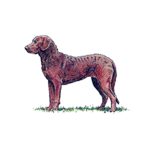
Retriever (Chesapeake Bay) – Breed Information, Traits & Complete Guide
The Retriever (Chesapeake Bay) is a robust and hard-working breed, celebrated for its combination of power, intelligence, and an unwavering dedication to its job—retrieving in challenging water conditions. This breed suits owners who lead active lifestyles, have plenty of outdoor space, and are looking for a loyal dog with strong instincts both as a working companion and as a family protector. Its legendary abilities in water retrieving have earned great respect among gundog enthusiasts and hunters alike.
Those drawn to the Retriever (Chesapeake Bay) will appreciate its independent spirit alongside deep affection for its family. While best known as a determined and capable working dog, this breed also thrives as a devoted companion, eager to be part of daily life. Given their need for exercise and mental stimulation, they are best matched to environments where their substantial talents and energy won’t go untapped.
- Overview of the Retriever (Chesapeake Bay)
- Key Characteristics
- Appearance of the Retriever (Chesapeake Bay)
- Temperament & Behavior
- Care & Living Needs
- Health & Common Issues
- Official Breed Standard Summary
- Frequently Asked Questions
Group: Gundog
Size: Large
Exercise needs: More than 2 hours per day
Coat length: Short
Grooming: Once a week
Shedding: Yes
Lifespan: Over 10 years
Ideal home type: Large house
Town or country: Country
Garden needs: Large garden
Overview of the Retriever (Chesapeake Bay)
The Retriever (Chesapeake Bay) traces its lineage back to a fascinating blend of Newfoundland dogs and early retriever breeds, resulting in a dog uniquely suited for challenging water work. Bred along the icy Atlantic shores of the Chesapeake Bay, these retrievers were developed to withstand cold, wind, and rough terrain while retrieving waterfowl. The outcome is a breed with remarkable stamina, a protective, weather-resistant coat, and a deep-seated eagerness to work in and around water.
Larger and more muscular than its cousin, the Labrador Retriever, the Chesapeake Bay Retriever possesses both strength and seriousness. Its talents have made it particularly valued among hunters and sportsmen, especially those operating in tough environments. Beyond the field, this breed shines in active households that appreciate determination, a willingness to engage, and a dog who likes to keep busy indoors and out.
This retriever is best suited for experienced owners who can provide ample physical exercise, consistent training, and a stimulating home environment. Those willing to embrace the breed’s working roots and need for companionship will find the Chesapeake Bay an endlessly rewarding partner.
Key Characteristics
- Energy level – Exceptionally high; needs significant daily activity to maintain health and happiness.
- Trainability – Very intelligent and quick to learn but benefits from consistent, positive-based training approaches.
- Intelligence – Demonstrates sharp problem-solving skills, especially in retrieving and navigating new environments.
- Prey drive – Strong retrieving instinct and a natural love of waterfowl and field work.
- Social needs – Loyal and affectionate with family; can be reserved or independent with strangers.
- Compatibility with families and children – Generally good with respectful children and makes a sturdy family companion.
- Compatibility with other dogs – Typically sociable, though early socialization is key for best results with other pets.
- Guarding or watchdog tendencies – Naturally protective of home and family due to their guardian instincts.
- Adaptability to city or country life – Far happier in rural environments with ample outdoor space and opportunity to roam.
- Best suited owner type – Active individuals or families with a rural lifestyle, outdoor interests, and an understanding of gundogs.
- Typical daily routine – Morning exercise, time for mental games or training, involvement in family activities, and opportunities for swimming or retrieving whenever possible.
Appearance of the Retriever (Chesapeake Bay)
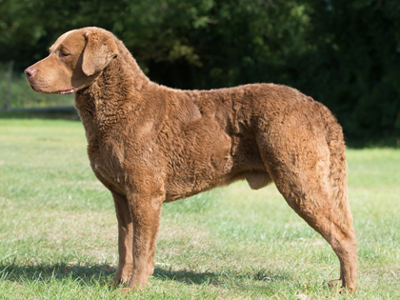
The Retriever (Chesapeake Bay) displays a well-proportioned, muscular form built for work in demanding conditions. Both males and females have a powerful silhouette, with males standing 23–26 inches at the shoulder and females slightly smaller at 21–24 inches. The breed appears strong yet graceful, displaying a level topline that may rise slightly toward the hindquarters, reflecting its physical readiness and resilience.
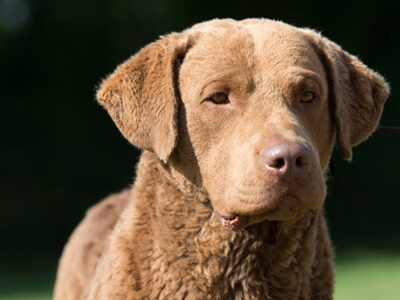
A hallmark of the Chesapeake Bay Retriever is its distinct double coat—a dense, fine, woolly undercoat topped by a harsh, oily outer coat. This doubly protective layer, which may appear wavy on the neck and lumbers, is essential for water resistance, allowing the dog to brave snow, ice, and cold water alike. The coat comes in shades designed for camouflage in natural environments, including dead grass, sedge (a warm red gold), ash, and various browns. Small white spots on the chest, belly, or toes are acceptable but generally kept to a minimum, and self-colored dogs are preferred.
The head is broad and round, featuring a moderately defined stop and a muzzle that is pointed yet not too sharp. Eyes are medium-sized, widely set, and strikingly yellow or amber—a distinguishing feature of the breed. Ears sit high and are of moderate size, folding in close to the head for protection. The strong, medium-length neck and broad chest add to the dog’s commanding presence.
Hare-like, webbed feet further enhance swimming ability, while the medium-length tail, straight or with a gentle curve, is carried level or just above the topline, never over the back. Movement is smooth and powerful, with the feet tending to draw inward as speed increases. The Retriever (Chesapeake Bay) combines function and form in every physical detail, presenting as a true athlete of the canine world.
Temperament & Behavior
The temperament of the Retriever (Chesapeake Bay) reflects its heritage as a hard-working gundog—courageous, independent, and deeply dedicated to its people. Alert and cheerful, this dog responds quickly to its environment and demonstrates an enduring willingness to tackle new challenges. While affectionate with family, the breed is not overtly demonstrative with strangers, often displaying a calm reserve until trust has been established.
At home, the Chesapeake Bay Retriever is happiest when involved in daily life and activities. It makes a steady guardian, naturally alert to changes in the household and keen to offer protection when needed. With children, the breed’s sturdy frame and patient nature are an advantage, but like all larger breeds, play should be supervised to ensure a positive experience for everyone.
Within the larger group of gundogs, this retriever stands out for its adaptability to family roles. Sociable yet not clingy, it flourishes in an environment where both its body and mind are engaged. Early introduction to other pets and consistent guidance help the Chesapeake Bay Retriever channel its independence productively. Owners may find that these dogs express their intelligence with a streak of self-reliance, making boundaries and training a must for harmonious living.
One of the breed’s greatest strengths is its capacity to form strong bonds with its immediate family, making it both a working partner and a loyal, protective companion. Its guarding tendencies do not translate to aggression but rather a thoughtful watchfulness over home and loved ones.
Care & Living Needs for the Retriever (Chesapeake Bay)
Meeting the needs of a Retriever (Chesapeake Bay) begins with understanding their demand for exercise. These dogs thrive on more than two hours of active movement each day; long walks, runs, retrieving games, or swimming all serve to satisfy their robust energy. A large home and a spacious, securely fenced garden provide the best backdrop, especially in a country or rural setting where the dog can explore safely and remain mentally stimulated.
Grooming this breed is relatively straightforward thanks to its short, water-resistant double coat. Brushing once a week helps remove loose hairs and keeps the coat in top condition, while baths should be infrequent to maintain natural waterproofing oils. Moderate shedding throughout the year is normal, so expect some hair around the home.
Training and mental exercise are equally important. The Chesapeake Bay Retriever excels in structured activities that draw on its fetching, searching, and swimming instincts. Training sessions should be consistent but varied in order to keep the dog engaged. Puzzle toys, scent games, and participation in canine sports can channel their intelligence and drive.
This breed may not be the best fit for city apartments or homes without ample outdoor space. Owners who prefer a low-maintenance, sedentary dog or who are unable to provide regular, vigorous exercise should consider other breeds better suited to a quieter lifestyle.
Health & Common Issues
Retriever (Chesapeake Bay) dogs generally enjoy robust health, supported by their working background and functional build. As is true for most large, active breeds, responsible owners should pay attention to joint health and provide age-appropriate exercise, especially during puppyhood and adolescence.
Routine care—such as regular veterinary check-ups, dental hygiene, and monitoring weight—helps maintain this breed’s vitality. The thick double coat should be inspected periodically for skin health, especially after long swims or muddy outings. Balanced meals and access to clean, fresh water contribute to a healthy life span, which often exceeds ten years for this breed.
While no specific health concerns are listed, general good practice includes watching for common issues seen in large, energetic breeds and maintaining an active partnership with a veterinarian throughout the dog’s life.
Official Breed Standard Summary
The official standard for the Retriever (Chesapeake Bay) describes a well-muscled, proportionate dog built for hard work in extreme weather and water conditions. Soundness is paramount, with emphasis on a robust physique and the distinctive thick, oily double coat, which provides protection and buoyancy in cold water. Dogs are expected to stand between 23 to 26 inches for males and 21 to 24 inches for females, with proper substance, bone, and athletic ability always favored over mere size.
Coat coloring, while ideally matched to natural camouflages such as dead grass, sedge, ash, or brown, is secondary to coat quality, which must be water-resistant and dense. Moderate feathering on the tail is permissible, and a small amount of white on the chest or toes is acceptable. The general impression is one of readiness, endurance, and capacity for long hours of retrieving in challenging environments.
The breed’s movement should be powerful and free, displaying smooth, effortless strides that allow the dog to cover ground without waste. Any exaggerations or faults that may hinder work or compromise welfare are discouraged, and judges look for dogs that are fit for purpose both in looks and in capability.
Prospective owners are advised to consider that the breed standard offers guidance rather than strict measures—individual dogs may naturally fall outside ideal size ranges. Regardless of details, adherence to health, function, and the breed’s traditional role remains at the core of official evaluation.
Frequently Asked Questions about the Retriever (Chesapeake Bay)
Is the Retriever (Chesapeake Bay) good for first-time dog owners?
This breed can be challenging for first-time owners due to its high energy, working instincts, and need for consistent training. Those new to dogs may want to gain experience with less demanding breeds first.
How much exercise does a Retriever (Chesapeake Bay) need daily?
This dog thrives on more than two hours of vigorous activity each day. Long walks, runs, swimming, and interactive play are all ideal to meet its substantial exercise requirements.
Is the Retriever (Chesapeake Bay) good with children?
Generally, the Chesapeake Bay Retriever is sturdy and patient with respectful children. As with all large breeds, interactions should be supervised to ensure safety for both dog and child.
Can the Retriever (Chesapeake Bay) live in an apartment?
This breed is not well suited to apartment living due to its size, energy level, and need for space. A home with a large, secure yard in a rural or suburban setting is much more appropriate.
How much grooming does a Retriever (Chesapeake Bay) need?
Grooming is fairly low-maintenance, requiring a weekly brush to remove loose hair and maintain the weatherproof coat. The breed sheds year-round, and baths should be infrequent to preserve the natural oils in its coat.
Are there common health concerns in this breed?
There are no specific health issues highlighted, but maintaining a healthy weight, regular vet visits, and supporting joint and coat health are important for this active, working breed.


