

English Setter – Breed Information, Traits & Complete Guide
The English Setter brings grace, athleticism, and a warm personality to homes that can meet its needs. This breed suits those looking for an active, intelligent companion that thrives in family settings or with outdoorsy individuals. Whether for fieldwork or as a cheerful addition to lively households, the English Setter captures hearts with its friendliness and unique beauty.

This breed’s roots trace back to classic British sporting traditions, making it a skilled gundog and a charming household member. With their flowing coats, expressive eyes, and gentle nature, English Setters appeal to dog lovers seeking a blend of elegance and energy. For those willing to dedicate time to exercise and grooming, the English Setter is a loyal partner and a joy to share life with.
- Overview of the English Setter
- Key Characteristics
- Appearance of the English Setter
- Temperament & Behavior
- Care & Living Needs
- Health & Common Issues
- Official Breed Standard Summary
- Frequently Asked Questions
Group: Gundog
Size: Large
Exercise needs: More than 2 hours per day
Coat length: Medium
Grooming: More than once a week
Shedding: Yes
Lifespan: Over 10 years
Ideal home type: Large house
Town or country: Either
Garden needs: Large garden
Overview of the English Setter
The English Setter has its roots in 19th-century Britain, where Edward Laverack established the foundation for the breed using selectively bred blue belton Setters. He focused on developing a refined appearance and reliable working abilities, which soon attracted the attention of other breeders. Richard Purcell Llewellin later expanded the gene pool by introducing Gordon Setters, Red and White Setters, and even the now extinct Welsh Setter, contributing to the English Setter’s blend of elegance, stamina, and intelligence.
Originally, the English Setter was bred as a gundog with a special talent for finding and setting game birds in the field. This tradition lives on today, and while some English Setters still exhibit hunting instincts, many enjoy life as companions in active homes. Their versatile nature means they thrive both as working dogs and as affectionate, playful family members.
This breed suits owners who can match their high energy and enjoy spending substantial time outdoors. Whether part of an active family, a rural household, or with individuals passionate about canine sports, the English Setter rewards attention with deep loyalty and gentle affection. Their striking coloration and classic lines make them equally eye-catching in the field and at home.
Key Characteristics
- Energy level – Exceptionally high; English Setters are always ready for action and need significant daily exercise.
- Trainability – Intelligent and responsive, they pick up training quickly but benefit from consistent, positive methods.
- Intelligence – Quick-learning and eager to please, making them excellent for advanced training or fieldwork.
- Prey drive – They retain strong instincts from their gundog heritage and may chase birds and small animals.
- Social needs – Thrive on companionship and dislike long periods alone; they want to be involved in family life.
- Compatibility with families and children – Extremely friendly and patient, usually wonderful with children and guests alike.
- Compatibility with other dogs – Generally sociable and get along well with other canines.
- Guarding or watchdog tendencies – Not naturally territorial or suspicious, so limited as traditional guard dogs.
- Adaptability to city or country life – Versatile but happiest where they have plenty of space and outdoor time.
- Best suited owner type – Active owners and families who can provide extensive exercise, simulating their working past.
- Typical daily routine – Includes long walks, off-leash romps in secure areas, play sessions, and close human interaction.
Appearance of the English Setter
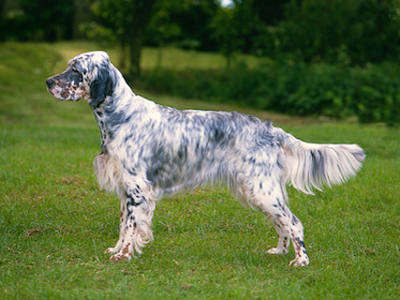
The English Setter is a large, athletic dog that displays both refinement and sporting capability. Dogs typically stand between 25½ and 27 inches at the shoulder, while bitches are slightly smaller. Their overall silhouette is clean, elegant, and balanced, giving the impression of effortless movement and natural grace. These dogs convey strength without heaviness, combining muscular build with distinguished lines.
The breed’s head is long, lean, and held proudly high, with a well-defined stop and oval-shaped skull indicating plenty of intelligence. Their bright, expressive eyes—ranging from hazel to dark brown—are full of warmth and curiosity. The ears are set low, of moderate length, and lie in neat folds close to the cheeks, covered in fine, silky hair, contributing to the Setter’s distinguished look. The muzzle is moderately deep and square, matched by strong jaws and a regular scissor bite, giving the impression of utility and harmony.
The English Setter’s coat is one of its most distinguishing features. Medium in length, soft, and slightly wavy (but never curly), it hangs in gentle feathering from the ears, tail, legs, and body, lending a flowing, textured appearance. The breed’s recognized colors are black and white (blue belton), orange and white (orange belton), lemon and white (lemon belton), liver and white (liver belton), and various tricolor combinations, usually flecked throughout (the preferred “belton” pattern) rather than with large solid patches. The tail is of medium length, carried level with the back, and flaunts a sweeping flag of longer, silky hair. Feet are tight and well padded, designed for stamina and extended activity outdoors.
Temperament & Behavior
The English Setter is known for an intensely friendly and good-natured disposition. Bred to work alongside humans and other dogs in the field, they retain a strong social instinct and derive comfort and happiness from the company of people and other animals. At home, English Setters are gentle, affectionate, and well-mannered, rarely showing aggression or excessive shyness. They adapt well to family routines and enjoy being a central part of everyday life.
This breed excels as a companion for children due to their patience and playful disposition. Their tolerance extends to other pets and visiting guests, making them a wise choice for households that entertain or host extended family. While their gundog lineage means they can be active and sometimes exuberant, they settle well indoors, especially when exercised sufficiently.
English Setters are not natural guard dogs. Their sociable attitude means they welcome newcomers rather than act as deterrents. However, their keen senses and alertness give them presence in any setting. The breed’s high intelligence and trainable nature make them rewarding for those who invest in regular, positive training and interactive games.
At their core, English Setters thrive on interaction—they are happiest when included in walks, family gatherings, or garden play. Loneliness can lead to boredom and restlessness, so homes that can dedicate plenty of time and affection best suit this breed.
Care & Living Needs for the English Setter
English Setters are high-energy dogs, needing more than two hours of varied exercise every day. They are not content with short walks around the block and thrive when given space to roam and run freely in secure environments. A large fenced yard or regular access to safe open areas is ideal to let them expend both physical and mental energy.
The best living situation for an English Setter is a large house with direct garden access, though they can adapt to various environments as long as their exercise needs are fully met. Both town and country settings can work, as long as the household is active and provides regular outdoor adventuring. A securely fenced, spacious garden is a significant benefit for off-leash explorations and play.
Grooming is an essential aspect of Setter care. Their medium-length, silky coat requires brushing at least twice a week to prevent tangles and remove loose hair, particularly during the shedding season. Expect some year-round shedding, so regular grooming helps maintain the coat’s health and the home’s tidiness. Pay special attention to feathered areas on the legs, belly, and tail, where knots can develop, and keep the ears clean and dry.
Mental stimulation is as important as physical exercise. English Setters respond well to gentle, consistent training that harnesses their intelligence and eagerness to please. Activities such as scent games, training classes, or simple fieldwork keep their minds engaged. This breed appreciates structure and praise but can be sensitive, so positive reinforcement is key. Undemanding or sedentary owners may find the Setter’s needs overwhelming, as these dogs are not suited to inactive households or extended periods left alone.
Health & Common Issues
The dataset does not list specific health concerns for the English Setter, so it is important for owners to maintain a proactive approach to canine wellness. As with any large, active breed, routine veterinary checkups help monitor general health, with attention to areas such as joints, eyes, teeth, and skin.
Maintaining an ideal body weight through a balanced diet and appropriate exercise can reduce strain on joints and keep energy levels in check. Regular grooming aids in the early detection of any skin or coat concerns. Dental hygiene and clean ears are also important to prevent minor issues from becoming problems.
As the breed can live over 10 years, a good relationship with a veterinarian and a structured health routine will help the English Setter stay vibrant and active throughout life. Their robust build is generally an asset, but, as with all breeds, attentive care makes all the difference.
Official Breed Standard Summary
The official breed standard describes the English Setter as a medium to large dog, characterized by elegance in both appearance and movement. The standard places high value on good health, soundness, and suitability for function, discouraging any exaggeration or health-compromising features. While the breed is elegant, it is never fragile—strength and athleticism are balanced by grace and proportionality.
Typical heights range from 25½ to 27 inches for males and 24 to 25½ inches for females. The coat should be soft, silky, and only slightly wavy, with feathering present on legs, tail, and ears. The preferred color patterns (“belton”) include blue, orange, lemon, and liver belton varieties, as well as tricolor combinations, with flecking all over the body being most desirable.
Movement should be free, graceful, and display both speed and endurance. Key faults include any traits detracting from health, function, or correct appearance, and any exaggeration away from the breed’s traditional role. Breed standards do not require dogs to fall within exact size limits, recognizing natural variation. Males should also have two fully descended testicles.
Frequently Asked Questions about the English Setter
Is the English Setter good for first-time dog owners?
The English Setter can be a good choice for dedicated first-time owners who are ready to provide plenty of exercise, consistent training, and mental engagement. They may be challenging for those with limited time or inactive lifestyles due to their high energy and social needs.
How much exercise does a English Setter need daily?
This breed thrives on more than two hours of vigorous exercise each day. Energy outlets should include long walks, games, and ideally some off-leash running in safe, enclosed areas.
Is the English Setter good with children?
English Setters are known for being very friendly and gentle with children. Their patience and affectionate personality make them excellent companions for active families.
Can the English Setter live in an apartment?
Although adaptable, English Setters are much better suited to homes with ample space and a large garden. Apartment living is only advisable if substantial outdoor exercise is provided daily.
How much grooming does a English Setter need?
Their medium-length, feathered coats require brushing at least twice a week. Regular grooming helps prevent matting, especially in the feathered areas and during heavy shedding periods.
Are there common health concerns in this breed?
There are no specific common health issues noted here, but regular veterinary visits, grooming, and attention to general wellness are always recommended for any large, active breed.


