
What Are the Traits and Care Requirements of the Ibizan Hound?
The Ibizan Hound is a striking and elegant breed, known for its athleticism, dignified appearance, and ancient lineage. Enthusiasts are often drawn to its unique combination of reserved intelligence and high energy, making this dog a fantastic fit for those who lead active lifestyles and appreciate an independent yet affectionate companion. With its roots tracing back thousands of years to the Mediterranean islands, the Ibizan Hound is both a remarkable sight hound and a loyal family member.
This breed thrives in spacious, rural environments where it can stretch its long legs and indulge in extended play or exercise. While typically reserved around strangers, the Ibizan Hound forms strong bonds with its family, making it both a spirited field partner and a graceful house dog for those who can accommodate its active routines.
- Overview of the Ibizan Hound
- Key Characteristics
- Appearance of the Ibizan Hound
- Temperament & Behavior
- Care & Living Needs
- Health & Common Issues
- Official Breed Standard Summary
- Frequently Asked Questions
Group: Hound
Size: Large
Exercise needs: More than 2 hours per day
Coat length: Short
Grooming: Once a week
Shedding: Yes
Lifespan: Over 10 years
Ideal home type: Large house
Town or country: Country
Garden needs: Large garden
Overview of the Ibizan Hound
The Ibizan Hound boasts a lineage that reaches back to Ancient Egypt, its likeness visible in the art found on centuries-old tombs. Originally bred on the islands of Ibiza and Formentera, this breed developed as a highly specialized hunter, particularly adept at catching rabbits. The relatively isolated population on these Mediterranean islands promoted a consistent and distinctive look, reflecting both beauty and function.
Known locally as the Podenco Ibicenco, the Ibizan Hound’s principal role was that of a tireless hunter. Its impressive agility, graceful stride, and powerful jump made it invaluable on rocky terrain and among dense undergrowth. Today, while the breed still retains its keen hunting drive, it has also found a place as a unique and spirited companion for those with ample space and an appreciation for both its athletic demands and independent nature.
Owners best suited for the Ibizan Hound are those who live in the country or in homes with generous outdoor access. The breed is ideal for active individuals or families who can commit to daily exercise, patient training, and offer a stable environment where this sensitive, dignified hound can thrive.
Key Characteristics
- Energy level – High; needs substantial daily activity and room to run.
- Trainability – Intelligent but independent, responds best to patient, consistent training.
- Intelligence – Displays quick problem-solving skills and sharp instincts.
- Prey drive – Very strong; originally bred to hunt rabbits and small game, supervision is essential outdoors.
- Social needs – Forms strong bonds with family but can be reserved or aloof with strangers.
- Compatibility with families and children – Generally gentle and dignified with respectful older children, but may be too sensitive for rough play.
- Compatibility with other dogs – Usually gets along with other dogs, though high prey drive can be an issue with smaller pets.
- Guarding or watchdog tendencies – Not a natural guard dog, but will alert owners to new arrivals or unusual activity.
- Adaptability to city or country life – Much better suited to country homes with space for safe, free movement.
- Best suited owner type – Active, experienced dog owners who understand sighthound behavior.
- Typical daily routine – Requires two or more hours of vigorous activity along with quiet time for relaxation indoors.
Appearance of the Ibizan Hound
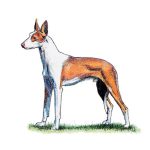
The Ibizan Hound offers an unmistakable silhouette, standing tall and narrow with finely built proportions. Its large, upright ears command attention and contribute to an aura of alertness and intelligence. The head is fine and long, featuring a flat skull with a slightly convex muzzle. A flesh-colored nose, expressive amber almond-shaped eyes, and thin lips complete this distinguished profile.
In motion or at rest, the Ibizan Hound embodies athletic grace. Its neck is lean, long, and slightly arched, leading to a back that is level and slopes gently toward the rump. The breed’s ribcage is long and flat, while the body displays a notable tuck-up at the waist, all built for speed and endurance. Legs are long and straight, delivering the kind of reach and drive expected from a skilled hunter. Well-arched toes, thick pads, and light-colored claws support agility across varied terrain.
The coat comes in two types—smooth and rough—both of which are hard, close, and dense, offering some weather protection. Typical colors include white, chestnut, lion, red and white, as well as combinations of these. Size varies, with dogs from the breed’s country of origin standing between 22 and 29 inches in height, but overall balance and proportion remain more important than specific measurements.
The tail is another hallmark feature, long and slender, set low and capable of expressive movement depending on the dog’s excitement. Overall, the Ibizan Hound projects an impression of refined agility, built for both impressive sprints and controlled, hovering gaits.
Temperament & Behavior
At home, the Ibizan Hound tends to be dignified and calm, showing affection and loyalty toward family while remaining somewhat reserved when newcomers visit. This breed is not nervous nor aggressive but prefers to observe strangers from a distance until comfortable. Owners describe the Ibizan Hound as intelligent and displaying an independent streak—attributes that stem from centuries of working alone or with minimal direction.
The breed’s strong prey drive is accompanied by remarkable agility and stamina. Composed in temperament, the Ibizan Hound is not overly demonstrative, yet it develops meaningful bonds with family members. Children who understand how to interact respectfully with animals can make great playmates, but as a sensitive breed, the Ibizan Hound does best in homes where noise and chaos are kept to a minimum.
Socialization with other dogs is typically positive, though it is wise to supervise interactions with much smaller animals due to instinctual chasing behavior. While not bred as a guard dog, the Ibizan Hound will alert its household to approaching visitors, its deep sense of awareness cultivated from years of work hunting in unfamiliar environments.
Descended from a long lineage of working hounds, the Ibizan is trustworthy yet somewhat aloof, valuing companionship but also cherishing moments of solitude or quietness. The breed excels in households that understand and celebrate these unique hound traits.
Care & Living Needs for the Ibizan Hound
A defining trait of the Ibizan Hound is its need for daily vigorous exercise. Two or more hours each day, including running, interactive play, or structured activities such as lure coursing, will help meet its high energy requirements and prevent boredom. This breed finds its optimal environment in rural or suburban homes with large, secure gardens, aligning with its origins in the wide-open spaces of Mediterranean islands.
The ideal home for an Ibizan Hound is a spacious house, preferably in the country, accompanied by a sizable fenced outdoor area. Apartments or homes with small yards are not suitable, as the breed’s natural athleticism and high prey drive make regular, substantial off-leash activity essential for both physical and mental well-being.
Grooming requirements are straightforward. A once-weekly brush will suffice for both the smooth and rough varieties, due to the short, dense nature of the coat. Shedding occurs, so periodic cleaning is recommended, especially for those with allergies. Occasional baths help maintain coat condition, and hunting scars, being a badge of work, are not considered faults. Regular nail trims, ear checks, and dental care are helpful additions to the grooming routine.
Mental enrichment through training, puzzle toys, scent games, and new experiences are vital for keeping the Ibizan Hound engaged. Their intelligence and independence benefit from varied routines rather than repetitive drills. This breed is not a match for sedentary owners or those with very busy schedules; individuals seeking a laid-back lap dog or a pet for a city apartment may find the Ibizan Hound’s needs challenging to fulfill.
Health & Common Issues
The Ibizan Hound is generally regarded as a robust and healthy breed, benefiting from centuries of working lineage and a relatively small, well-managed gene pool. Owners should, however, provide balanced exercise and routine veterinary care to support joint health and overall well-being throughout the dog’s life.
Although the dataset does not specify particular health concerns, regular checkups, a high-quality diet, and attention to dental hygiene are always recommended. Because this breed is active and agile, it is wise to monitor for signs of injury or overexertion, especially in high-impact environments.
Making sure the Ibizan Hound maintains an ideal weight, receives sufficient stimulation, and has opportunities for rest will go a long way in promoting a long, healthy life. Owners should work closely with their veterinarians and be attentive to any changes in behavior, appetite, or mobility.
Official Breed Standard Summary
The official breed standard for the Ibizan Hound sets out the ideal characteristics, appearance, and temperament, ensuring the breed stays healthy, functional, and true to its heritage. Absolute soundness and avoidance of extremes are emphasized to promote the welfare and suitability of the breed as a working and companion animal.
Ibizan Hounds are expected to be tall, narrow, finely built, with large, erect, highly mobile ears aligned with the arch of the neck. The breed standard outlines a fine, long head, clear expressive amber eyes, a muscular and slightly arched neck, and long, straight legs. The back is level and sloped slightly, the ribcage long and flat, and the waist tucked, revealing a trim, athletic frame. Hindquarters are strong and lean, with minimal angulation for speed and stamina.
Coat types include both smooth and rough textures, always hard, close, and dense, offering extra length under the tail and at the backs of the legs. Acceptable colors are white, chestnut, lion, red and white, and combinations thereof, while any alternate colors are considered undesirable. Size typically ranges from 22 to 29 inches at the shoulder, though proportion and overall balance take precedence. The breed is distinguished by its suspended, far-reaching stride and a tail that extends well below the hock and is capable of expressive, elevated carriage when excited.
The standard notes that faults should be evaluated with regard to their impact on health and functionality. Males should have two normal testicles fully descended. Prospective owners should understand that actual dogs may vary from ideal measurements, and thoughtful moderation—avoiding exaggeration in any feature—remains a priority for breeders and judges alike.
Frequently Asked Questions about the Ibizan Hound
Is the Ibizan Hound good for first-time dog owners?
The Ibizan Hound can be a rewarding companion for experienced owners, especially those familiar with active sighthound breeds. First-time owners who commit to learning about their unique instincts and needs may find success with patience and ongoing support.
How much exercise does an Ibizan Hound need daily?
This breed thrives on more than two hours of vigorous exercise each day. Owners should plan for running, play, and engaging activities to meet their Ibizan Hound’s high physical and mental demands.
Is the Ibizan Hound good with children?
The Ibizan Hound is generally gentle and dignified, making it suitable for families with respectful, older children. Their sensitivity means they do best with kids who understand canine boundaries.
Can the Ibizan Hound live in an apartment?
The Ibizan Hound is best suited to large homes with spacious, secure gardens. Apartments or urban settings often do not provide enough room for their activity levels and should be avoided if possible.
How much grooming does an Ibizan Hound need?
Grooming needs are relatively low; a once-weekly brushing is usually sufficient for both coat types. Regular nail, ear, and dental care are also recommended for overall health.
Are there common health concerns in this breed?
The Ibizan Hound is typically robust and healthy. Like all dogs, they benefit from routine veterinary exams, balanced nutrition, and thoughtful management of exercise and weight to minimize injury risk.


