
What Are the Traits and Care Requirements of the Irish Wolfhound?
The Irish Wolfhound stands tall as a remarkable companion for those seeking a devoted yet gentle canine presence. Renowned for its impressive size and calm temperament, this breed is best suited to homes where space, time, and affection are abundant. Its dignified bearing and formidable stature make it a memorable addition to any household, particularly for experienced dog owners who appreciate both the history and unique demands of large breeds.
Affectionately nicknamed the “gentle giant,” the Irish Wolfhound has roots as a noble hunter and guardian, but today it flourishes as a loyal family friend. Its agreeable nature, combined with an enduring elegance, appeals to those looking for a blend of companionship and quiet strength in a canine partner. This breed’s needs, from exercise to environment, require careful consideration, ensuring it thrives in settings where its size and serenity are equally valued.
- Overview of the Irish Wolfhound
- Key Characteristics
- Appearance of the Irish Wolfhound
- Temperament & Behavior
- Care & Living Needs
- Health & Common Issues
- Official Breed Standard Summary
- Frequently Asked Questions
Group: Hound
Size: Extra large
Exercise needs: More than 2 hours per day
Coat length: Medium
Grooming: More than once a week
Shedding: Yes
Lifespan: Under 10 years
Ideal home type: Large house
Town or country: Country
Garden needs: Large garden
Overview of the Irish Wolfhound
The Irish Wolfhound stands out as one of the most awe-inspiring breeds in the canine world, both for its imposing height and its gentle nature. Originally developed for hunting wolves and safeguarding livestock in Ireland, this breed’s roots stretch back centuries. These formidable dogs were initially achieved by blending fast, agile Middle Eastern greyhound-type dogs with powerful mastiffs, resulting in a canine with the speed and strength needed to face Ireland’s most significant predators.
With the extinction of wolves in Ireland by the late 18th century, the Irish Wolfhound’s numbers dwindled sharply. The breed faced near extinction during the Great Famine of the 1840s, but passionate breeders, including Captain George Augustus Graham, initiated dedicated revival efforts. By introducing bloodlines from Deerhounds, Great Danes, and Tibetan Mastiffs, the Irish Wolfhound regained its grandeur. Today, it is recognized as potentially the tallest dog breed, beloved for its kind and calm demeanor as much as its size.
This noble dog thrives in a setting where its stature and exercise needs are accommodated. It best suits families or individuals living in spacious, country environments who appreciate a loyal, affectionate, and gentle-natured guardian. Living with an Irish Wolfhound is a commitment to caring for a living piece of history—a faithful companion who brings both majesty and mellow companionship into any home lucky enough to have one.
Key Characteristics
- Energy level – High exercise needs; thrives on long daily walks and opportunities to stretch out in large, safe spaces.
- Trainability – Responsive but can be independent; benefits from consistent, gentle training methods.
- Intelligence – An intelligent breed that enjoys mental stimulation and engaging activities with its people.
- Prey drive – Historically strong in hunting, so early recall training and supervision with small animals are recommended.
- Social needs – Deeply bonds with its owners and prefers human company; does not like being left alone for long periods.
- Compatibility with families and children – Excellent with children; gentle and patient but should be supervised due to size.
- Compatibility with other dogs – Generally good with other dogs, especially when properly socialized from a young age.
- Guarding or watchdog tendencies – Naturally imposing presence can deter intruders, but the breed is friendly and not aggressive.
- Adaptability to city or country life – Best suited to rural or suburban environments with plenty of space; city living is challenging due to its size.
- Best suited owner type – Ideal for experienced owners with ample space and time; less suited to first-time dog owners without support.
- Typical daily routine – Involves extended walks, playtime in a secure yard, interaction with family, and time spent relaxing indoors.
Appearance of the Irish Wolfhound
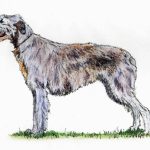
The Irish Wolfhound is instantly recognizable for its enormous size, commanding presence, and harmonious build. Its physique is both powerful and graceful, giving the impression of strength without sacrificing elegance. Males often stand between 32 and 34 inches at the shoulder, with females slightly smaller yet still well above average in height. The breed’s form is long and muscular, designed for both speed and endurance, with a deep chest and arched loin that hint at its heritage as a fast, formidable hunter.
The head is long and carried with dignity, featuring a gently raised forehead and a long, moderately pointed muzzle. Dark, elliptical eyes convey intelligence and calmness, while the ears are small, rose-shaped, and set back from the face, lending a refined silhouette. The strong neck is arched and free from loose skin, blending smoothly into wide, muscular shoulders and straight, sturdy forelegs. Hindquarters are equally muscular with well-bent stifles and hocks set low, built for powerful, easy movement.
One of the breed’s distinguishing features is its rough, wiry coat, especially prominent over the eyes and under the jaw. The hair is harsh and of medium length, providing protection without appearing shaggy. The breed comes in a variety of colors, including grey, brindle, red, black, white, fawn, wheaten, and steel grey, each adding to its unique appeal. The tail is long, slightly curved, and well covered with hair, adding a touch of elegance to the breed’s overall outline.
The Irish Wolfhound’s feet are round, with strong, arched toes and robust, curved nails, supporting the dog’s weight with stability. This breed’s overall impression is that of majesty and athletic capability, suited just as well to a proud stance in the field as a relaxed posture at home.
Temperament & Behavior
Irish Wolfhounds are celebrated for their gentle, kind, and friendly disposition. As members of the hound group, they share the dignified and trustworthy nature found in breeds developed for hunting by sight. Despite their considerable size, these dogs are calm and remarkably docile in the home, preferring peaceful companionship over boisterous antics.
Interaction with people tends to be affectionate without being demanding. The Irish Wolfhound forms close bonds with family members, often acting as a quietly attentive presence rather than an exuberant playmate. Their patience makes them wonderful companions for children, but supervision is always wise due to their sheer size and inadvertent strength.
The breed generally gets along well with other dogs, and early socialization ensures positive interactions throughout life. With smaller pets, their historic prey drive can make introductions more challenging, so early training and careful management are important. They are not known for aggression or watchdog instincts, choosing instead to greet new people with good-natured curiosity. Their imposing appearance alone is often enough to provide reassurance to their owners without the need for defensive behavior.
Owners should be aware that the Irish Wolfhound prefers companionship over solitude. This is not a breed to leave outdoors or alone for extended periods, as it begs for human contact and inclusion in daily routines. For families or individuals who desire a calm, loyal dog that embodies dignity and repose, the Irish Wolfhound is an inspired choice.
Care & Living Needs for the Irish Wolfhound
The Irish Wolfhound is a high-energy breed with substantial daily exercise requirements. More than two hours of activity, including walks, off-leash running in safe, enclosed areas, and ample time to stretch out outdoors, is essential for both physical health and happiness. The breed’s history as a hunter and guardian means it flourishes when free to roam large gardens and countryside environments.
A large home with direct access to a spacious, secure garden is ideal for this breed. Apartments or properties without a yard are not suitable environments, as the Irish Wolfhound’s sheer size and activity level demand open space. Rural or suburban households with securely fenced gardens provide the best balance of freedom and safety.
Grooming for the Irish Wolfhound is moderate, requiring careful attention more than once a week. The coat is medium in length, rough and wiry, especially on the head and jaw. Regular brushing removes shed hair and prevents tangles while helping to manage the breed’s natural shedding. Bathing should be done only as needed, as the coat has protective qualities. Nail trimming, ear cleaning, and dental care should be part of a regular grooming routine to keep the dog comfortable and healthy.
Mental stimulation is just as crucial as physical exercise for the Irish Wolfhound. Training sessions should be positive, gentle, and consistent, reinforcing good manners and helping curb any independent streak. Engaging the breed’s intelligence with puzzle toys, scent work, or basic obedience exercises will keep it mentally satisfied.
This breed is not ideal for first-time dog owners with limited time, small living spaces, or busy urban lifestyles. Those unable to provide ample space, steady companionship, and consistent daily routines may find the demands of an Irish Wolfhound overwhelming. For those who can meet its unique requirements, however, the rewards are immense.
Health & Common Issues
The Irish Wolfhound, as with most breeds of its size, has a lifespan generally under 10 years. While the dataset does not specify particular health conditions, responsible ownership requires awareness of the general needs of extra-large breeds. Regular vet check-ups are important to monitor the dog’s overall well-being, support healthy growth, and address any age-related issues early.
Providing the right balance of exercise is vital; excessive exercise in young, growing dogs can stress developing joints, while inactivity can lead to weight and mobility problems in adults. Keeping the Irish Wolfhound at a healthy weight is particularly important, as this supports joint health and reduces stress on the heart and other organs. A balanced diet, sized to the breed’s age and energy requirements, is indispensable.
Basic routine care—such as dental hygiene, ear cleaning, and regular parasite prevention—contribute to the breed’s quality of life. Observing any changes in mobility, appetite, or temperament and seeking veterinary advice promptly can help detect and address issues before they become serious. While all dogs require attention to health and comfort, the Irish Wolfhound’s large size necessitates extra diligence throughout its life.
Official Breed Standard Summary
The official breed standard for the Irish Wolfhound sets clear guidelines to preserve the dog’s form, function, and temperament. The standard emphasizes great size, symmetry, strength, and an impressive, commanding appearance, all balanced by a graceful and muscular frame. Soundness and health are of utmost importance, with the expectation that no trait is exaggerated to the detriment of the dog’s welfare.
The accepted minimum height is 31 inches for males and 28 inches for females, with corresponding minimum weights of 120 pounds and 90 pounds, respectively. Preferred heights often reach up to 34 inches for dogs. The breed’s coat is rough and harsh, wiry especially around the eyes and under the jaw, protecting it in various weather conditions. Accepted coat colors include shades of grey, brindle, red, black, white, fawn, steel grey, and wheaten; any other color or combination is not allowed under the standard.
The ideal Irish Wolfhound moves with ease and activity, showing neither stiffness nor awkwardness. Its head is long with slight frontal bone, dark elliptical eyes, small rose ears, and strong jaws with a proper scissor bite. The body is built for endurance with a deep chest, long back, arched loin, and a well-drawn up belly, complemented by muscular legs and a long, slightly curved tail.
The standard highlights that any departure from these physical traits should be considered a fault, with its seriousness depending on its impact on health and function. Prospective owners are reminded that not all dogs will match the precise measurements, and that size or appearance should never come at the cost of soundness or well-being. For males, both testicles should be fully descended. This framework ensures the breed remains fit for its historical function as well as its modern role as a companion.
Frequently Asked Questions about the Irish Wolfhound
Is the Irish Wolfhound good for first-time dog owners?
While the Irish Wolfhound is gentle and friendly, its size and exercise requirements can be overwhelming for first-time owners. Those with some prior dog experience or strong support systems are likely to find the breed more manageable.
How much exercise does an Irish Wolfhound need daily?
This breed requires more than two hours of exercise each day. Long walks, opportunities for safe off-leash running, and mental engagement are essential to keep them healthy and content.
Is the Irish Wolfhound good with children?
The Irish Wolfhound is known for its gentle and patient temperament, making it generally very good with children. Supervision is recommended due to their large size and potential for accidental knocks.
Can the Irish Wolfhound live in an apartment?
Due to their extra-large size and substantial need for space, Irish Wolfhounds are not well-suited to apartment living. They thrive best in large homes with access to a spacious, secure garden.
How much grooming does an Irish Wolfhound need?
The breed’s rough, medium-length coat needs brushing more than once a week to remove dead hair and prevent tangles. Regular attention also helps manage shedding and keeps the dog comfortable.
Are there common health concerns in this breed?
While the dataset does not specify particular health problems, Irish Wolfhounds have a shorter lifespan compared to smaller breeds and benefit from regular veterinary care, proper diet, and well-managed exercise routines.


