
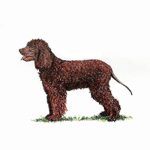
Spaniel (Irish Water) – Breed Information, Traits & Complete Guide
The Spaniel (Irish Water) is a unique and athletic member of the gundog group, cherished for its working ability in the field as well as its loyal companionship at home. Known for its striking curly coat and rich liver coloring, this breed attracts active families, country dwellers, and dedicated dog enthusiasts who appreciate both versatility and character in a canine companion.


With its origins deeply rooted in Irish sporting tradition, the Irish Water Spaniel thrives in environments where it has both a job to do and the room to stretch its legs. This breed is ideally suited to those who can provide plenty of exercise, enjoy time outdoors, and value a dog with both endurance and an affectionate, sometimes comical personality.
- Overview of the Spaniel (Irish Water)
- Key Characteristics
- Appearance of the Spaniel (Irish Water)
- Temperament & Behavior
- Care & Living Needs
- Health & Common Issues
- Official Breed Standard Summary
- Frequently Asked Questions
Group: Gundog
Size: Medium
Exercise needs: More than 2 hours per day
Coat length: Medium
Grooming: More than once a week
Shedding: No
Lifespan: Under 10 years
Ideal home type: Large house
Town or country: Country
Garden needs: Large garden
Overview of the Spaniel (Irish Water)
The Spaniel (Irish Water) boasts a fascinating lineage that stretches back centuries in Ireland, where curly-coated, liver-colored water dogs were renowned for their swimming abilities and retrieving skills long before an official club was established in 1890. The breed’s history is highlighted by pivotal figures like Boatswain, born in 1834, who left a profound mark on bloodlines worldwide thanks to the careful breeding efforts of Mr. Justin McCarthy. While this breed carries the “spaniel” title, its working style aligns closely with that of a retriever, particularly when it comes to recovering game from water.
This breed is specially adapted for challenging wetland tasks, thriving in fowling and wild game hunting, and even participating in retriever trials. The ancestry of the Irish Water Spaniel is thought to include influences from breeds such as the French Barbet, the now-extinct English Water Spaniel, and the Poodle—all breeds distinguished by their proficiency in water work. This genetic tapestry has given rise to a gundog that is not only physically robust but also resourceful and highly trainable.
Owners who are drawn to the Spaniel (Irish Water) tend to be those who spend considerable time outdoors, enjoy shooting sports or hiking, or simply appreciate an energetic canine companion. The breed does best in homes where space and exercise are abundant; city apartments aren’t ideal, but rural properties with access to rivers or lakes allow this gundog to truly thrive. Their resilient nature and deep-rooted instincts make them a favorite among dedicated trainers and active families alike.
Key Characteristics
- Energy level – Exceptionally high, requiring vigorous daily activity and mental stimulation.
- Trainability – Highly trainable with a strong desire to please, best when engaged in tasks or sporting activities.
- Intelligence – Very intelligent, quick to learn commands but benefits from structured guidance.
- Prey drive – Naturally strong, especially around birds and small mammals due to sporting background.
- Social needs – Affectionate and strongly bonded to family, but can be initially reserved with strangers.
- Compatibility with families and children – Generally good, thrives in active households willing to involve the dog in daily activities.
- Compatibility with other dogs – Usually sociable if well socialized from an early age.
- Guarding or watchdog tendencies – Not a typical guard dog but often alert and will bark to announce visitors.
- Adaptability to city or country life – Best suited to country living with ample space and water access.
- Best suited owner type – Active individuals or families committed to daily outdoor activities and ongoing training.
- Typical daily routine – Includes long walks, swimming, retrieving exercises, and interactive play sessions.
Appearance of the Spaniel (Irish Water)
The Spaniel (Irish Water) features a distinctive, smart, and upstanding silhouette that immediately sets it apart from other breeds. Medium in size yet strongly built, this dog exudes both athletic energy and compact efficiency. Males typically stand 21–23 inches at the shoulder, while females range from 20–22 inches, positioning them as moderate yet powerful dogs ideal for demanding outdoor work.
The most striking aspect of their appearance is their dense, tight ringlets of curly hair, which covers the body and ears with a crisp texture, free from woolliness. This rich, liver-toned coat often reflects a peculiar purplish tint, sometimes described as ‘puce-liver’—a unique hallmark among dog breeds. The skull is domed and broad, giving the breed its characteristic head shape, with a pronounced ‘top-knot’ of long curls peaking between the eyes. The ears are low set and draped with tight curls, contributing to the breed’s unmistakable look.
The tail, often referred to as a ‘rat tail,’ is short, straight, and thick at the root, tapering to a fine point, covered in curls at the base and bare or with short hairs towards the tip. Large, round, and well-padded feet provide great grip and propulsion in slippery or marshy environments. The overall movement of the breed is free and powerful, with a rolling gait accentuated by their barrel-shaped chest and well-sprung ribs.
Temperament & Behavior
The Spaniel (Irish Water) is a gundog that blends strength and endurance with charm and a hint of mystery. At home, they may appear reserved or slightly aloof upon first meeting, but they warm up swiftly and demonstrate deep affection for their loved ones. Their stable disposition makes them reliable companions, and their trademark sense of humor shines through in playful antics and a joyful approach to work and play.
Despite their independent streak outdoors, these spaniels form strong bonds with their families. They thrive in environments where they can be included in daily routines—especially those that involve outdoor adventures. Their gentle spirit generally extends to children and other dogs, though early socialization and consistent guidance are important for best results, especially as puppies develop into strong-willed adults.
Given their origins and intended purpose as retrievers for waterfowl and other game, the breed exemplifies versatility in the field and at home. Their gundog background insures a natural desire to work closely with humans, and they excel in shooting sports, field trials, and even as partners for outdoor enthusiasts. While not naturally aggressive or overly protective, they are watchful and quick to announce new arrivals to the home without being overbearing.
As part of a group famous for producing well-rounded family dogs, the Spaniel (Irish Water) brings a delightful blend of athleticism, loyalty, and citizenship to any home ready and able to meet their active lifestyle needs.
Care & Living Needs for the Spaniel (Irish Water)
With a demand for more than two hours of daily exercise, the Spaniel (Irish Water) is best matched with active owners who can offer energetic outlets such as hiking, running, swimming, and field work. Their heritage makes long daily walks, off-leash retrieval games, and water activities non-negotiable elements of their routine. A spacious, rural environment with access to a large garden is ideal, allowing the breed’s athleticism to fully express itself.
When it comes to the home environment, this breed is not suited to apartments or properties with limited outdoor space. They flourish in large houses and countryside settings, where natural instincts like tracking, swimming, and exploring can be safely indulged. Consistent training and mental stimulation are crucial, as boredom or neglect may lead to mischief or undesirable behaviors. Incorporating scent games, obedience work, and interactive toys is recommended to keep their sharp minds engaged.
Grooming requirements for this breed are relatively high, given their unique curly coat. Brushing and combing should be performed more than once a week to prevent mats and remove debris, while regular trimming of feet, ears, and tail area keeps them tidy and comfortable. Shedding is minimal, making them appealing to those deterred by dog hair but willing to commit to coat care. Their coat also has a natural oiliness, which offers protection in water but requires attention to prevent build-up or odors.
This breed is not an ideal choice for sedentary households, apartment dwellers, or individuals who cannot devote time to exercise and grooming. Prospective owners should be prepared for an active, interactive relationship with their dog and enjoy spending significant time outdoors in all seasons.
Health & Common Issues
The Spaniel (Irish Water) is generally considered a robust and hardy breed, shaped by the physical demands of its traditional work as a retriever in wetlands. While the dataset does not specify any breed-specific health concerns, regular checkups with a veterinarian remain important throughout their lives.
Owners should pay attention to common canine wellness standards, such as monitoring joint mobility and maintaining a healthy weight alongside rigorous exercise. The tightly curled coat may require inspection and care to prevent infections or matting, especially in the ears and paws, since these areas tend to trap moisture and debris.
Oral hygiene and routine vaccinations are part of the usual preventive measures. A balanced diet, age-appropriate physical activity, and a keen eye for any changes in your dog’s behavior or appearance help ensure a long, happy, and healthy life for the Irish Water Spaniel.
As with any breed, consultation with experienced breeders and regular wellness visits are the best ways to identify and manage any emerging concerns early, fostering a thriving companion for years to come.
Official Breed Standard Summary
The official breed standard for the Spaniel (Irish Water) sets forth detailed guidelines to ensure that these dogs maintain their working ability, health, and characteristic appearance. The breed is expected to present a smart, upstanding presence with strong, compact proportions, reflecting both its athletic function and distinctive Irish heritage. Judges and breeders are cautioned to avoid exaggerations or physical faults that could harm the dog’s welfare or its ability to do its traditional work.
According to the standard, coat texture and color are of particular importance—dogs should have dense, crisp ringlets and a rich, dark liver hue with a purplish tint, sometimes called puce-liver. Size falls within a moderate range, with a well-developed barrel chest, strong loins, and large, well-padded feet. The breed’s gait is marked by freedom, soundness, and a slight rolling motion, a result of its rounded ribcage.
Features such as a domed skull, pronounced ‘top-knot’, well-developed nose, and the distinctive ‘rat tail’ differentiate the breed from others. The standard emphasizes soundness and temperament, highlighting traits like endurance, a stable disposition, and versatility in the field. Any fault that negatively affects working ability, health, or well-being should be penalized in the show ring.
Prospective puppy buyers are reminded that the standard describes the ideal and not every individual dog will match measurements exactly. Dogs may fall slightly above or below the stated ranges and still make excellent companions or working partners.
Frequently Asked Questions about the Spaniel (Irish Water)
Is the Spaniel (Irish Water) good for first-time dog owners?
This breed suits owners who are active and experienced with energetic dogs. While they are intelligent and affectionate, their exercise and grooming needs may be challenging for new dog owners without prior experience.
How much exercise does a Spaniel (Irish Water) need daily?
A Spaniel (Irish Water) requires more than two hours of exercise each day, including physical activity, swimming, and interactive play. Without adequate exercise, they may become bored or restless.
Is the Spaniel (Irish Water) good with children?
This breed generally gets along well with children, especially in active households that include the dog in family activities. Supervision and positive socialization ensure smooth interactions with young kids.
Can the Spaniel (Irish Water) live in an apartment?
This breed is best suited to large houses with a spacious garden, ideally in the countryside. Apartment living does not meet their space and exercise requirements and is not recommended.
How much grooming does a Spaniel (Irish Water) need?
The breed requires regular grooming, with brushing needed more than once a week to prevent mats and keep their curly coat in good condition. Occasional trimming and inspection of ears and paws are also important.
Are there common health concerns in this breed?
While specific health issues are not highlighted, Irish Water Spaniels are generally robust. Routine veterinary care, coat maintenance, and weight management will support overall well-being throughout their life.


