
What Are the Traits and Care Requirements of the Dobermann Breed?
The Dobermann stands out as a powerful, elegant, and commanding breed that appeals to those seeking an intelligent companion with steadfast loyalty. Well-suited for experienced dog owners who have the time and dedication to meet both the physical and mental needs of their dog, the Dobermann excels in active households that value a true working partner. With a proud heritage as both protector and loyal friend, this breed is as comfortable serving in a professional role as it is being part of a loving family.
Renowned for their alertness and trainability, Dobermanns are often seen as the epitome of the working dog group, prized for their natural guardianship and devotion. Whether they are keeping a watchful eye over their home, participating in canine sports, or simply enjoying time with their family, Dobermanns bring an unmistakable presence and energy to every environment.
- Overview of the Dobermann
- Key Characteristics
- Appearance of the Dobermann
- Temperament & Behavior
- Care & Living Needs
- Health & Common Issues
- Official Breed Standard Summary
- Frequently Asked Questions
Group: Working
Size: Large
Exercise needs: More than 2 hours per day
Coat length: Short
Grooming: Once a week
Shedding: Yes
Lifespan: Over 10 years
Ideal home type: Large house
Town or country: Either
Garden needs: Large garden
Overview of the Dobermann
The Dobermann traces its roots to late 19th-century Germany, where it was developed by Louis Dobermann, a tax collector seeking a loyal, courageous, and physically imposing companion for protection in his line of work. By crossbreeding dogs such as the Pinscher, Weimaraner, Greyhound, Manchester Terrier, Rottweiler, and German Shepherd, he crafted a breed that offered both formidable presence and keen intelligence, resulting in the Dobermann we know today.
The breed was established to offer not only strength and speed but also mental acuity and confidence, making it a natural fit for both protective and working roles. Official recognition came at the end of the 19th century, cementing the Dobermann’s status as a breed of both distinction and reliability.
Owners drawn to the Dobermann generally appreciate a dog with both the physical capacity and intellectual engagement to participate in a busy and sometimes demanding life. Whether serving as a reliable family member, a skilled participant in dog sports, or an effective deterrent as a guard dog, the Dobermann’s versatility stands out among larger working breeds.
Key Characteristics
- Energy level – Highly active and energetic, requiring considerable daily exercise to remain content and healthy.
- Trainability – Exceptionally trainable, excelling in obedience and canine sports with consistent guidance.
- Intelligence – Extremely intelligent, with a sharp mind and a love for problem solving and learning new tasks.
- Prey drive – May possess a moderate prey drive, but generally focused and responsive to training.
- Social needs – Enjoys being a central part of the family, often forming strong bonds with their people.
- Compatibility with families and children – Loyal and protective, typically devoted to their household and gentle when properly socialized with children.
- Compatibility with other dogs – Can coexist with other dogs, though proper introductions and training are vital, especially around unfamiliar animals.
- Guarding or watchdog tendencies – Naturally vigilant, with strong instincts to protect their home and loved ones.
- Adaptability to city or country life – Well-suited to either environment with sufficient space and access to a secure, large garden.
- Best suited owner type – Ideal for experienced, active owners with time and resources to provide mental and physical stimulation.
- Typical daily routine – Thrives on daily walks, training sessions, playtime, and involvement in family activities.
Appearance of the Dobermann
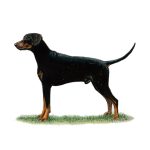
The Dobermann presents a striking figure, defined by its medium-to-large size, muscular frame, and unmistakable elegance. The breed gives an impression of both power and grace, with a body that is compact, squarely built, and athletic. Their movement is noted for its balanced energy and swift, elastic gait, affirming the Dobermann’s capability for impressive speed and agility.
The head is shaped as a long, elongated wedge, well filled under the eyes, and clean-cut, offering a keen, intelligent expression that commands attention. The eyes are almond-shaped and lively, moderately deep-set, with a color that complements the dog’s markings—darker shades preferred. The ears sit high, are small and neat, folding close to the cheeks in the undocked style commonly seen today. The muzzle and jaws are strong, featuring a perfect, regular scissor bite, and the overall composition of the skull, cheeks, and lips is both balanced and tight.
The neck is fairly long, lean, and elegant, carried with nobility and blending smoothly into powerful shoulders. The back is short and firm with a straight, slightly sloping topline, while the forechest is well developed and the ribs deep and well sprung. Hindquarters are robust, muscular, and parallel, equipped for driving power and effortless stride. Feet are compact, strong, and cat-like, providing stability in all activities. The tail, whether docked or left natural, continues smoothly from the line of the back without a noticeable drop or kink.
The coat is smooth, short, dense, and close-lying, giving the Dobermann a sleek, polished look. Coloration is sharply defined: shades of black, brown, blue, or fawn (Isabella), always paired with distinctive rust-red markings above the eyes, on the muzzle, forechest, legs, and beneath the tail. White markings are considered highly undesirable for this breed.
Size falls in a robust yet manageable range: males ideally reach 27 inches at the withers, while females are slightly smaller at 25½ inches, making the Dobermann genuinely substantial yet controlled in form.
Temperament & Behavior
The Dobermann is revered for a temperament that is both bold and unwaveringly alert. Renowned for his intelligence and steadfast loyalty, the breed is described as firm in character and completely obedient when guided by a trusted leader. Shyness or undue aggression is expressly ruled out by the breed standard, leaving a well-adjusted Dobermann as a confident yet balanced member of any household.
At home, Dobermanns form exceptionally strong bonds with their family. They can be gentle, affectionate companions and, with early and ongoing socialization, are typically trustworthy with children and regular visitors. A Dobermann thrives when included in the daily rhythm of the home and does not fare well in isolation.
In their interactions with other animals, Dobermanns are naturally territorial and watchful, sometimes requiring careful introductions, particularly with unfamiliar dogs. That said, their intelligence and responsiveness make them very trainable, and many live successfully in multi-dog homes with clear, consistent boundaries.
The breed’s origins in the working group shine through in its adaptability and heroic tendencies. Whether assisting in search and rescue, serving as a family protector, or excelling in canine sports, the Dobermann is recognized for its specialist abilities and commitment to the tasks at hand.
Strengths include vigilance, close attachment to their people, and resilience under training. Owners should also be prepared to address the breed’s natural guardian instincts, setting clear expectations and proactively managing environments where strangers or new animals are present.
Care & Living Needs for the Dobermann
The Dobermann is a high-energy breed that needs more than two hours of exercise daily to meet their physical and psychological needs. Owners should prioritize activities such as brisk walks, runs, obedience sessions, and interactive play. Without adequate outlets, the Dobermann’s intelligence and energy may be channeled into less desirable behaviors.
This breed does best in a large house with access to a generously sized, secure garden. While Dobermanns can adapt to either urban or rural settings, their size and drive make them less suited to small apartments or households without outdoor space. Town or country living is equally possible as long as their daily needs are met.
Grooming is straightforward thanks to the Dobermann’s short, hard, and close-fitting coat. Weekly brushing helps manage their moderate shedding and keeps their coat glossy. Shedding is present year-round, so a quick once-over with a grooming mitt or soft brush is typically sufficient. Bathing is needed only occasionally, and routine ear, nail, and dental care should not be neglected.
Mental stimulation is just as important as physical exercise. Dobermanns flourish when challenged by training sessions, scent work, agility, or other canine activities. Consistent rules and positive reinforcement enable the Dobermann to learn quickly and enjoy the process, cementing the owner-dog partnership.
This breed is not ideal for first-time dog owners or those whose lifestyles don’t allow for dedicated interaction and leadership. Dobermanns are most content with calm, confident owners ready to invest in early socialization and lifelong training.
Health & Common Issues
Dobermanns are generally robust and active, with a life expectancy of over 10 years. As with all breeds, it is important to monitor their overall health through regular veterinary checkups, healthy weight management, and appropriate exercise. Keeping an eye on oral health and providing a balanced diet helps reduce the risk of common dental issues and supports general well-being.
The breed is designed for athleticism and does not typically face breed-specific breathing challenges. However, their muscular build means joint care is important, particularly as they age and if they are highly active. Routine exercise that is well-balanced—not excessive or overly strenuous—can help maintain joint and muscle health.
Owners should keep track of eye, ear, and skin health, attending promptly to any signs of discomfort or unusual appearance. Early intervention and professional advice are key to ensuring that any potential health concerns are addressed before they become problems.
While the dataset does not specify any breed-specific health concerns, being proactive about preventive care—including vaccinations, parasite control, and regular monitoring—forms the basis of a healthy and fulfilling life with a Dobermann.
Official Breed Standard Summary
The official breed standard for the Dobermann provides a detailed guideline on the ideal characteristics, physical structure, and temperament of the breed. A Dobermann should be muscular, medium to large in size, with a proud, elegant carriage, square and compact body, and an overall toughness befitting its working origins. The breed is expected to exhibit soundness and be free from exaggerations or faults that could impact health or welfare.
Coat coloration is carefully defined: permitted colors include black, brown, blue, or fawn (Isabella), always accompanied by sharply outlined rust-red markings in specific locations. Any white markings or non-standard colors are considered undesirable. The coat itself is smooth, short, and densely packed, sitting close against the body. The ideal height is 27 inches for males and 25½ inches for females, with proportional bodies and balanced features.
The breed standard also details the elasticity and reach of the Dobermann’s movement, ensuring that the gait is balanced, vigorous, and expresses both rear drive and controlled front extension. The character and temperament outlined in the standard emphasize intelligence, loyalty, confidence, and obedience, ruling out any tendencies toward shyness or unwarranted aggression.
Selecting a Dobermann that matches the breed standard in both appearance and spirit is key for those interested in show or working roles. It’s also important to remember that the breed standard serves as a guide; individual dogs may vary in size and should not be judged solely by specific measurements.
Frequently Asked Questions about the Dobermann
Is the Dobermann good for first-time dog owners?
The Dobermann’s intelligence and energy demand a confident, experienced owner. While rewarding to train, they may be challenging for first-time owners unaccustomed to high-drive breeds and consistent leadership requirements.
How much exercise does a Dobermann need daily?
This breed needs more than two hours of exercise each day. Activities should mix physical challenges with mental stimulation, including walking, running, training, and games to prevent boredom.
Is the Dobermann good with children?
Dobermanns are typically loyal and protective toward their family, including children. Early socialization and supervision help ensure they remain gentle and well-mannered around younger family members.
Can the Dobermann live in an apartment?
Due to their size and high exercise needs, Dobermanns are better suited to homes with ample indoor space and access to a secure, large garden. Apartment living may not provide enough opportunity for activity and stimulation.
How much grooming does a Dobermann need?
The Dobermann’s short coat is low maintenance, requiring only weekly brushing to manage shedding and keep the coat healthy. Regular attention to nails, ears, and teeth is also important.
Are there common health concerns in this breed?
The dataset does not specify particular health issues, but routine veterinary care, a balanced diet, and appropriate exercise are essential to maintaining the Dobermann’s health and longevity.


